

Aromatic Hydroxy Intermediate Supplier for High-Purity Chemical Manufacturing
2026-08-27
In high-purity chemical manufacturing, the choice of aromatic hydroxy intermediate supplier can make or break your entire process. At DSL Chemicals, we don’t just supply molecules—we engineer reliability into every batch, from trace-metal control to custom synthesis that adapts to your exact specs. What really separates a dependable partner from a transactional vendor? In the sections ahead, we’ll break down the key criteria, common pitfalls, and how our approach keeps your downstream chemistry running without surprises.
Sourcing High-Purity Aromatic Hydroxy Intermediates Without Supply Chain Delays
Finding a steady source of high-purity aromatic hydroxy intermediates often means moving past the standard catalogue listings. These compounds, such as substituted phenols and naphthols used in pharma and fine chemical synthesis, can carry traces of positional isomers or metal residues that wreck a downstream coupling step. A reliable buyer will insist on batch-specific certificates of analysis that go beyond the usual 98% assay, checking for individual impurity profiles and residual solvents. It is also worth visiting the production site or at least requesting a detailed process description, because how a supplier isolates and dries the product can be just as important as the synthetic route itself.
Supply delays rarely come from the manufacturing step alone. A plant might have the capacity, but if its key raw material is imported through a single port or its QA release takes three extra weeks, your production schedule feels the hit. To avoid this, spread risk across two or three qualified suppliers in different regions, even if that means paying slightly more for the second source. At the same time, lock in quarterly or semi-annual volume commitments with your primary supplier so they can hold dedicated reactor time. For high-purity aromatic hydroxy intermediates, storing extra inventory is not always straightforward because some are hygroscopic or prone to colour change, so calculate a buffer that balances cash flow with the cost of a line shutdown.
Finally, treat the supplier as an extension of your own quality system rather than a transactional vendor. Share your demand forecasts and any upcoming specification changes early, and ask for immediate notification if a production batch fails or a shipment gets re-routed. Many delays come from missing customs documentation or incorrect labelling on air freight, so build a checklist that covers the exact harmonised code, purity declaration, and packing condition for each intermediate. A short weekly call with the supplier's logistics contact can catch these problems before they turn into a stock-out, keeping your synthesis pipeline moving without compromising on the high purity your chemistry demands.
How a Dedicated Supplier Keeps Your Chemical Manufacturing on Schedule
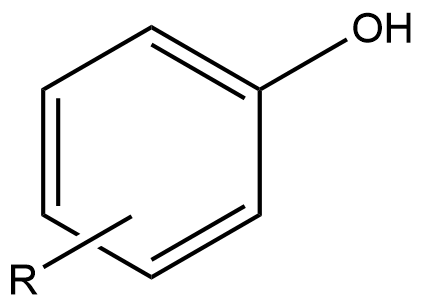
Production delays in chemical manufacturing rarely trace back to a single dramatic failure. More often, they stem from small inconsistencies—a late raw material shipment, a batch that fails spec, or a supplier that treats your order as just another line item. A dedicated supplier removes that uncertainty by aligning their entire operation with your production calendar. They maintain buffer stock of your critical inputs, monitor lead times proactively, and communicate potential disruptions before they reach your line. This level of attention turns procurement from a reactive scramble into a predictable rhythm.
The real value surfaces when schedules tighten. A dedicated supplier will re-sequence deliveries, split batches to cover urgent runs, or tap into alternate logistics routes without you having to ask. They understand that a two-day delay in a catalyst or solvent can idle an entire reactor train, so they build redundancy into their own supply chain. You are not negotiating priorities under pressure; the framework for flexibility already exists. That is the difference between a vendor who ships chemicals and a partner who keeps your reactors running.
Over time, this relationship compounds into measurable gains. Fewer rush orders mean lower freight costs and less overtime. Consistent material quality reduces rework and waste. And because your dedicated supplier tracks your usage patterns, they can suggest smarter order intervals or shelf-life optimizations that further protect your schedule. The outcome is not just on-time delivery—it is a manufacturing cadence you can actually plan around.
Quality Checks That Actually Matter for Hydroxy Intermediates
A batch of hydroxy intermediates can look perfectly clear on paper yet fail downstream for reasons no certificate of analysis ever flags. The checks that actually matter start with residual catalyst metals, not because specs demand it, but because even trace palladium or nickel poisons the next coupling step. We routinely run ICP-MS on every lot, then push the limit ten times lower than the pharmacopeia suggests, simply because polymerization side reactions have a way of hiding behind a clean HPLC trace.
Moisture content is another one that gets lip service but rarely gets tested properly. Karl Fischer titration on a sample that sat open on a bench for an hour is not a quality check; it is theater. Hydroxy groups love water, and a 0.2% swing in moisture changes stoichiometry enough to kill a yield. We sample from sealed drums under nitrogen, in triplicate, and reject anything above 0.05% for sensitive downstream chemistry.
Then there is the check nobody writes in a spec sheet: color stability over time. A pale yellow batch today may turn amber in three weeks due to trace aldehydes or peroxides. We store a retention sample at 40°C for 14 days and compare the absorbance at 420 nm against a frozen reference. If it drifts more than 0.1 AU, the lot gets quarantined, no matter how nice the initial assay looked. That is the difference between a supplier who ships molecules and one who ships problems.
Scaling Aromatic Hydroxy Intermediate Supply from Pilot to Production
Moving aromatic hydroxy intermediates from pilot scale to full production rarely follows a linear path. The jump in vessel size alters heat transfer rates, mixing efficiency, and residence time distributions, so parameters that worked in a 50-liter reactor can fail at 5,000 liters. Teams typically re-map temperature ramps, adjust catalyst loadings, and re-evaluate quench steps to avoid runaway exotherms or impurity spikes.
Supply chains become equally critical once production volumes rise. Aromatic hydroxy intermediates often depend on specific starting materials—substituted phenols, naphthols, or halogenated precursors—whose availability can fluctuate. Qualifying a second source for each raw material, setting tighter incoming specs, and validating alternate synthetic routes help prevent line stoppages. In parallel, batch records need more detailed in-process controls, because a minor deviation at scale can render an entire lot off-spec.
Finally, the equipment itself must be matched to the chemistry. Pilot-scale glassware may tolerate strong acids or bases without issue, but production reactors demand corrosion-resistant alloys, scrubber capacity for byproduct gases, and solvent recovery loops. Cross-functional reviews—process chemistry, engineering, EHS, and quality—usually expose gaps that are easy to overlook in early development. Treating these reviews as design gates rather than formalities keeps the scale-up schedule credible.
Custom Synthesis for Niche Aromatic Hydroxy Compounds
Many aromatic hydroxy compounds needed for research or specialty applications fall outside standard catalogs, especially when substitution patterns create steric or electronic quirks. A custom route often starts by evaluating the existing functionality on the ring and deciding whether direct hydroxylation is feasible or if a protecting group must be introduced first. Small-scale reactions with careful temperature control can preserve sensitive catechol or resorcinol derivatives that would otherwise oxidize during workup.
Regioselectivity remains the central hurdle. Ortho-lithiation followed by oxidation works for some electron-rich arenes, but it fails when competing coordination sites exist. In those cases, a diazonium salt intermediate may offer cleaner conversion, though the acidic conditions demand rapid isolation. Sometimes a biocatalytic step with a monooxygenase gives a hydroxylation pattern that is difficult to mimic by purely chemical means, especially on heavily substituted rings.
Purification of these polar, hydrogen-bonding molecules typically requires normal-phase chromatography with carefully chosen modifier acids to reduce streaking. Confirming both position and degree of hydroxylation relies on high-resolution mass spectrometry and 2D NMR rather than routine HPLC alone. For niche targets, the ability to adjust a route after the first few grams often matters more than scaling up immediately, since small structural changes can shift solubility and stability in unexpected ways.
Safe Handling and Storage for Moisture-Sensitive Intermediates
Moisture-sensitive intermediates rarely give you a second chance once they've been exposed to ambient humidity. Open containers only under inert gas or in a properly purged glovebox, and bring the material to room temperature before breaking the seal to reduce condensation. Transfer solids and liquids with dried syringes or spatulas, keeping exposure windows as short as possible.
Storage conditions depend on the compound's sensitivity profile, but a dedicated desiccator over activated molecular sieves or silica gel works for many materials. For long-term stability, purge the headspace with nitrogen or argon before resealing, then store at the temperature recommended in the batch record. Avoid freezer storage unless known to be safe; repeated freeze-thaw cycles can pull moisture inside through imperfect seals.
Label every container with the date first opened and the remaining moisture exposure budget if one has been established. Where feasible, split bulk material into single-use aliquots under inert atmosphere, so each reaction uses a fresh portion and the main stock isn't compromised by frequent opening. Rotate inventory on a first-in, first-out basis and quarantine any vial that shows caking, discoloration, or an unexpected pressure change when opened.
FAQ
We focus on substituted phenols, naphthols, and biphenyl derivatives with hydroxy functionality. Most are produced under tight impurity profiles, with residual solvents and metals controlled to ppm levels to fit downstream pharmaceutical and electronic-grade applications.
Every batch is validated against a master specification before release. We use HPLC, GC-MS, and ICP-MS for purity and trace metal analysis, and retain samples for three years so any lot can be retested if questions arise.
Yes. We run a dedicated kilo-lab and pilot plant for route scouting, impurity spike studies, and scale-up. Typical custom projects move from feasibility to multi-kilogram delivery in 8-14 weeks, depending on complexity.
Most hydroxy intermediates are packed under nitrogen in amber glass or fluorinated HDPE containers, with desiccant where needed. We advise storing below 25°C and away from direct light, and can provide stability data to justify shelf life.
For each shipment we supply certificates of analysis, safety data sheets, and statements of origin. For pharmaceutical intermediates, we can also prepare drug master file support or provide data packages for technical dossiers.
Standard catalog items ship within 3-5 business days from our regional warehouses. For custom or larger volumes, lead time is typically 4-6 weeks after QC release, though expedited options are available for critical timelines.
Yes, we provide 5g to 250g evaluation samples for most products. Samples are shipped with the same purity documentation as production lots so your analytical team can verify compatibility early.
We don't just resell material. In-house process engineers review each synthesis route for impurity carryover risks, and we perform forced degradation studies on request. That means fewer surprises when you scale up to manufacturing.
Conclusion
Running a high-purity chemical manufacturing line means aromatic hydroxy intermediates can quietly become the bottleneck if your supplier treats them like a commodity. We keep buffer stocks of the most common hydroxy compounds and pull directly from audited producers, so a late shipment doesn't force you to pause a reactor. But more than inventory, we watch your order pattern closely and adjust supply before you even ask. That kind of proactive coordination is what keeps your schedule intact when other vendors stall.
Quality checks here go beyond a basic COA. We measure isomer ratios, residual solvents, moisture levels, and actual purity curves because those details decide whether your downstream reaction works or fails. When you move from pilot to full production, we scale packaging and documentation without making you re-qualify a new source. For niche aromatic hydroxy compounds, custom synthesis covers route design through kilogram delivery. And since many of these intermediates pull moisture fast, we pack under dry inert gas and give straightforward storage guidance so you don't discover degradation halfway through a batch.
Contact Us
Contact Person: Wei Zhang
Email: [email protected]
Tel/WhatsApp: 862163529955
Website: https://www.dslchem.com