
Best FRP Grating Solutions: Your Ultimate Guide to Superior Performance and Durability
2026-03-17
In modern engineering and industrial applications, the demand for high-performance materials continues to grow. Among these, FRP gratings offer a unique blend of strength, durability, and versatility that makes them ideal for challenging environments. From chemical plants to offshore platforms, these solutions have proven their worth time and again. But with so many options on the market, how do you ensure you're getting the best possible product for your needs? That's where expertise and innovation come into play. At Sino Grating, we specialize in crafting FRP grating solutions that don't just meet standards—they exceed expectations. Our guide dives deep into what makes superior FRP gratings tick, exploring their benefits, applications, and the cutting-edge technology behind them. Whether you're an engineer looking to optimize a project or a business owner seeking reliable solutions, this ultimate guide will equip you with the knowledge to make informed decisions and achieve lasting performance. Let's begin by uncovering the key factors that set top-tier FRP gratings apart from the rest.
Discover the Benefits of High-Quality FRP Gratings for Long-Term Use
Investing in high-quality FRP (Fiberglass Reinforced Plastic) gratings isn't just about the initial cost—it's a smart decision for enduring performance. These gratings are designed to withstand harsh environments, from chemical plants to marine settings, without corroding or degrading like traditional metal options. Over time, this durability translates into fewer repairs and replacements, helping businesses save money while maintaining safe, reliable walkways and platforms.
Beyond their resistance to corrosion, top-tier FRP gratings offer exceptional strength-to-weight ratios, making them easier to install and handle compared to heavier materials. This lightweight nature doesn't compromise safety; they're built to support heavy loads and resist impacts, reducing the risk of accidents. As a result, facilities can enjoy long-term operational efficiency with minimal downtime, ensuring smooth workflows year after year.
Another key advantage is their non-conductive and fire-retardant properties, which enhance safety in electrical or high-risk areas. Combined with low maintenance needs—no painting or frequent inspections—high-quality FRP gratings provide a sustainable solution. By choosing these gratings, industries can achieve lasting value, promoting both safety and cost-effectiveness over decades of use.
Explore Advanced Installation Techniques for Maximum Safety and Efficiency
When it comes to installation, cutting corners often leads to costly mistakes and potential hazards. Advanced techniques focus on pre-installation planning, such as conducting thorough site assessments and using 3D modeling software to visualize the setup before any physical work begins. This proactive approach not only minimizes errors but also ensures that all safety protocols are integrated from the start, reducing risks like structural failures or electrical mishaps.
Efficiency is boosted by leveraging modern tools and methods, such as modular installation systems that allow for quick assembly and disassembly. For instance, in industrial settings, using prefabricated components can slash installation time by up to 50% while maintaining high precision. Pairing this with real-time monitoring during the process helps identify bottlenecks early, keeping projects on schedule without compromising on safety standards.
Ultimately, marrying safety with efficiency means adopting continuous improvement practices, like post-installation reviews and training for teams on the latest techniques. This not only safeguards against accidents but also optimizes long-term performance, making installations more resilient and cost-effective. Embrace these strategies to set a new benchmark in your projects.
Compare Materials: Why FRP Outperforms Traditional Options in Harsh Environments
When it comes to durability in extreme conditions, fiber-reinforced polymer (FRP) consistently proves its superiority over traditional materials like steel and wood. Unlike steel, which can corrode rapidly in salty or acidic atmospheres, FRP remains unfazed due to its inherent resistance to rust and chemical degradation. In offshore platforms or industrial plants where moisture and aggressive chemicals are constant threats, this means less frequent replacements and lower maintenance costs. Wood, on the other hand, is prone to rot and pest damage in wet or humid environments, making it a poor choice for long-term reliability. FRP's non-porous structure not only withstands these elements but also resists UV radiation and temperature fluctuations that would cause traditional materials to weaken or fail over time.
Strength-to-weight ratio is another key area where FRP shines compared to its conventional counterparts. Steel is heavy, which can lead to increased transportation and installation expenses, especially in remote or challenging sites like deserts or coastal areas. FRP is significantly lighter yet offers comparable or even superior tensile strength, allowing for easier handling and reduced structural loads. This lightweight nature also makes it ideal for applications like walkways or roofing in harsh environments, where minimizing weight without compromising safety is critical. Traditional options like concrete are bulky and can crack under thermal stress, whereas FRP's flexibility helps it absorb impacts and vibrations, maintaining integrity in seismic zones or windy conditions.
Beyond just physical properties, FRP provides unique advantages that traditional materials can't match in demanding settings. Its design flexibility allows for customization into complex shapes and sizes, enabling solutions tailored to specific harsh environments, such as custom piping for corrosive fluid transport or specialized enclosures for high-humidity areas. Moreover, FRP requires minimal upkeep, freeing up resources for other priorities. In contrast, metals often need regular coatings or treatments to prevent deterioration, and wood demands constant sealing against moisture. By reducing lifecycle costs and enhancing performance, FRP offers a smarter, more sustainable choice for projects where reliability and efficiency are paramount.
Innovative Design Features That Enhance Performance and Reduce Maintenance
Modern engineering integrates self-monitoring systems that continuously track performance metrics like temperature and vibration, allowing for predictive adjustments that prevent failures before they occur. This proactive approach not only boosts efficiency but also drastically cuts down on unexpected downtime, making operations smoother and more reliable.
By utilizing advanced materials such as graphene composites and self-healing polymers, these designs inherently resist wear and corrosion, which significantly extends the lifespan of components. This material innovation means fewer replacements and less frequent servicing, translating into lower long-term costs and reduced environmental impact from waste.
The inclusion of modular components allows for easy, tool-free replacements of specific parts without dismantling entire systems, streamlining maintenance tasks and minimizing operational disruptions. This user-friendly design empowers teams to handle upkeep quickly, keeping performance at peak levels without the need for extensive technical expertise.
Expert Tips for Selecting the Right FRP Grating for Your Specific Application
Selecting the perfect FRP grating begins with a thorough assessment of your project's unique demands. Instead of opting for the most common resin types, consider how factors like chemical exposure, UV resistance, and temperature fluctuations at your site might influence performance over time. For instance, in coastal areas or chemical plants, a vinyl ester resin often outperforms standard polyester due to its superior corrosion resistance, ensuring longevity even in harsh environments. Tailoring this choice can prevent unexpected failures and reduce long-term maintenance costs, making it a crucial first step.
Don't overlook the importance of grating design and load-bearing capacity specific to your application. Whether you're installing walkways in an industrial facility or platforms in a wastewater treatment plant, the grating's mesh size, thickness, and panel dimensions must align with the expected foot traffic and equipment loads. Consulting with suppliers who provide detailed load tables and case studies can help you avoid over-engineering or under-specifying, ensuring safety without unnecessary expense. This proactive approach not only meets regulatory standards but also enhances operational efficiency by minimizing slip hazards and fatigue.
Finally, factor in installation and environmental considerations that might differ from standard practices. For example, in settings prone to moisture or electrical hazards, opting for non-conductive FRP grating with added anti-slip surfaces can be a game-changer. Additionally, explore customization options like color coding for safety zones or integrating accessories such as handrails during the fabrication stage, which can streamline onsite assembly and reduce project timelines. By thinking beyond basic specs, you can achieve a solution that truly fits your operational needs and stands out in durability and functionality.
Success Stories: Real-World Examples of FRP Gratings in Action
When a chemical plant needed to revamp its walkways to withstand constant exposure to corrosive substances, the team opted for FRP gratings due to their non-corrosive properties and low maintenance. The installation not only reduced annual upkeep costs but also provided a safer environment for workers, preventing slippery surfaces in wet conditions. This decision showcases how FRP gratings can transform industrial safety by offering durable and cost-effective solutions that last for years without faltering.
In a coastal wastewater treatment facility, where saltwater and humidity pose a constant threat, traditional materials like steel quickly deteriorated. By switching to FRP gratings, the facility eliminated rust issues and extended the lifespan of its structures. The lightweight nature of the gratings simplified installation, allowing for quick upgrades without heavy machinery. This example highlights how FRP gratings excel in harsh environments, providing reliability that outperforms conventional options.
For a food processing plant, hygiene is paramount, and FRP gratings proved to be an ideal choice due to their easy-to-clean surfaces and resistance to bacterial growth. After implementation, the plant reported fewer contamination incidents and improved compliance with health regulations. The gratings' anti-slip surfaces also enhanced worker safety, making them a smart investment for industries where cleanliness and safety go hand in hand.
FAQ
FRP grating excels in corrosive and wet settings because it's non-conductive, rust-proof, and lightweight, offering long-term reliability where metals fail.
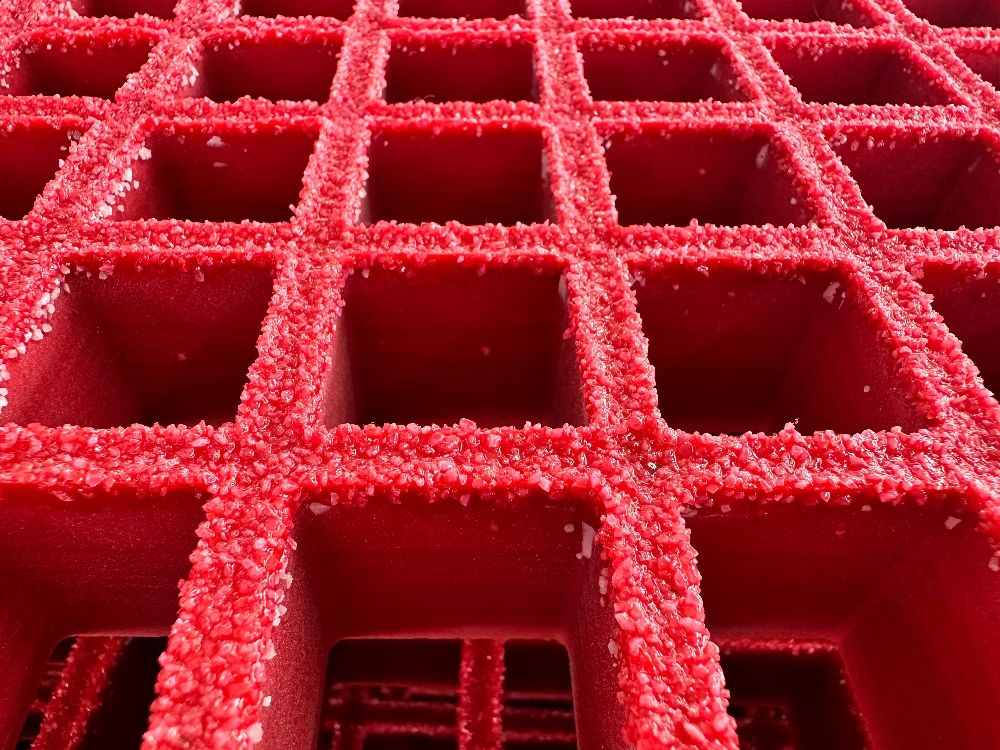
Its molded-in grit surface provides excellent slip resistance, even when oily or wet, reducing accidents without needing added coatings.
Yes, with proper resin formulations and fiber alignment, it maintains structural integrity under sustained weight, outperforming many alternatives in durability.
It's easy to cut and fit on-site with basic tools, speeding up projects and reducing labor costs compared to bulkier materials.
Minimal maintenance—no painting or anti-corrosion treatments—cuts expenses, making it cost-effective despite a higher initial price.
From marine boardwalks to renewable energy platforms, its versatility supports creative designs in sustainable and aesthetic projects.
It's often made with recycled content, reduces energy use in production, and lasts longer, lowering waste and carbon footprint.
Tailored colors, mesh sizes, and resin types allow precise matching to functional and visual needs, enhancing both performance and appearance.
Conclusion
FRP grating solutions offer a compelling blend of durability and performance, making them an excellent choice for long-term applications across various industries. High-quality FRP gratings provide significant benefits, including corrosion resistance, lightweight properties, and low maintenance requirements, which are crucial for harsh environments. By comparing materials, it's clear that FRP outperforms traditional options like steel or wood, especially in settings exposed to chemicals, moisture, or extreme temperatures. Innovative design features, such as anti-slip surfaces and customizable shapes, further enhance performance and safety, reducing the need for frequent repairs. When selecting the right FRP grating, expert tips emphasize considering factors like load capacity, environmental conditions, and specific application needs to ensure optimal fit and functionality.
Success stories from real-world examples highlight the practical advantages of FRP gratings in action, demonstrating their reliability in industrial, marine, and commercial settings. Advanced installation techniques contribute to maximum safety and efficiency, ensuring secure and long-lasting setups. This guide serves as an ultimate resource for superior performance, helping users make informed decisions that lead to cost savings and enhanced durability over time. By integrating these aspects, FRP grating solutions stand out as a versatile and resilient option, backed by proven results and expert insights for diverse projects.
Contact Us
Contact Person: Nicholas Zhu
Email: [email protected]
Tel/WhatsApp: 18921275456
Website: https://www.sino-grate.com