

Calcium Chloride 94% Granules Factory: Inside a High-Purity Production Line
2026-11-02
What really happens inside a calcium chloride 94% granules factory? It’s not just mixing and bagging—high-purity production demands obsessive control over moisture, mesh size, and reaction time. Shouguang Golden Chemical opens its doors to show why 94% isn’t a casual number, but a promise. Keep reading for a rare look at the line where consistency is engineered, not assumed.
What Goes Into a 94% Calcium Chloride Granule
Most of a 94% calcium chloride granule is, as the name suggests, calcium chloride itself. The 94% figure is measured on an anhydrous basis, which means the actual granule includes both the CaCl₂ molecules and a small amount of bound water that naturally associates with the salt. The remaining few percentage points are typically made up of sodium chloride, potassium chloride, and traces of magnesium chloride that ride along from the brine or limestone sources used in production.
Calcium chloride is hygroscopic, so even a high-purity granule will pull moisture from the air and hold it within the solid structure. This is why the material often feels slightly damp or develops a thin surface film in humid conditions. It is not a sign of poor quality; the moisture is part of how the product behaves. In some formulations, a minimal amount of anti-caking treatment or dust suppressant may also be present, but it rarely exceeds a fraction of a percent.
Compared with lower-purity calcium chloride, a 94% granule leaves less insoluble residue behind when dissolved. The insoluble fraction is usually tiny—often under a tenth of a percent—and consists mostly of naturally occurring mineral fines. This balance of purity, controlled moisture, and low residue is what makes the 94% grade practical for deicing, dust control, and industrial mixing where predictable performance matters.
The Reactor Room Where Purity Begins
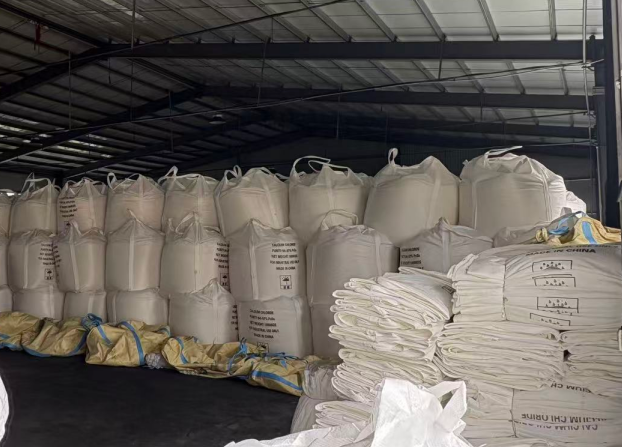
Inside the reactor room, every surface and airflow pattern is tuned to a single obsession: keeping contamination at impossible lows. The air itself is pushed through HEPA and ULPA filters until it carries fewer particles than a cleanroom ever sees. Polished stainless steel and electropolished gas lines reflect the amber glow of status indicators, while the actual work happens behind quartz viewports and thick chamber walls. It's quiet enough to hear the faint click of a mass flow controller adjusting a gas stream by a fraction of a percent.
Purity, in this space, is not an abstract ideal. It is measured in parts per trillion and defended with brutal routine. Before a deposition or etch cycle, the chamber is baked, purged, and leak-tested; residual moisture and oxygen are driven down until even the most sensitive sensor barely registers them. Operators move with deliberate slowness, aware that a single hair, a flake of skin, or a microscopic metal sliver can ruin an entire lot. Inside the reactor, ultra-pure quartz, silicon carbide, or specially coated alloys are chosen because they do not shed particles or outgas under extreme heat and corrosive plasma. Every gas line is welded, not threaded, to eliminate dead zones where impurities could hide.
What leaves this room is rarely a finished product. It is the quiet foundation that makes everything else possible: a film deposited with near-atomic uniformity, a doping profile exact to the nanometer, or an epitaxial layer so clean that electrons travel through it without scattering. The rest of the fab depends on this discipline. If the reactor room ever loosened its grip on purity, no amount of downstream correction could bring the process back.
Granulation Without the Dust and Fines
Granulation often comes with a hidden trade-off: the very process that turns fine powders into larger, free-flowing granules also generates unwanted dust and fines. But what if you could achieve the same particle enlargement without the messy by-products? Modern dry granulation techniques, particularly roller compaction, make this possible by using pressure rather than moisture to bind particles. The result is a cleaner operation with less material loss, fewer dust collection headaches, and a safer working environment.
The key lies in controlling particle size distribution from the start. Instead of accepting dust as an inevitable side effect, you can design the compaction and milling steps to minimize fine generation. Adjusting roll force, gap width, and screen size allows you to produce granules that are sturdy enough to hold their shape yet soft enough to break down when needed. This approach not only eliminates the need for extensive dedusting equipment but also preserves the integrity of your formulation, especially for moisture- or heat-sensitive ingredients.
In practice, achieving granulation without dust and fines means rethinking your process parameters rather than adding more downstream filters. Focus on the interaction between feed consistency and roll surface design. A smooth, uniform feed results in denser compacts with fewer weak edges that later crumble into fines. By fine-tuning these variables, you can shift from a reactive dust-management mindset to a proactive granule-design one, cutting waste and improving product uniformity in a single step.
Why Drying Temperature Decides the Final Hardness
The temperature at which a coating, adhesive, or resin is dried does more than simply evaporate water or solvent. It controls how tightly the remaining molecules can pack together before the film locks into place. At lower temperatures, evaporation slows down, giving chains time to relax and settle into a looser, more open network. That open structure typically translates into a softer finish because there is more free volume between the polymer segments.
Raise the drying temperature and the situation changes quickly. Heat accelerates solvent or moisture loss, forcing the material to reach its solid state before the molecules have a chance to arrange themselves in a low-stress configuration. The result is a denser, more constrained matrix. In many systems, this densification also promotes additional crosslinking reactions or crystallite formation, both of which push the final hardness upward.
There is a practical limit, of course. Excessive heat can create a hard skin on the surface while the interior remains under-dried, or it can trigger thermal degradation that weakens the film. The key is to match the drying temperature to the chemistry of the material so that the final hardness comes from controlled molecular packing and reaction completion rather than accidental overheating.
The Screening Gauntlet That Rejects Off-Spec Material
Every incoming batch moves through a sequence of stations that measure, weigh, and compare against tolerances far tighter than what the naked eye would catch. A load that looks uniform on the surface can still fail on moisture content, particle distribution, or trace contamination. The gauntlet isn't a single gate; it's a deliberate chain where each checkpoint removes what the previous one couldn't see.
Rejection at any point sends the material back before it can mix with accepted stock, so off-spec lots never have a chance to dilute the line. Operators log the specific failure mode, which feeds back into upstream adjustments. Over time, the reject rate becomes less about catching bad batches and more about teaching the system to avoid producing them in the first place.
Packing for the Long Haul Without Caking
Moisture is the main enemy when powders travel over long distances. Even a small shift in humidity can cause particles to clump together, especially if the product sits in a shipping container through temperature swings. Before choosing a package, check the powder's moisture content and aim for the lowest stable level your process allows. A product that leaves the plant slightly damp will almost certainly cake by the time it reaches the customer.
Layer your defenses. A multi-wall bag with a foil or plastic liner works well for many dry foods and supplements. Toss in a food-grade desiccant packet sized to the package volume, and seal the top with a heat sealer rather than a simple tie. For products that are especially sensitive, consider adding a small amount of an anti-caking agent like silicon dioxide, but check your label requirements first. Rigid containers with airtight lids can also be a smarter choice for long sea or road freight.
Pallet and container conditions matter just as much as the primary package. If a pallet is wrapped tightly in stretch film and then moved from a cold warehouse into a warm, humid loading dock, condensation can form inside the wrap. Let packages acclimate before sealing them into a container, and use desiccant blankets or moisture-absorbing mats under the pallets. A little extra care during loading prevents the rock-hard clumps that frustrate end users.
FAQ
It refers to the minimum calcium chloride content by weight in the finished granules. The remaining fraction includes water of crystallization and trace amounts of sodium chloride and calcium hydroxide carried over from the limestone and hydrochloric acid reaction.
Food-grade limestone and synthetic hydrochloric acid are the primary inputs. The limestone is crushed, screened, and sometimes calcined before being reacted under controlled conditions. Using synthetic acid instead of byproduct acid keeps iron and magnesium levels low.
After concentration, the hot liquid is sprayed into a prilling tower or fed through a granulator with recycled fines. The goal is a uniform, hard granule that resists crushing in transit but still dissolves quickly when added to water.
The line runs under negative pressure in the drying and cooling sections, and the final packaging area is humidity-controlled. Granules pass through fluidized-bed dryers that reduce surface moisture to below 0.5% before they reach the bagging station.
A lot goes into oil and gas drilling fluids, where the 94% grade balances performance and cost. Other buyers use it for concrete acceleration, dust suppression on mine roads, and de-icing commercial properties. Some food processors also request this purity for brine systems, though they usually want an extra certificate of analysis.
The lab pulls samples every two hours from the line, not just from the final hopper. They run complexometric titration for calcium chloride content, check pH, and measure insoluble matter. If the titration reads below 94.2%, that material is diverted back to the dissolver instead of being bagged.
Evaporation capacity. Turning a 30% calcium chloride solution into a melt that can be granulated requires a lot of steam, and the evaporators are usually the limiting factor. Plants often run three shifts just to keep the evaporators hot, because shutting them down costs more than running them continuously.
Yes, significantly. The factory targets a 2–4 mm range with low fines. Larger, uniform granules dissolve more slowly than flakes, which is useful for de-icing because it provides longer residual action. For drilling fluids, the consistent size helps with metering and reduces dust.
Conclusion
Inside a high-purity calcium chloride 94% granules factory, the production line starts with carefully selected raw materials and a reactor room where purity truly begins. Here, precise stoichiometric control and advanced mixing eliminate unwanted ions before the solution ever moves downstream. The granulation step is engineered to form dense, uniform granules without generating dust or fines—a common problem in lower-grade operations. Drying temperature is not just a setting; it directly dictates the final hardness of each granule, with tight thermal profiles ensuring the product survives handling and storage without crumbling.
Once dried, the granules face a screening gauntlet that rejects any off-spec material, enforcing a narrow size distribution that customers rely on. The final packing stage is designed for the long haul, incorporating moisture barriers and anti-caking treatments so the product remains free-flowing even after months in a warehouse. From raw feedstock to sealed bags, every step on this line is tuned to deliver a 94% calcium chloride granule that meets strict industrial demands without compromise.
Contact Us
Contact Person: Tom Cui
Email: [email protected]
Tel/WhatsApp: +8618663670626
Website: https://www.jinjigoldenchem.com