

China Conference Chair: How to Select Comfortable and Stylish Seating for Your Meeting Room
2026-11-02
Choosing conference chairs for your meeting room isn't just about filling seats. It's about striking the right balance between comfort for long strategy sessions and a look that reflects your company's style. China has become a hub for high-quality, design-forward conference seating, but not every chair lives up to the promise. In this guide, we'll walk you through what to look for, and why OFCJNS is a name worth knowing before you outfit your space.
Beyond the Price Tag: Evaluating Seat Comfort in Real Meeting Scenarios
A seat can look impressive on a showroom floor and still turn a 45-minute project update into an exercise in endurance. The real test happens when people stop thinking about the chair and start focusing on the discussion. If someone is constantly readjusting, leaning forward to relieve pressure, or crossing and uncrossing their legs, the seat has already failed—even if the price tag suggested otherwise.
In actual meeting rooms, comfort comes down to how well a chair supports small, unconscious movements. A seat that allows a slight tilt, offers enough depth without cutting into the back of the knees, and keeps the lower back engaged without forcing a single posture will keep attention on the agenda instead of on physical strain. Materials also matter: a fabric that stays cool through a long brainstorming session can prevent the fidgeting that derails conversations.
Testing should therefore mimic meeting conditions. Sit through a full agenda, lean sideways to reach a document, swivel to face a whiteboard, and note whether the armrests stay useful at various heights. Those details rarely appear in a catalog, but they determine whether a meeting ends with clear takeaways or with everyone quietly counting the minutes until they can stand up.
Fabric, Mesh, or Leather: Which Surface Suits Your Meeting Culture?
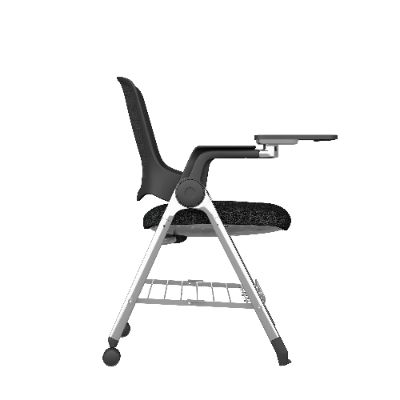
Meeting rooms reveal more about a company's tempo than any mission statement, and the chair surface is often the quietest signal. Fabric tends to suit cultures where conversations linger—strategy reviews, design critiques, post-mortems—because it softens both acoustics and posture, making an hour feel less like a sentence. If your calendar is stacked with back-to-back syncs, mesh keeps the atmosphere light and literal, letting air move while ideas bounce. Leather, by contrast, announces that this room is for decisions, not debates; it holds its shape and so, often, do the people in it.
Think of the surface as a participation filter. A mesh chair forgives a slouch and suits standing-heavy or walk-and-talk teams that only sit for the hard parts. Fabric invites a certain informality—coffee on the edge of the table, laptops half-closed, someone leaning in to sketch on a notepad. Leather raises the stakes: it creaks, it warms slowly, and it suggests that whoever sits there should have something worth saying. The wrong choice isn't a failure of taste; it's a mismatch between how long your meetings actually run and how much comfort you're willing to trade for authority.
Durability also maps to meeting culture. Fabric hides wear until it doesn't, much like a team that tolerates friction until a project cracks. Mesh shows its age through sag and snap, a reminder that lightweight structures need regular attention. Leather, if maintained, can outlast several reorgs, but it punishes neglect with cracks and a stale sheen—not unlike a culture that leans on formality without genuine upkeep. The surface you choose should match not the room's aesthetic, but the rhythm of attention, argument, and resolution your meetings actually produce.
Chair Dimensions That Work With Standard Conference Tables
Most conference tables sit between 28 and 30 inches high, which means your chairs need a seat height that leaves at least 7 to 10 inches of knee clearance underneath. Fixed-height chairs around 17 to 19 inches usually fit well, but if you want flexibility for different body types, look for pneumatic or adjustable models that cover roughly 16 to 21 inches.
Width and depth matter just as much when you're lining up chairs along a long boardroom table. A chair that's 23 to 26 inches wide gives people enough room to sit comfortably without elbows colliding, while a depth of 20 to 24 inches keeps the seat from jutting too far into the walkway behind. For tighter spaces, skip bulky armrests or choose low-profile arms that can slide under the table edge.
Leave about 24 to 30 inches from the center of one chair to the next, and you'll avoid that cramped shoulder-to-shoulder feeling during longer meetings. If your table has a solid apron or modesty panel, double-check the clearance before buying—an otherwise perfect chair can become a knee-banger if the seat is too high or the armrests don't tuck in.
The Role of Armrests and Backrest Recline in Long Sessions
Spending hours in the same chair makes small adjustments feel bigger than they are. Armrests and backrest recline are not just luxury add-ons; they determine whether your shoulders stay relaxed or creep toward your ears by mid-afternoon. The right combination spreads load across your upper body and lower back, letting you shift position without losing support.
Armrests earn their keep when they match the natural height of your elbows. Too low and you lean sideways to rest a forearm; too high and you shrug without noticing. Width and pivot range matter just as much, especially if you switch between typing and reading. A well-placed armrest takes weight off the neck and traps, which is often the first place fatigue shows up.
Backrest recline adds a second layer of relief. A slight recline—around 100 to 110 degrees—opens the hip angle and reduces pressure on spinal discs compared to sitting bolt upright. Pair that with adjustable lumbar support and you can alternate between upright focus and reclined breathing room. The goal is not one perfect position but the freedom to move among two or three supported ones throughout the day.
How to Spot Strong Welds and Durable Casters Before You Buy
A quick visual pass over the weld line tells you more than most spec sheets. Look for a consistent, slightly rippled bead with no pinholes, undercut edges, or random splatter. If the bead looks lumpy in one spot and paper-thin in another, that’s a sign of uneven heat or a rushed hand. Run your fingernail along the seam—smooth transitions usually mean solid fusion, while a sharp notch or visible crack is an automatic pass.
Don’t just spin the wheel once and call it good. Grip the caster frame and try to rock the wheel side to side; a durable caster should have almost no slop in the axle or swivel race. Then lift the unit and give the wheel a firm flick. It should keep spinning for a couple of seconds without growling, clicking, or wobbling. Any grinding noise usually points to cheap bearings or misaligned mounting plates.
Pay attention to the metal around the mounting plate, too. A strong caster often has a thicker top plate that doesn’t flex when you press a thumb into its center. Tap the weld area lightly with a coin or key—if it rings clearly, the metal is dense and well-fused; a dull thud can indicate internal voids or poor penetration. Finally, check for even coating coverage, since rust creeping out of a seam is often the first clue that a weld wasn’t cleaned properly before finishing.
Styling Chinese Conference Chairs for Modern and Traditional Interiors
Blending the clean geometry of Ming-style joinery with a slender steel frame gives a conference room an unexpected anchor piece. The key is restraint: keep the chair's curved backrest and solid wood armrests intact, then pair them with a matte charcoal or warm graphite finish so the silhouette reads contemporary rather than period. In rooms with concrete floors or glass partitions, this contrast makes the seating feel curated instead of old-fashioned.
For traditional interiors, leaning into the chair's natural materials works better than forcing a lacquered shine. A hand-rubbed oil finish on elm or walnut, combined with a neutral linen or wool cushion, lets the wood grain stay visible while softening the formality. Place these chairs around a long boardroom table with muted wall paneling and a single pendant light, and the space feels grounded without turning into a museum replica.
Another route is to mix finishes across the same chair family. Use dark stained frames at the head of the table and lighter, wire-brushed versions along the sides to create visual rhythm. Swap out standard fabric for a textured boucle or a fine herringbone weave, and the chairs start to hold their own against both leather executive seating and minimalist Scandinavian side tables. The goal is coherence, not costume.
FAQ
Comfort comes before looks. Look for a chair with adequate lumbar support, a padded seat that doesn't compress after an hour, and a backrest angle that lets people lean back slightly without tipping. If the chair feels good after sitting for ten minutes, it's likely fine for a two-hour session.
Focus on the silhouette and upholstery. A slim profile with a curved backrest reads as contemporary, while breathable mesh or a matte fabric in a warm neutral tone avoids the sterile office look. You can also mix two-tone colors, dark frame with lighter seat, to add style without sacrificing ergonomics.
Many Chinese manufacturers now produce conference chairs that meet international standards like BIFMA or EN 1335. Ask for the weight capacity, warranty length, and whether the chair has undergone cycle testing for the gas lift and casters. A solid chair from a reputable factory will easily handle daily meeting room use.
Go with abrasion-resistant fabrics rated at 50,000 double rubs or higher, or top-grain leather if the budget allows. For the frame, powder-coated steel or reinforced nylon is durable and easy to clean. Avoid thin bonded leather that peels after a year and armrests made from cheap hollow plastic.
It depends on how often you reconfigure the space. If the room doubles as a training area or event space, stackable chairs let you clear the floor in minutes. Look for models with a linking mechanism or a dolly system, otherwise you will waste time dragging chairs one by one.
A seat height range of 17 to 20 inches covers most adults when paired with a standard 29-inch table. The seat pan should be at least 18 inches wide and 16 to 18 inches deep so people with longer legs don't feel squeezed. Always test the chair with different body types before buying a whole set.
Wipe down fabric or leather with a mild cleaner every month and vacuum crevices to prevent dust buildup. Tighten screws and bolts twice a year, and check the gas lift for smooth movement. Keep a few spare casters and armrest caps on hand for quick fixes rather than replacing the entire chair.
Conclusion
Selecting a conference chair in China goes far beyond comparing price tags. You need to imagine a three-hour strategy meeting where someone is shifting every ten minutes, or a client presentation where an uncomfortable seat becomes a silent distraction. Comfort starts with the surface material. Mesh breathes well in humid southern offices and keeps people cool during long discussions, while leather adds a sense of formality and is easier to wipe clean after coffee spills. Fabric offers a middle ground with softer acoustics and a warmer feel. Whichever you choose, pay attention to how the seat and back actually perform under real use. Chair height and depth should pair naturally with standard conference tables—most Chinese meeting tables sit around 75 cm high, so the seat height range must allow shorter and taller participants to rest their feet flat. Armrests are not just decorative; they should support elbows without blocking the chair from sliding under the table. A backrest that reclines a few degrees can relieve lower back pressure during extended sessions, but it needs a smooth tilt mechanism that doesn't snap back abruptly.
Durability is the other half of the equation. Before buying, turn the chair upside down and inspect the weld points where the frame meets the base—look for smooth, continuous beads rather than spotty or rough joins. Casters should roll quietly on both carpet and hard flooring without scratching the surface. In China's mixed office environments, many meeting rooms combine modern minimalist design with subtle traditional elements like wood accents or ink-wash art. A chair with clean lines and a neutral upholstery color bridges both styles well. Avoid overly bulky executive designs that dominate a small room. Instead, think of the chairs as a quiet backdrop: they should feel comfortable enough to disappear during the conversation, yet sturdy and refined enough to leave a lasting impression on visitors. Testing a sample chair for a full week with real meetings is the most reliable way to confirm you've made the right choice.
Contact Us
Contact Person: Diff Wang
Email: [email protected]
Tel/WhatsApp: +8613650281199
Website: https://www.ofcmeshchair.com/