
China Cutter Suction Dredger Supplier Selection Guide for International Dredging Projects
2026-11-02
Selecting the right cutter suction dredger supplier for international dredging projects can be a make-or-break decision. From varying site conditions to tight deadlines, every choice matters. This guide cuts through the noise, drawing on real-world insights and a closer look at YaKai Dredger to help you evaluate suppliers with confidence.
What Separates a Reliable Dredger Builder from a Short-Term Exporter
A reliable dredger builder treats every vessel as a long-term commitment rather than a one-off transaction. Instead of chasing quick deals, they invest in engineering depth—hull reinforcements, pump metallurgy, and control systems that hold up after thousands of operating hours. You can feel the difference in the details: wiring harnesses routed away from vibration points, wear plates sized for actual slurry abrasion, and documentation that doesn't vanish once the invoice clears.
Short-term exporters, by contrast, often optimize for container dimensions and port fees. They ship a machine that looks right on paper but starts showing cracks—literally and operationally—within the first season. There is no spare parts strategy, no local service network, and no one to call when a ladder bearing seizes in a remote canal. The price tag may be lower, but the hidden cost arrives in downtime, improvised fixes, and eventually a full replacement.
What separates the two is not just build quality but accountability. A committed builder stands behind their dredger with field support, performance guarantees, and a willingness to modify designs for specific soil conditions. They ask about your project depth, production targets, and discharge distance before quoting a price. That conversation alone often tells you which category you're dealing with.
Why Sediment Type Should Drive Your Cutter Head and Pump Decisions
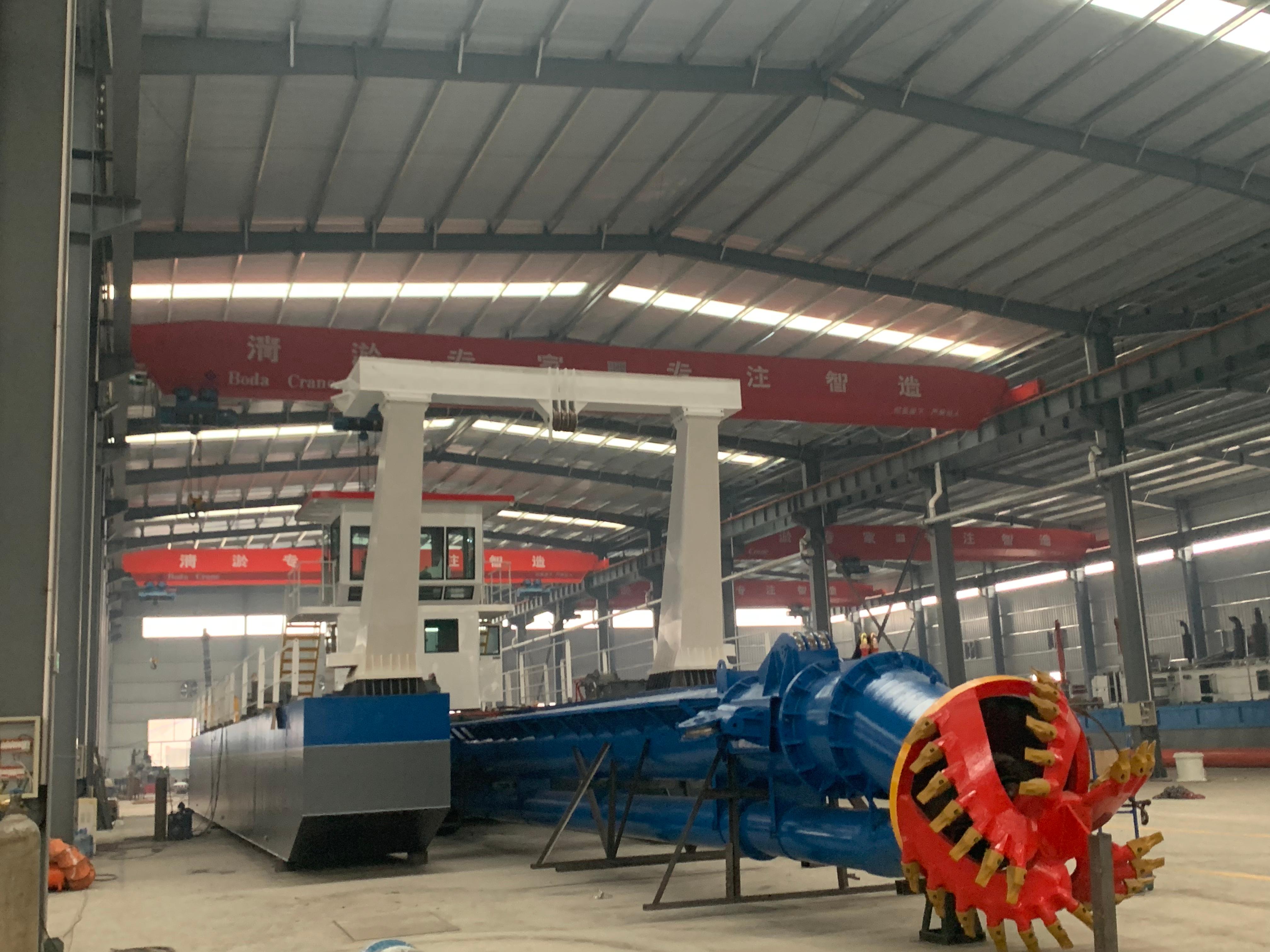
The ground you’re cutting through isn’t just background noise—it dictates every meaningful choice you make about your cutter head and pump setup. Clay, sand, gravel, and rock each punish equipment in their own way, and treating them as interchangeable is how projects burn through budgets and deadlines. Clay sticks and balls up, demanding open cutter head designs with high torque and low rotation speed, while sandy soils push you toward hardened surfaces and pumps that can handle constant abrasion without choking. Ignore these differences, and you’ll be pulling a clogged cutter head out of the hole before lunch.
The pump side is just as unforgiving. Fine silts and clays need higher viscosity handling and slower impeller speeds to avoid shear thickening, while coarse gravel demands a pump that can pass large solids without jamming. A pump selected for one sediment profile can tear itself apart in another—seals fail, impellers wear unevenly, and suddenly your slurry line pressure drops and the tunnel face destabilizes. Matching the pump curve to the actual grain size distribution and plasticity index isn’t an engineering luxury; it’s the difference between steady advance and emergency maintenance shifts.
Experienced tunnel crews read the muck coming off the conveyor and adjust on the fly: adding water or polymers for sticky clays, swapping cutter tools for mixed faces, or dialing bypass valves to handle sudden sand lenses. But the smartest decisions happen before the first push, when the geotechnical report meets the equipment spec sheet. If you’re not letting sediment type drive your cutter head and pump choices, you’re gambling with someone else’s schedule—and the ground always wins that bet.
Checking a Yard’s Real Capacity Before You Sign the Build Contract
Most people glance at the lot size and assume the whole yard is buildable. That rarely holds up. Setbacks, easements, drainage channels, slopes, and protected trees can quietly eat away at usable space. Walk the property with a tape measure and mark out where the structure would actually sit, including overhangs and access paths. If the remaining flat, clear area feels tight on paper, it will feel tighter once equipment and material deliveries start moving around.
Soil and drainage often matter more than square footage. A yard that looks solid can hide expansive clay, shallow bedrock, or a high water table. Digging a few test holes or hiring a local geotechnical engineer for a quick look can reveal whether you are dealing with standard footings or something far more expensive. Water flow after a heavy rain is another giveaway—watch where it pools and where it runs. That line tells you more about future foundation and landscaping costs than any listing photo.
Finally, think through what the yard can actually connect to. A new build may need power, water, sewer or septic, and stormwater management. If the existing services are at the opposite end of the property or undersized, the upgrade can reshape your budget before the first wall goes up. Ask the local building department about current requirements, not what the previous owner got away with years ago. Signing a contract without these checks turns the yard into a guess, and guesses are expensive to fix.
Spare Parts, Service Teams, and the Hidden Cost of Downtime
A machine standing idle rarely announces itself with a warning light. It just stops, and then the real race begins. Every hour of unplanned downtime pulls money out of the operation — not only in lost production but in rushed freight, overtime labor, and the quiet erosion of customer trust. What often gets overlooked is how much of that downtime could have been avoided if the right spare part had been sitting on a shelf, or if the service team had clear visibility into what was already broken before the failure cascaded.
Spare parts strategy is less about having everything and more about knowing which failures are most likely, most costly, and most preventable. A critical bearing for a packaging line may cost two hundred dollars, but waiting three days for it can mean tens of thousands in lost output. Service teams, on the other hand, are the human side of uptime. Their ability to diagnose fast, communicate clearly, and fix once instead of twice is what turns a parts inventory from a pile of boxes into actual reliability. When technicians are forced to work with incomplete histories or guesswork, even the best-stocked storeroom can't save the schedule.
The hidden cost of downtime is rarely a single line item. It spreads across expedited orders, missed delivery windows, idle operators, and the slow drift of maintenance from proactive to reactive. Companies that track only direct repair costs often miss the larger pattern: repeated failures of the same component, long intervals between failure and repair, and service teams running from one emergency to the next. Building a system that connects spare parts data with service team feedback — what broke, what was missing, what took too long — closes that gap. Downtime stops being a surprise and starts becoming a number that can be managed down, one informed decision at a time.
How to Avoid Common Export Documentation and Delivery Delays
Discrepancies between the commercial invoice, packing list, and bill of lading are a frequent trigger for customs holds. Set up a side-by-side review of all three documents before submission, checking that weights, quantities, and descriptions match exactly. For regulated destinations, keep a current checklist of country-specific certificates or permits so nothing gets overlooked on the day of shipment.
Incorrect HS codes or vague goods descriptions often slow clearance and can lead to additional inspections. Confirm the classification with your customs broker early in the order process rather than guessing at the last minute. Also clarify Incoterms in writing with the buyer—spelling out who arranges freight, insurance, and import clearance removes confusion that might otherwise cause goods to sit at a port.
Schedule realistic departure and arrival dates that account for port congestion, weather, and potential document reviews. When delays do occur, notify the buyer immediately with the updated timeline instead of waiting for them to ask. This small habit reduces disputes and keeps future shipments moving without repeated bottlenecks.
Moving From One-Time Purchase to a Dredging Partner for Future Projects
Buying a dredge used to feel like a transaction—sign the papers, get the keys, and hope the machine holds up until the next capital budget cycle. That approach works until a project runs into unexpected silt layers or a pump fails mid-season. Then you're stuck making frantic calls to whoever happens to have spare parts in stock. Shifting to a dredging partner changes that whole dynamic. Instead of a one-off sale, you get a team that tracks your operating hours, knows your site conditions, and can recommend adjustments before a small issue turns into a week of downtime.
A real partner doesn't disappear after the invoice clears. They stay involved through commissioning, operator training, and the first few thousand hours of wear. If your project scope expands—say, a marina expansion or a new sediment disposal plan—you're not starting from scratch with another vendor. You're building on shared history, which means faster mobilizations and fewer surprises. Some contractors resist this because it feels like giving up control, but the ones who make the switch rarely go back to transactional buying.
The financial side matters too. A partner can structure buyback options, lease-to-own arrangements, or guaranteed maintenance intervals that align with your contract pipeline. That's not something you get from a catalog price sheet. When the next project comes up, you're not shopping around again—you're calling someone who already knows your crew, your water conditions, and your tolerance for risk. That kind of continuity has a value that's hard to put on an invoice, but you'll notice it every time a dredge fires up without a hitch.
FAQ
Focus on the shipyard's export track record, especially in similar water and soil conditions. Request references from past international clients and verify that delivered vessels actually achieved the specified dredging depth, output, and uptime, not just brochure numbers.
Many yards offer modular designs and can adjust ladder length, cutter drive, and spud systems to site conditions. The real difference shows in engineering support: some provide detailed soil analysis and pump curve matching, while others simply sell a standard hull with minimal changes.
Installed power, dredging depth, discharge distance, and maximum particle size are the baseline. Equally important are dredge pump material, cutter tooth options, and whether the control system supports remote diagnostics, because downtime in remote locations gets expensive quickly.
Assuming all certifications are genuine without third-party inspection is a frequent mistake. Buyers also overlook spare parts availability and commissioning support. A low price can disappear if you must fly in technicians repeatedly or wait months for a critical pump component.
Ask for a factory acceptance test with an independent surveyor present. For critical values like slurry concentration and production rate, request performance bonds tied to sea trials or the first month of operation. Some suppliers will also invite you to visit an active job site where a similar unit is working.
Usually a proven standard hull with customized dredging depth and pump arrangement is safer than a fully bespoke design. Full customization adds engineering risk and delivery time, but if the project has very specific soil or draft limits, customization may be the only way to meet the tender.
At minimum, include a commissioning engineer on site for two to four weeks, a twelve-month warranty on main equipment, and an agreed spare parts list shipped with the vessel. Also clarify response time for remote support and whether the warranty covers wear parts like cutter teeth and impellers.
Chinese units often deliver more installed power per dollar and shorter lead times, but documentation quality and resale value can lag. For projects where budget or local content is the main constraint, a well-selected Chinese dredger can be highly competitive; for premium certification requirements, you may need to pay extra for upgrades.
Conclusion
Choosing a cutter suction dredger supplier in China for international projects means looking beyond the glossy brochures and trade-show handshakes. A reliable builder proves itself through a track record of completed overseas deliveries, transparent factory audits, and a willingness to share references from past clients. Short-term exporters often vanish after the final payment, leaving buyers to wrestle with mismatched spare parts and untraceable warranties. Instead, focus on yards that own their production lines, maintain in-house engineering teams, and can walk you through their welding and machining processes without hesitation. Ask about previous projects with similar soil conditions: rock, silt, or dense clay each demand different cutter head designs, pump clearances, and drive power. A builder who questions your sediment report before quoting is more trustworthy than one who promises a universal solution.
Before signing, verify the yard's real capacity by checking current workload, number of skilled welders, and whether they subcontract hull fabrication or control it onsite. Spare parts strategy matters as much as the dredger itself: a supplier with a regional service partner or stocked warehouse in your project country can reduce downtime dramatically, while a low upfront price erodes quickly if every impeller replacement waits for a sea freight container from China. Export documentation and delivery delays are common failure points, so work with yards that assign a dedicated logistics coordinator and provide complete HS codes, packing lists, and third-party inspection reports without extra charges. Ultimately, treat the first purchase as a trial run. A genuine dredging partner will proactively suggest wear-part upgrades, monitor performance remotely, and help you plan for the next project rather than chasing the next invoice.
Contact Us
Contact Person: Nancy
Email: [email protected]
Tel/WhatsApp: (+86) 13869631558
Website: https://www.yakaidredger.com/