

Chinese Inkjet Marking Systems: Advancing Precision and Efficiency in Industrial Coding
2026-08-08
Precision and efficiency define the next era of industrial coding, where every dot, line, and character must be flawless. In the rapidly evolving landscape of marking technology, Danmajet inkjet systems are rewriting the rules—combining speed, accuracy, and durability to meet the most demanding production lines. This post dives into how Chinese innovation is elevating marking solutions, and why Danmajet stands out as a key player in this transformation.
Redefining Precision: How Chinese Inkjet Systems Excel
Where traditional inkjet heads once struggled with consistency at high speeds, Chinese-engineered systems now deliver droplet placement within single-micron tolerances, even on curved or textured surfaces. This leap comes from closed-loop feedback circuits that read nozzle performance in real time, coupled with piezoelectric actuators milled from monolithic ceramics rather than layered composites. The result is not just finer detail, but a sharp reduction in satellite droplets that typically marred edges on packaging films and industrial labels.
The secret extends into the chemistry as well. By formulating UV-curable inks with nanoscale pigment dispersions and precisely tuned surface tension, these systems achieve instant adhesion on substrates that previously demanded corona or plasma pretreatment. A print line running at 80 meters per minute can shift from glossy coated paper to raw aluminum without swapping hardware or recalibrating the waveform, because the software automatically adjusts firing voltage and meniscus pressure based on real-time rheological feedback.
Perhaps the biggest departure is how these machines rethink the entire print workflow. Instead of relying on static compensation tables, they use onboard machine learning to predict nozzle health and compensate for subtle timing drifts before they become visible artifacts. This transforms routine maintenance from reactive cleaning cycles into predictive, non-stop operation—pushing OEE (Overall Equipment Effectiveness) numbers into territory once reserved for analog rotary presses. In short, precision here is not a specification on a datasheet; it’s a dynamic, self-correcting capability that redefines what digital inkjet can reliably produce.
Streamlining Industrial Coding: The Efficiency Advantage
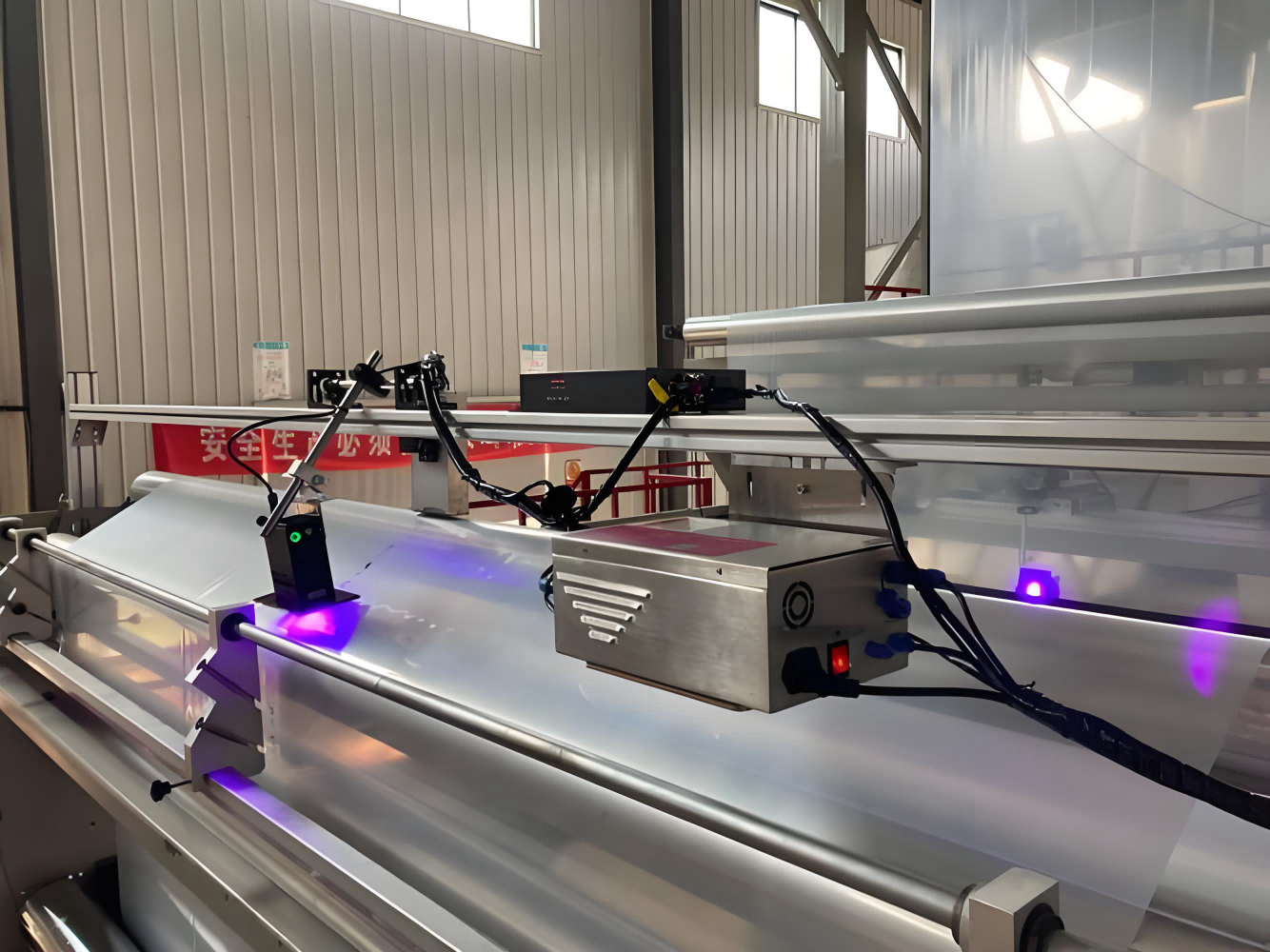
In fast-paced production environments, every second of downtime ripples across the supply chain. Simplifying the way codes are applied to products isn’t just about cutting seconds from a cycle—it’s about building resilience into the entire operation. When coding workflows are streamlined, operators spend less time wrestling with complex interfaces and more time keeping lines running smoothly. This shift away from manual, error-prone setups means fewer interruptions, reduced material waste, and a noticeable drop in the mental load on staff. The result is a floor where consistency becomes the default, not the exception.
The real advantage emerges when streamlined coding becomes part of a connected ecosystem. Modern systems that integrate directly with production databases and ERP platforms allow for real-time data handling without constant human intervention. A single change at the planning level can cascade instantly to the correct printer, eliminating the multiple touchpoints where mistakes traditionally creep in. This connected approach not only speeds up changeovers but also creates a reliable audit trail—something that becomes invaluable during quality reviews or compliance checks. It’s a quiet evolution from reactive troubleshooting to proactive control.
Perhaps most importantly, efficient coding frees up technical resources to focus on improvements rather than firefighting. When the coding process feels almost invisible—just another seamless part of the line—engineers and managers can shift attention to scale, innovation, or fine-tuning other areas. The efficiency gain isn’t measured solely in throughput numbers; it’s felt in the confidence of teams who trust their equipment and the agility a company gains when coding no longer acts as a bottleneck. In the end, streamlining is less about the code itself and more about what becomes possible when that part of the operation simply works.
Beyond Basic Marking: Advanced Features of Chinese Inkjet Printers
The user interfaces on modern Chinese inkjet printers have evolved into intuitive touchscreen control panels. These high-resolution displays allow operators to drag and drop designs, adjust parameters in real time, and preview full-color gradients before the first droplet hits the substrate. The system often includes AI-driven nozzle health monitoring, which analyzes wave patterns during jetting to predict clogs before they happen, dramatically reducing downtime.
Material compatibility has expanded far beyond common paper and cardboard. Print heads with variable drop technology can seamlessly switch between solvent-based, UV-curable, and even edible inks, enabling marking on curved glass, textured leather, or thin electronic components. Specialty pigmented inks formulated for high-speed absorption on non-porous surfaces now allow for crisp barcodes on food packaging that would have smeared just a few years ago.
Integration capabilities have been quietly revolutionized through open API architectures. A pharmaceutical line in Shenzhen can auto-adjust print registration based on sensor feedback about bottle orientation, while a ceramics factory links the printer to a cloud-based pattern library that updates designs overnight. These systems not only mark but also verify: inline spectral cameras check every code for legibility and correctness, rerouting flawed items without stopping production.
Tailored for Tough Environments: Robust Coding Solutions
Building software that holds up under extreme conditions isn't about overengineering—it's about understanding failure before it happens. Our approach strips away assumptions, focusing on fault tolerance and graceful degradation so systems keep running even when hardware falters, network latency spikes, or unexpected inputs arrive. We bake resilience into every layer, from error handling that actually recovers to memory management that doesn't leak under pressure.
Instead of chasing textbook patterns, we learn from real-world breakdowns: power cuts in remote monitoring gear, vibration-ruined storage in autonomous drones, saltwater corrosion creeping into marine sensor nodes. By modeling these edge cases during design—not patching them later—we produce firmware and control logic that feels almost stubborn in its refusal to fail. The result is code that earns trust in places where a reboot isn't an option.
What sets this apart is the refusal to treat ruggedness as an add-on. Every function is written with the question, "What if the worst happens right here?" Variables are validated against physical bounds, communication timeouts adapt dynamically, and watchdog timers aren't just present—they're orchestrated to reset only what's truly stuck. The payoff is hardware that survives years in the field with minimal intervention, whether it's buried in a glacier or bolted to a vibrating engine block.
From Food to Pharma: Versatile Applications Unveiled
You might be surprised how often the same core ingredients or technologies show up in both grocery aisles and hospital pharmacies. Take fermentation, for instance—what starts as a method to craft artisanal cheese or sourdough also transforms into precision bioprocessing that manufactures life-saving insulin. It is not just a scaled-up kitchen experiment; it is a deliberate repurposing of nature's own refinement process, where microbes are coaxed into producing molecules far more complex than any synthetic chemistry lab can economically replicate.
Then there is the quiet crossover of texture science. The same hydrocolloids that give a vegan dessert its creamy mouthfeel are relied upon in delivering controlled-release medications, ensuring a pill dissolves at just the right point in the digestive tract. Edible films originally designed to keep pastries fresh have been reimagined as dissolvable oral strips for quick-acting pain relief. The line between nourishment and therapy blurs when you realize both fields share a fundamental goal: delivering an active compound—be it a nutrient or a drug—safely, effectively, and in a form the body can readily embrace.
Driving the Smart Factory: Connectivity and Automation in Coding
Modern production lines thrive on seamless data exchange, where every sensor, machine, and control unit speaks the same digital language. In coding and marking systems, this connectivity means that batch information, expiry dates, and dynamic serialization are no longer punched in manually but streamed directly from the manufacturing execution system. The result is a drastic reduction in human error and a setup time measured in seconds, not minutes—a quiet revolution that keeps lines agile and responsive.
Automation goes a step beyond simple data links, embedding intelligent decision-making into the coding process itself. Vision-guided print heads can adjust positioning on the fly, compensating for slight substrate shifts or product variations without breaking rhythm. Recipe management becomes autonomous: when a new product enters the zone, the printer automatically pulls the correct format, content, and placement parameters from the central database, eliminating changeover delays and ensuring every code is crisp and compliant.
Perhaps the most telling shift is how feedback loops now close in real time. A misprinted code isn’t just detected downstream and quarantined—it triggers an immediate line slowdown or an alert to maintenance, along with a detailed log that pinpoints the cause. This predictive posture, built on robust connectivity, elevates coding from a mere marking function to a strategic node in the smart factory’s nervous system, driving overall equipment effectiveness and traceability to new heights.
FAQ
They combine high-speed printing with micron-level accuracy, thanks to advanced nozzle designs and real-time monitoring that adjusts droplets automatically.
Adaptive printhead technology calculates surface contours in milliseconds, adjusting ink drop placement so codes stay sharp even on bottles, cables, or textured materials.
Continuous inkjet models now run maintenance cycles without stopping production, and solvent recovery systems cut downtime while handling up to 100,000 bottles per hour.
Yes, many are built with sealed printheads and temperature-resistant inks, operating dust-free in bakeries or corrosion-free on chemical drums with minimal intervention.
Food and beverage plants use them for date coding, electronics for PCB marking, and construction for pipe tracing, driven by strict traceability rules and export requirements.
They reduce waste through drop-on-demand technology that eliminates overspray, and newer bio-based inks lower VOC emissions compared to solvent-heavy alternatives.
By locally developing core components like piezoelectric crystals, they avoid import markups and offer competitive pricing while matching international performance benchmarks.
Integration with AI vision systems for self-correcting codes and cloud-based queue management is emerging, along with portable handheld units for small-batch flexibility.
Conclusion
Chinese inkjet marking systems have redefined expectations in industrial coding by delivering exceptional precision without sacrificing speed. Advanced drop-control technology and high-resolution printheads produce sharp, clear text, barcodes, and intricate graphics on virtually any surface, from curved packaging to delicate components. This accuracy minimizes misreads and product rejections, directly improving yield rates. Beyond the basics, these printers incorporate intelligent features like automatic nozzle cleaning, solvent-saving modes, and real-time viscosity adjustment, which keep maintenance intervals long and cost per print remarkably low. Their robust construction handles dust, humidity, and extreme temperatures, making them ideal for demanding production floors. Whether printing lot numbers on snacks at 600 feet per minute or micro-text on tiny electronic parts, the systems maintain consistent quality, proving that precision engineering is not just an option but a standard capability in modern Chinese inkjet solutions.
Efficiency gains are equally dramatic, as rapid-drying inks and streamlined user interfaces slash changeover times and operator training needs. Many models integrate seamlessly with factory networks via Ethernet/IP, Profinet, or MQTT, enabling remote monitoring, automatic message downloads, and centralized recipe management that tie directly into MES or ERP platforms. In food and beverage facilities, they use pigmented and UV-curable inks that withstand condensation and sterilization without fading, while in pharmaceutical lines, they comply with strict serialization mandates using abrasion-resistant, solvent-based inks. Such versatility extends to building materials, where they mark rough concrete boards, and to automotive parts, where they survive under-hood heat. This combination of adaptability, connectivity, and ruggedness positions Chinese inkjet systems as pivotal enablers of the smart factory vision, where every product carries a flawless digital identity from production to the end user.
Contact Us
Contact Person: Jacky
Email: [email protected]
Tel/WhatsApp: 086 15000607053
Website: https://www.danmajet.com