

Customized Collapsible Water Bottles Manufacturer: How to Pick the Perfect Partner
2026-10-24
Choosing a customized collapsible water bottles manufacturer isn't just about comparing quotes—it's about finding a team that can handle tricky silicone molding, keep colors accurate across batches, and still ship on time. Most brands learn this the hard way. At Qunhao, the focus is on closing that gap between what you envision and what actually arrives at your warehouse. This post walks through the questions you should ask before signing any agreement, from minimum order flexibility to real-world durability testing. If you've been burned by vague promises or delayed prototypes, you'll want to read on.
Material Claims Are Easy; Proof Is Harder
A supplier can say a lot about tensile strength, purity, or longevity in a single line. Those statements take seconds to write and often get repeated until they sound like fact. But the moment you ask for the raw test data behind them, the conversation changes. Materials don't lie; people do, and sometimes they don't even know they're stretching the truth because they've never run the relevant trial themselves.
Real proof sits in the details that marketing sheets rarely include: sample preparation, conditioning time, test speed, failure mode, and the name of the lab that produced the numbers. Two products can both claim a certain modulus or purity, yet behave completely differently once temperature, moisture, or load cycles enter the picture. That is why a single certificate is never enough. You need to see whether the same result appears across batches and under conditions that resemble your actual application.
The more specific the claim, the heavier the burden of evidence. Instead of accepting a bold statement at face value, ask for the full test report, the calibration records, and the names of the technicians involved. A credible supplier will share those without hesitation. A weak one will stall, point to a brochure, or claim the information is confidential. That difference in response is often more revealing than the original claim itself.
The Mold Fee Conversation Every Smart Buyer Starts Early
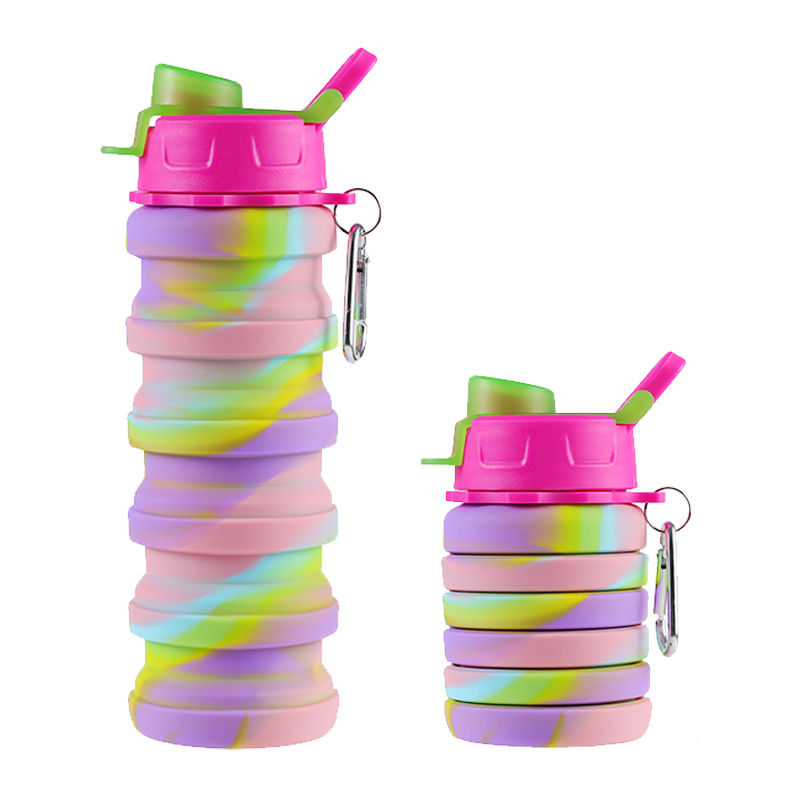
Most buyers wait until the quote lands on their desk before thinking about mold fees. That's a mistake. The moment you start scoping a custom plastic or metal part, the mold cost should be in your head. Not as a scary line item, but as a variable you can shape. Early conversations with your supplier about tooling let you tweak wall thickness, undercuts, or surface finish while the design is still fluid. Waiting until later often means paying for a mold that's overbuilt or one that needs expensive revisions.
Smart buyers don't ask "how much is the mold?" and stop there. They ask what drives the number: number of cavities, steel grade, expected cycle life, texture, and whether the part can share a mold family with something else. Those details are easier to adjust before the CAD file is frozen. A supplier who hears you're open to a simpler gate location or a slightly different draft angle might knock twenty percent off the tooling cost. But that only happens if you start the talk before the design is locked.
Another reason to bring up mold fees early is that it filters suppliers. Some shops quote a low part price but bury the real cost in the tooling. Others amortize the mold into the piece price, which changes your unit economics. If you discuss mold ownership, maintenance, and replacement terms from the first call, you avoid the awkward renegotiation six months in. The conversation doesn't have to be technical. Just say: "Before we go far, let's talk about how you handle mold fees and what affects them." That one sentence saves you from surprises and builds trust faster than any polished RFQ.
Why Some Collapsible Designs Fail After 500 Opens
Five hundred open-close cycles sounds modest, but it is exactly where hidden weaknesses tend to surface. Many collapsible parts made from polypropylene or ABS work smoothly for the first few dozen uses, then start forming microscopic stress cracks along thin hinge webs. Those cracks grow with every flex, eventually showing up as white stress marks near the fold line or a snap that happens without warning.
Locking features often fail before the hinge itself. A small bump that fits into a recess can hold tightly at first, but after 500 cycles the bump gets rounded down or the recess edge deforms just enough to lose interference. The result is a lid that no longer stays shut or a leg that collapses under light pressure. Injection molding tolerances make this worse because a few hundredths of a millimeter in part variation can disappear quickly under repeated friction.
Assembly stress also plays a quiet role. If a hinge pin is pressed into a slightly misaligned hole, the surrounding material holds residual stress from day one. Each cycle then works those stressed areas like a fatigue test, so radial cracks appear around the pin hole around the 400 to 600 cycle mark. Designs that use acetal or glass-filled nylon with generous corner radii typically sail past 2,000 cycles without issue, which shows material choice and geometry matter more than an arbitrary cycle count.
Factory Certifications You Should Actually Read Beyond the Logos
A wall of certification logos in a supplier's lobby tells you almost nothing about daily reality. What matters are the actual audit reports, the scope of each certificate, and the date of the last surveillance visit. For example, an ISO 9001 badge is meaningless if the quality management system only covers a small corner of production, or if the last audit flagged major nonconformities that were quietly closed with superficial corrections. Ask for the full certificate number and verify it against the issuing body's public database; many factories display expired or suspended certificates without hesitation.
Beyond the familiar ISO and BSCI logos, look for certifications that address specific risks in your product category. A textile supplier claiming ethical labor practices should be able to show a current SA8000 or WRAP certificate, but you should read the accompanying corrective action plan from the most recent audit. If the plan mentions excessive overtime, blocked fire exits, or missing wage records, those are red flags no logo can hide. Similarly, for electronics or metal components, check whether the factory's environmental permit and any RoHS or REACH compliance documents are still valid, and whether they match the actual materials used in your order.
The most useful certifications are those tied to traceable, unannounced audits rather than scheduled, factory-prepared visits. Ask how often audits occur, who pays for them, and whether workers are interviewed without management present. If a factory proudly displays a certification but hesitates to share the full report or the auditor's name, treat that as a stronger signal than any polished logo on a website. Certifications are a starting point for due diligence, not a substitute for it.
Prototype Speed vs. Production Consistency: Reading the Signs
When a feature works perfectly in the prototype but stumbles in production, the gap usually isn't in the code—it's in the assumptions. Prototypes are built for speed: they tolerate hardcoded values, skip edge cases, and lean on mock data. Production demands consistency: every path must be validated, every failure handled, and every input treated as untrusted. Reading the signs means spotting where the prototype's shortcuts are now causing real friction—unexpected nulls, stale configurations, or race conditions that never surfaced in a demo with a single user.
One telltale sign is a growing list of hotfixes that patch symptoms rather than redesign the flow. Another is when new team members struggle to trace logic because the prototype's structure was optimized for velocity, not clarity. The shift from prototype to production is not about rewriting everything; it's about identifying which assumptions are load-bearing and which are leftovers. A pragmatic approach is to run the prototype side-by-side with production traffic, mirror a small percentage of requests, and watch where the logs diverge from expected behavior.
Ultimately, reading the signs is a discipline of paying attention to the quiet failures: a timeout that occasionally triggers, a cache that returns stale data, or a retry loop that amplifies a minor outage. These are not separate issues—they are the same issue wearing different masks. Teams that treat prototype speed and production consistency as two ends of a spectrum, rather than two different projects, learn to move fast without breaking the things that matter.
Small Customization Touches That Signal a True Partner
True partners notice the details that never make it into a contract. It might be remembering how a stakeholder prefers reports formatted, or aligning delivery schedules with a client's quieter periods. These small adjustments cost little but reveal deep listening.
Customization often shows up in communication style. A partner who mirrors your team's shorthand, adapts to your review cadence, or flags a risk before you ask isn't following a script. They've studied how you actually work, not just what you asked for.
The most telling touches are almost invisible. A renamed file convention, a dashboard tailored to one team's metrics, a kickoff deck that uses your internal terminology. These aren't add-ons; they're evidence that someone is treating your goals as their own.
FAQ
Look for in-house mold development, choice of food-grade silicone or TPU, multiple color matching including translucent options, and finishing techniques like matte coating or carabiner attachment. A partner who can handle both small-batch laser engraving and large-run screen printing without pushing you toward stock designs is usually more capable.
Ask for video evidence of leak tests at different compression levels and request data from folding cycle tests—typically a reliable bottle should survive at least 5,000 to 10,000 collapse-expand cycles. If possible, order a pre-production sample and run your own drop and squeeze tests with hot and cold liquids.
For fully custom molds, MOQs often start around 1,000 to 3,000 units, while semi-custom options using existing molds may drop to 300-500. You can often negotiate lower initial runs if you pay a small tooling fee or agree to a phased production schedule, especially with manufacturers that keep common mold sizes in stock.
It matters more than many buyers realize. The spiral or accordion fold geometry affects both durability and user experience. A manufacturer with an in-house engineering team can suggest wall thickness adjustments, grip ring placement, or nozzle seal improvements that prevent costly redesigns later. Ask for a 3D render or cross-section drawing before tooling begins.
A realistic schedule is about 4-8 weeks for semi-custom and 8-14 weeks for full custom, including mold making, sampling, and production. Be wary of manufacturers who promise shipping within two weeks without existing stock or who repeatedly extend the sampling phase without clear technical reasons.
Request their QC checklist for collapsible bottles—it should cover material thickness consistency, seam strength, cap torque, and leak testing under partial compression. You can also ask for third-party inspection reports from recent runs or arrange a live video walkthrough of the production and testing area.
At minimum, look for FDA food-contact compliance for silicone or TPU materials, LFGB if you sell in Europe, and BPA-free test reports. Depending on your market, you may need CPSIA for children's products or REACH for EU chemical safety. A trustworthy manufacturer will share certification numbers and not just claim compliance.
Break down each quote by tooling cost, unit price at different quantities, sampling fees, and shipping terms. Then ask what's included—some low quotes exclude silicone quality grade, valve components, or color matching. A slightly higher unit cost can be worth it if the manufacturer uses platinum-cured silicone and includes leak testing on every batch.
Conclusion
Choosing a manufacturer for custom collapsible water bottles means digging past glossy claims. Many suppliers state food-grade silicone or Tritan, but the real test is asking for third-party test reports, not just spec sheets. Ask about mold fees upfront; a serious partner will explain the cost, steel type, and cavity count before you commit. Also examine hinge and fold durability—cheap designs often crack near creases after a few hundred open-close cycles. Request a life-cycle test video or sample that has been flexed at least 500 times.
Certifications should be read line by line—look for FDA, LFGB, or BPA-free declarations that match your target market, not just logos on a website. Prototype speed matters, but consistency is the real differentiator; ask how many production lines run the same mold and what tolerance they hold on wall thickness. Finally, notice the small things: a manufacturer that suggests custom caps, straps, or laser engraving without being prompted is likely a partner thinking about your end user. These quiet signals often separate reliable factories from those just chasing a one-off order.
Contact Us
Contact Person: Cecilia
Email: [email protected]
Tel/WhatsApp: 8619057488653
Website: https://silwatbottle.com