

Driveway Tiles Factory Insights for a Durable and Stylish Entrance
2026-11-04
Your driveway is the first thing guests see, but it's often the last thing homeowners upgrade. The difference between a cracked, faded entrance and one that stays sharp for decades usually comes down to what happens in the factory. In this post, Beata Ceramics shares the key insights on materials, design, and production that will help you choose driveway tiles that are as durable as they are stylish.
The Factory Floor Check That Separates Long-Lasting Tiles from Early Failures
In most tile factories, the final inspection is not a quick glance at the end of a conveyor belt. Sampled finished pieces are carried to the shop floor and laid out flat, replicating real installation conditions as closely as possible. Inspectors walk along the seams with a straightedge, running it across the intersection of four tiles. Any height difference greater than half a millimeter gets flagged immediately. This simple action mimics the edge chipping and surface wear that can appear years later. Batches that show slight warping or inconsistent thickness on the factory floor are the same ones that develop stress cracks once installed.
Another critical step is the tapping test. An inspector uses a small metal rod to strike the back and center of each tile, listening for a clear, sharp ring. A dull or hollow sound suggests internal delamination or tiny voids formed during rapid cooling in the kiln. Tiles with these hidden defects tend to develop radial cracks from the center after installation, especially when exposed to temperature swings. By tapping every tile on the factory floor, manufacturers catch these early failures before the boxes ever leave the warehouse.
How Raw Clay Choices Shape the Final Color and Strength of Your Driveway
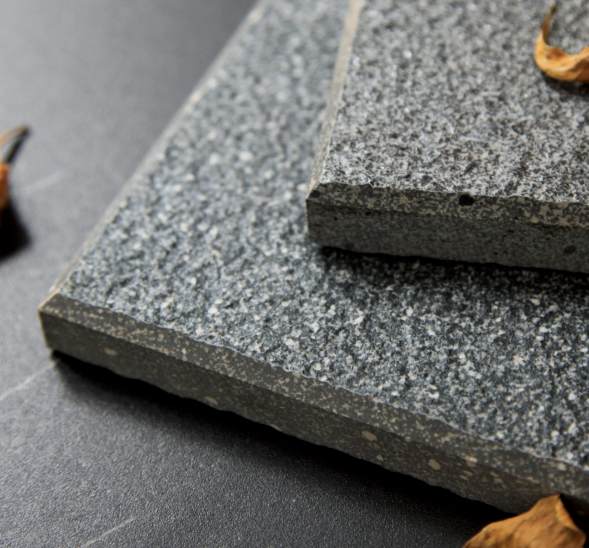
The mineral composition of raw clay does more than dictate how the surface feels underfoot—it directly sets the palette and load-bearing ceiling of a driveway. Iron-rich clays, for instance, fire into warm reds and earthy browns when compacted and cured, while kaolin-heavy sources tend to stay pale gray or cream. That color isn't just cosmetic; it reflects how the clay particles bind with moisture and additives, which in turn affects density and resistance to cracking.
Clay with a high percentage of fine silt may look smooth after grading, but it often lacks the internal friction needed to support repeated vehicle weight. Over time, such driveways develop ruts and soft spots, especially in wet seasons. Choosing a clay with a balanced mix of coarse sand and plastic fines gives the surface a stronger interlocking structure, so the final driveway holds its shape without constant regrading.
The way raw clay responds to compaction also shapes long-term strength. A moderately plastic clay will knit together under a roller, forming a dense crust that sheds water rather than absorbing it. Too much plasticity, however, leads to excessive shrinking and wide cracks as the material dries. Testing a small batch before committing lets you see both the cured color and the shrinkage behavior, so you can adjust the mix with local sand or gravel to get the exact tone and durability you want.
Kiln Temperature Curves: The Quiet Reason Some Tiles Stay Crack-Free
Most tile failures don't happen in the kiln's peak heat—they happen in the hours after, when the temperature drops too fast or lingers too long at the wrong moment. A well-shaped cooling curve lets the glaze and body contract at slightly different rates without pulling each other apart. The result is a tile that holds its shape, keeps its surface intact, and doesn't crack weeks later under normal use.
The trick is knowing which part of the curve to adjust for different tile bodies. Porcelain, stoneware, and terracotta each have their own thermal personality, and the same curve that works for one can ruin another. Some factories watch the 600°C to 500°C range like a hawk, because that's where quartz inversion can set off hairline fractures. Others focus on the early cooling phase to avoid dunting or shivering. It's less about following a universal recipe and more about reading the material's own stress points.
Small changes in the curve can separate a batch that passes inspection from one that fails quietly after installation. Adjusting the cooling rate by just a few degrees per hour—or adding a short hold at a critical temperature—can mean the difference between a floor that lasts decades and one that starts showing cracks before the first year is out. The curve rarely gets credit, but it's often the reason some tiles never call attention to themselves.
Texture Without the Trend Trap: Matching Grip to Real Foot Traffic
Most flooring catalogs push aggressive textures as if every hallway were a ski slope. But real foot traffic tells a different story. A grip that looks impressive in a showroom can turn into a cleaning nightmare in a busy lobby, where fine grooves trap dirt and lose their bite within months. The smarter move is to match surface friction to the actual pace and weight of people moving through the space, not to the latest trend in deep embossing.
Light residential zones rarely need anything beyond a subtle grain, while entryways with wet shoes and quick turns benefit from a medium cross-hatch that channels moisture without becoming a grime collector. Heavy commercial corridors, on the other hand, demand a flatter profile with just enough tooth to prevent slips under sustained wear. It’s less about having the roughest finish and more about having the right finish for the footfall you actually expect.
When you ignore the trend trap, texture becomes a practical tool rather than a marketing gimmick. You avoid the pitfalls of over-specifying, which can lead to premature wear from abrasive soles or unnecessary maintenance costs from aggressive scrubbing. The result is a floor that feels secure underfoot, cleans up without a fight, and still looks honest five years later.
Small Batch vs. Mass Production: What Changes in Consistency and Character
Walk into any craft distillery and the first thing you notice isn't just the copper still—it's the smell of a place where someone actually tasted the mash that morning. Small batch production lives and dies by human attention. Fermentation temps drift with the weather, barley lots vary from harvest to harvest, and the person running the still might decide to make a slightly tighter cut because the spirit just feels right. That's why two barrels from the same week can end up with distinct personalities. The "character" isn't engineered; it's accumulated. Consistency, in that world, means trusting the process enough to let small differences exist without panic.
Mass production flips that equation. The goal isn't to celebrate variation—it's to eliminate it. Large plants use continuous stills, automated sensors, and blending protocols designed to make batch #4,000 taste exactly like batch #1. That requires standardizing raw materials, controlling every minute of fermentation, and often blending away any sharp edges that might make a product memorable for the wrong reasons. The result is reliable, sure. But reliability has a cost: the flavor profile gets pulled toward the center. It's smoother and safer, yet rarely surprises you. You can taste the system more than the place.
That doesn't mean small batch is automatically better, and mass production is soulless. Plenty of big operations hire talented blenders who create wonderfully balanced products. The real difference is what "quality" means in each context. For small batch, quality includes idiosyncrasy—the right kind of imperfection that tells you a human made a decision. For mass production, quality is repeatability across thousands of miles and years. Neither is wrong. But if you drink for character rather than comfort, small batch will usually give you a story worth retelling.
Designing a Driveway Entrance That Looks Handpicked, Not Catalog-Chosen
A driveway entrance that feels handpicked rarely starts with a matching set of precast pillars. Instead, think of the arrival as a slow reveal: one side anchored by a single fieldstone boulder, the other softened by a low drift of native grasses that lean into the gravel. Let the paving material shift near the threshold—maybe the asphalt narrows to a band of reclaimed cobbles—so the transition reads as a deliberate choice rather than a contractor's default.
Personal details do more work than symmetry here. If there's a mature oak just off the corner, nudge the driveway line to give it breathing room instead of squaring everything off. Use an old farm gate as a purely decorative lean-to against the fence, or set house numbers into a flat piece of local slate propped among daylilies. These small mismatches create the sense that someone walked the site, noticed what was already there, and built around it.
Lighting, too, should hide rather than announce. A couple of low, warm LEDs tucked under the grasses or aimed down at the cobbles will guide a visitor more invitingly than twin lanterns on either side. The goal isn't to dress the entrance up, but to let it look like it has always belonged to the land—and only later was given a gentle nudge toward home.
FAQ
Factory production allows for controlled curing, consistent color blending, and higher compressive strength. The pressing force and kiln temperature are calibrated for every batch, so each tile arrives with uniform thickness and fewer hidden micro-cracks.
Porcelain tiles generally resist stains and frost better due to low water absorption, while concrete tiles offer easier on-site cutting and a softer, more textured look. For driveways with heavy vehicle traffic, opt for porcelain with a minimum 20mm thickness or reinforced concrete pavers rated for axle loads.
A matte or lightly textured finish with a high slip-resistance rating (R11 or above) makes sense. A fine-grit abrasive added to the glaze or a shot-blasted surface on concrete keeps grip without turning the driveway into a dirt trap.
Yes, if the sub-base is properly compacted and the tiles are bedded on a full mortar layer rather than spot-bonded. A minimum breaking strength of 50 N/mm² for porcelain and a 60mm thickness for concrete pavers in traffic areas is recommended.
Most factories offer a catalog of standard designs, then adjust pigment ratios or tile dimensions for a modest setup fee. For larger projects, you can request a dry-lay sample of four to six tiles to see how the pattern reads in natural light before committing.
Sweep debris off regularly to avoid scratches from grit, and wash with a pH-neutral cleaner twice a year. Avoid de-icing salts on porcelain; use sand or calcium magnesium acetate instead. Re-seal concrete tiles every three to five years depending on traffic.
Yes, order 10-15% overage. Factory batches can vary slightly in shade, and having spares from the same lot means future repairs won't leave a visible patch. Store them flat in a dry area to prevent warping.
Ask for water absorption, breaking strength, abrasion resistance, and freeze-thaw test results. A reliable factory will provide third-party test data showing results within the standard for porcelain (at or below 0.5% water absorption) or concrete pavers (at or below 6%).
Conclusion
On the factory floor, durability is rarely judged by eye. Instead, workers tap each tile and listen for a dull thud that hints at hidden micro-cracks or uneven density. This simple acoustic check, paired with random load tests, separates tiles that will survive freeze-thaw cycles from those that crumble after the first winter. The journey starts even earlier with raw clay choices. High-iron clays fire into warm terracotta reds but may be slightly softer, while purer kaolin clays yield pale greys with tighter grain structure. Neither is inherently better; the right pick depends on local climate and how much pigment variation you can accept. Then comes the kiln temperature curve, a quiet determinant of long-term crack resistance. A slow preheating phase boils off residual moisture without steam explosions, and a controlled cooling ramp releases internal stress. Rushed cooling can lock in tensions that only reveal themselves as hairline fractures months later, long after the tiles look perfect on delivery.
Texture decisions often fall into the trap of chasing trends, but a driveway entrance demands traction matched to actual foot traffic and vehicle movement. A light brush finish gives enough grip for wet shoes without turning into a dirt trap, while deep riven surfaces look dramatic but demand constant cleaning. The difference between small batch and mass production is not just about uniformity; it is about character. Small-batch runs carry subtle variations in edge softness and surface bloom that mass production often erases in favor of dimensional consistency. That is not a flaw, but a choice. Designing a driveway that feels handpicked rather than catalog-chosen means mixing two or three close tones from the same clay body, alternating edge treatments, and varying the laying pattern slightly at transitions. The goal is not to look perfect, but to look assembled with intention—like a good tailor altering a suit just enough to fit the house and the way people actually walk to the door.
Contact Us
Contact Person: Emma
Email: [email protected]
Tel/WhatsApp: 8618064423698
Website: https://www.beataceramics.com/