

Eco-Friendly Polyurethane Production Line: A Greener Approach to Manufacturing
2026-09-18
Polyurethane is everywhere—from car seats to insulation—but its production has always come with a hefty environmental price tag. That's finally changing. At YI ZHOU TECHNOLOGY, we've built an eco-friendly polyurethane production line that doesn't just tweak the old process; it reimagines it. Less waste, lower energy consumption, and zero compromise on performance. In this article, we take you inside the technology that's making greener manufacturing a practical reality—and why it matters for your business and the planet. Ready to see how we're breaking the mold?
Rethinking Raw Materials for a Lighter Footprint
Material choices often carry hidden weight. A product's footprint isn't just about how far it travels or how much energy its factory burns—it begins with the extraction, processing, and eventual fate of its ingredients. Shifting away from virgin petroleum-based polymers and mined metals toward bio-based resins, reclaimed fibers, or agricultural byproducts can cut embodied carbon dramatically. The challenge is matching performance without trading one environmental burden for another.
Some manufacturers are experimenting with materials that didn't exist in commercial form a decade ago: mycelium composites for packaging, algae-derived foams for footwear, and recycled ocean plastics that skip the oil well entirely. These alternatives force a rethink of supply chains, tooling, and even product lifespan. A lighter footprint rarely comes from a single swap; it emerges when sourcing, design, and end-of-life planning are considered together.
That kind of thinking also invites uncomfortable questions. Is a 'biodegradable' material useful if local composting infrastructure can't process it? Does a recycled feedstock still make sense if it requires intensive cleaning and transport? Honest answers often lead to simpler designs, fewer mixed materials, and better repair pathways—choices that quietly reduce impact long before a product reaches the shelf.
Energy-Smart Curing Without the Carbon Cost
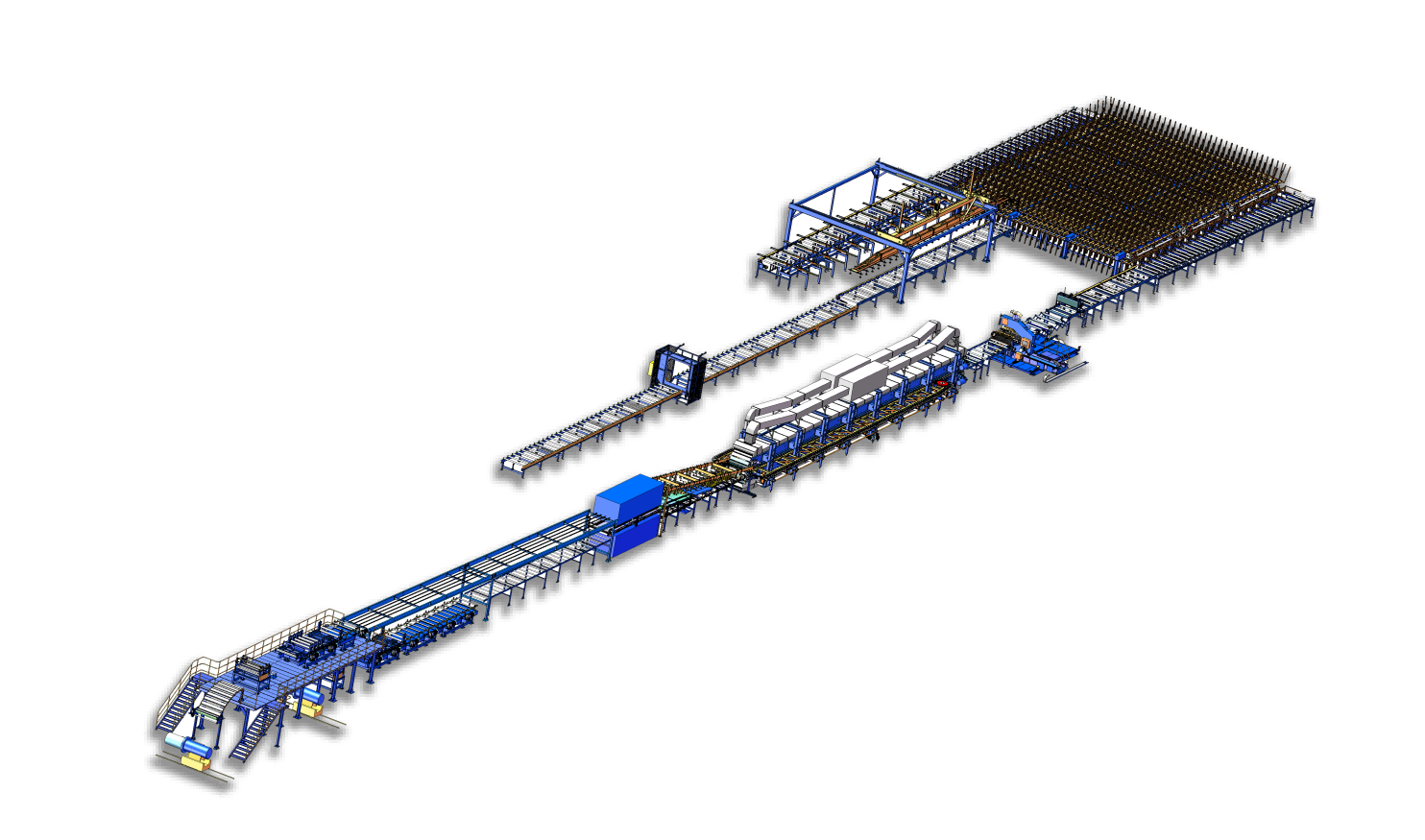
Modern curing often leans on heat, steam, or extended kiln time, all of which quietly pile up the energy bill and drag carbon emissions along for the ride. Energy-smart curing flips that logic: instead of brute-forcing a reaction with more temperature, it tunes the process to the material's own chemistry and ambient conditions. Low-temperature activators, moisture-retentive membranes, or staged thermal profiles let the cure complete with a fraction of the usual input—sometimes using waste heat from nearby equipment or even passive solar gain.
The real trick is matching the cure schedule to what the material actually needs at each phase, rather than running a one-size-fits-all furnace. For concrete, that might mean sealing the surface early to hold internal moisture while using insulating blankets only where thermal gradients threaten cracking. For coatings and adhesives, UV-LED or electron-beam systems can cure in seconds without warming the whole part, so the energy goes into the reaction, not into heating the air around it. The result is a cure that hits strength and durability targets while the carbon ledger stays surprisingly light.
Operators often find that the biggest savings come from simply measuring what used to be guessed. Embedded sensors and simple data loggers reveal when a slab or film has truly reached its target degree of cure, so equipment shuts off hours earlier than the old conservative timers allowed. Over a year of production, those freed hours translate into fewer kilowatt-hours, lower peak demand charges, and a smaller footprint for every batch—without sacrificing the end-use performance that the old, carbon-heavy cure was supposed to guarantee.
Turning Waste Streams into Useful Inputs
Most factories still treat byproducts as a disposal problem, but a growing number are mapping their waste flows the way they map supply chains—looking for places where one process's leftovers can feed another. A brewery in Belgium, for instance, pipes spent grain and CO2 from fermentation to a neighboring greenhouse, where the grain becomes substrate for mushrooms and the gas accelerates plant growth. The result is not a zero-waste slogan; it is a quieter kind of accounting.
The most interesting cases often involve mismatched scales. An old textile mill might produce too little waste heat to justify a power plant, but enough to warm a nearby aquaculture system. Rather than forcing every output into a single high-value product, the more durable approach is to build a network of small, reciprocal exchanges—each one modest, but together changing what counts as raw material.
Design plays a bigger role than technology here. A material that arrives mixed, wet, or inconsistently sized will never be a useful input no matter how advanced the sorting equipment. That is why some companies are rewriting specifications so that byproducts are separated at the source, kept clean enough to enter another process directly. Once that habit forms, the line between waste and inventory starts to blur.
Closed-Loop Solvent Recovery in Action
In a specialty chemical plant outside Rotterdam, a distillation column the size of a grain silo runs around the clock, not to produce a sellable product, but to reclaim the very solvent that made the reaction possible seconds earlier. Spent toluene from the reactor floor is piped directly into the recovery unit, where heat and vacuum strip away impurities. What emerges from the condenser is nearly identical to the virgin solvent sitting in the adjacent storage tank—only it never left the site. This is closed-loop solvent recovery in action: a system where the “waste” stream never becomes waste.
The economics are surprisingly simple. A pharmaceutical company running three batch reactors might spend over two million dollars a year on fresh acetone and methanol. Recovering just 85% of that solvent in-house drops the purchasing budget to a fraction, but the less obvious savings show up in logistics and compliance. No trucks hauling spent solvent to a distant recycling facility. No manifests, no disposal fees, no emergency response plans for off-site transport. One mid-sized manufacturer in Indiana cut its solvent-related operating costs by 40% within eleven months of switching to a closed loop, while simultaneously reducing its Scope 3 emissions by an amount equivalent to parking 600 cars.
What often surprises plant managers is how little operator intervention modern recovery systems require. Automated controls monitor feed composition, adjust column temperature and reflux ratio, and even redirect off-spec material back into the recovery tank—all without a human touching a valve. In one facility, the solvent recovery unit runs so quietly in the corner of the production hall that new employees sometimes mistake it for a water chiller. Yet that unassuming piece of equipment is quietly pulling hexane, ethyl acetate, or isopropanol from a dirty slipstream and returning it to the process with a purity level that meets or exceeds the original purchase specification.
Low-Emission Mixing That Protects Workers and Air
Many mixing operations still rely on open tanks or manual powder addition, which releases dust, solvent vapors, and aerosols directly into the breathing zone. A low-emission mixing setup changes this by keeping the process enclosed: powders are charged through contained transfer systems, liquids are metered into closed vessels, and any displaced air passes through filtration before release. This removes the primary exposure route for operators who would otherwise inhale fine particles or volatile organic compounds throughout a shift.
The design also pays attention to the mixing energy itself. High-shear blades can over-aerate the batch, generating mist that escapes when the lid is opened, while overly aggressive agitation can heat the material and drive off more vapor. Low-emission mixers use controlled tip speeds, vacuum-assisted degassing, and baffle arrangements that minimize surface turbulence without sacrificing blend uniformity. The result is a calmer batch surface and a measurably lower concentration of airborne contaminants near the workstation.
Air quality monitoring in facilities that have switched to these systems typically shows a sharp drop in both total dust and solvent exposure levels, often bringing them well below regulatory limits without relying solely on personal protective equipment. Workers report less odor fatigue and fewer respiratory complaints, while the plant avoids fugitive emissions that would otherwise require additional scrubbing or permitting. In short, the mixing step becomes a quieter part of the plant's environmental footprint, protecting both the people standing next to the vessel and the air outside it.
From Batch to Continuous: Streamlining for Sustainability
Shifting away from batch processing rarely begins as a sustainability project. It starts when operators notice the same equipment being cleaned twice in a shift, or a reactor sitting idle while another line waits for material. These small frictions signal a larger opportunity: replacing stop-start cycles with a steady, controlled flow that uses less rinse water, fewer heating cycles, and shorter hold times.
Continuous approaches also change how teams think about waste. Instead of discarding the heel of a batch or flushing lines between product grades, many facilities find they can redirect partially processed material back into the stream. Real-time sensors make this feasible by flagging quality shifts early, so adjustments happen before a whole lot is lost. Over months, the savings in energy and solvents compound in ways that batch records alone would never reveal.
The trade-off is that continuous lines demand tighter instrumentation and more upfront modeling. Yet once the control loops are tuned, the operation often becomes simpler to run, not more complex. Operators spend less time on repetitive start-up and shut-down checklists and more time monitoring a process that self-corrects. That steadiness, more than any single efficiency gain, is what makes the move sustainable in practice.
FAQ
It replaces a large share of petroleum-based polyols with bio-based alternatives derived from castor oil or lignin, and the entire process operates in a closed-loop system that recaptures solvents and reduces VOC emissions by over 40 percent. Additionally, waste heat from the exothermic reaction is used to preheat raw materials, cutting overall energy demand.
Scrap foam and trim are fed into a controlled glycolysis unit that breaks the polyurethane back into reusable polyol. This recovered polyol can replace up to 25 percent of virgin polyol in new batches without sacrificing tensile strength or elongation.
Mostly the same formulations work, but the line is tuned for higher-viscosity bio-polyols and uses low-pressure impingement mixing to avoid shear-induced degradation. Some recipes require a small adjustment in catalyst package, typically reducing amine catalysts by five to ten percent to maintain the same cream and rise times.
Through heat integration, variable-speed drives on the metering pumps, and a redesigned curing tunnel with infrared preheating, plants typically report a 25 to 35 percent drop in energy use per kilogram of finished polyurethane compared to older lines.
Not negatively. In fact, the automated in-line NIR sensors track hydroxyl number and moisture in real time, allowing the control system to adjust polyol and isocyanate ratios within milliseconds. This yields tighter density and hardness tolerances than most conventional batch systems.
Depending on plant capacity and local energy costs, the payback usually ranges from 2.5 to 4 years. The main savings come from lower energy bills, reduced solvent purchases due to the closed-loop recovery, and less waste disposal because scrap is converted back into polyol.
It is modular by design, so most components like the glycolyzer and bio-polyol preheating skid can be installed alongside existing foaming machines. A full retrofit generally takes three to five weeks of downtime, which is far less than building a new plant.
Conclusion
The eco-friendly polyurethane line starts by questioning every ingredient that enters the mixer. Instead of petroleum-heavy polyols, manufacturers are turning to bio-based alternatives derived from castor oil, lignin, or recycled PET. These swaps cut the carbon footprint at the source without sacrificing the resilience or flexibility buyers expect. At the same time, curing ovens and heated molds are being redesigned to run on waste heat or electric infrared panels powered by on-site renewables. The result is a process that no longer burns natural gas just to set a foam. Even the leftovers have a second life: off-spec foam, trimmings, and dust are shredded, densified, and blended back into new batches as filler or rebonded underlay. What used to be hauled to landfill now becomes a quiet input stream that lowers both material cost and disposal fees.
Further down the line, solvent recovery has moved from an afterthought to a core design feature. Closed-loop systems capture toluene, acetone, and cleaning agents from exhaust air, distill them on-site, and return them to the mixing heads at over ninety percent purity. This cuts virgin solvent purchases dramatically and keeps volatile organic compounds out of the atmosphere. Low-emission mixing chambers and sealed transfer lines protect workers from isocyanate exposure while also improving indoor air quality. The shift from batch kettles to continuous extruders and metering lines reduces energy spikes, shortens changeover times, and allows precise temperature control that prevents over-curing. Together, these changes form a production line that treats waste heat, waste solvent, and waste foam as resources rather than problems—proving that greener manufacturing can be leaner, safer, and more cost-competitive at the same time.
Contact Us
Contact Person: Sophia Jiang
Email: [email protected]
Tel/WhatsApp: +86 17367381818
Website: https://yzwelding.com/