

Intelligent Electric Wheelchair Production: Enhancing Accessibility Through Smart Manufacturing
2026-07-25
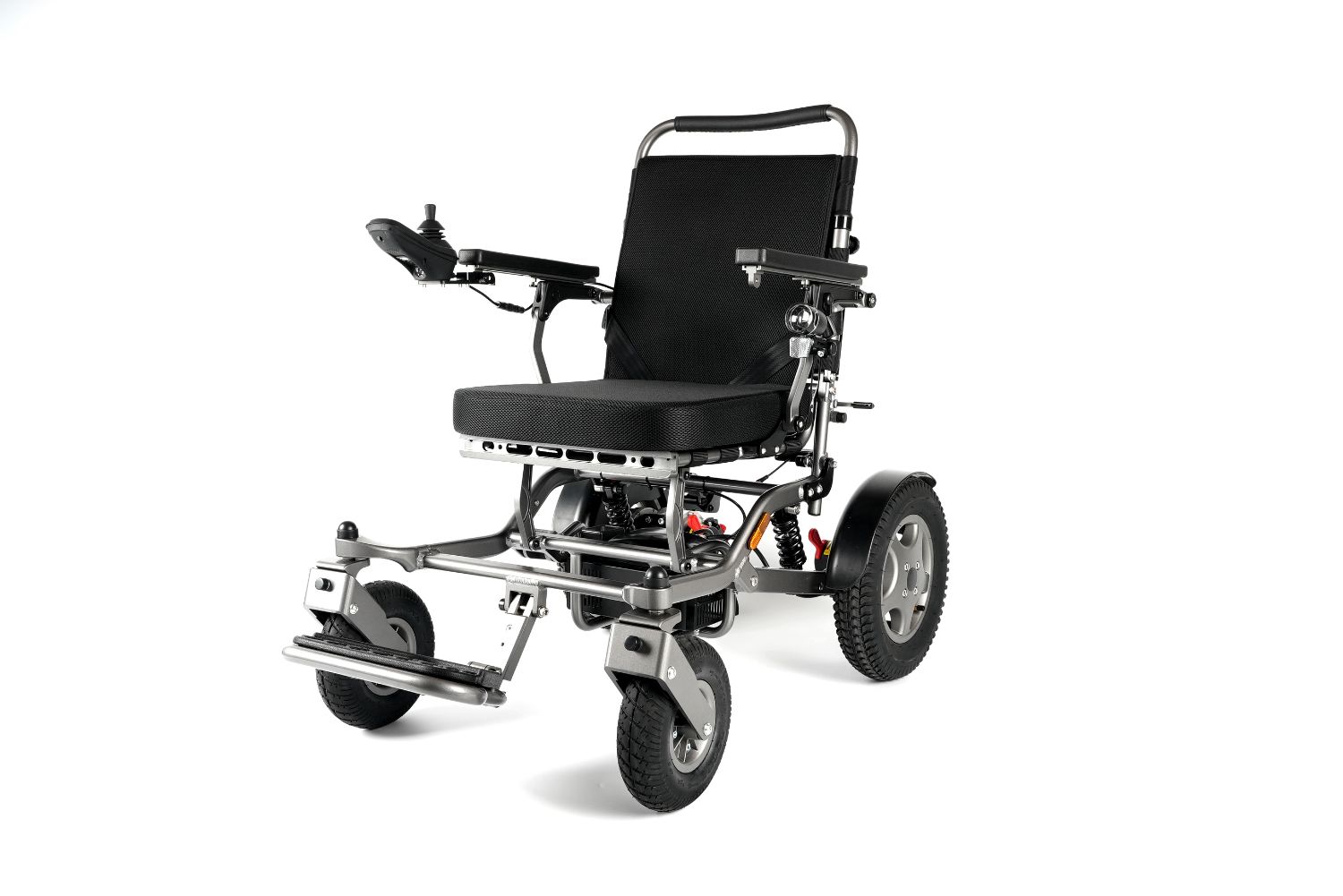
Imagine a world where mobility knows no bounds—where cutting-edge technology meets compassionate design. The rise of intelligent electric wheelchairs is transforming lives, and at the heart of this revolution is the Freedomchair. This blog explores how smart manufacturing isn’t just boosting efficiency; it’s crafting unprecedented accessibility, one precision-engineered chair at a time. Step into the future of inclusive mobility, where every detail is optimized for independence and dignity.
Crafting Mobility: The Art of Smart Wheelchair Assembly
Building a smart wheelchair is more than just bolting sensors onto a frame—it’s a delicate dance between precision engineering and human-centered design. Each component, from the whisper-quiet motors to the intuitive control interfaces, must be integrated with an almost obsessive attention to detail. The goal isn’t simply to create a machine that moves; it’s to craft an extension of the user’s intent, something that responds to the subtlest of commands and adapts to the world as naturally as a well-trained companion.
The assembly process itself is a blend of industrial rigor and artisan care. Wiring harnesses are routed not for convenience, but for longevity and safety, tucked away from pinch points and protected against daily wear. Every screw is torqued to specification, every joint tested for smooth articulation. But there’s also room for customization—adjusting the seat to match the exact contour of a person’s body, fine-tuning the suspension to absorb the unique rhythm of their daily paths. It’s this marriage of standardized excellence and personal touch that transforms a collection of parts into a true mobility solution.
What elevates this craft is the invisible layer of intelligence woven throughout. Sensors communicate with processors in a quiet symphony, learning from each journey to anticipate needs. The wheelchair doesn’t just react; it remembers the tight corner in the hallway, the slight incline at the driveway’s edge. Assembly, then, is not complete when the last bolt is tightened—it continues with every mile traveled, as the chair and its user forge a partnership that grows smarter, smoother, and more seamless over time.
Precision Meets Purpose: Adaptive Manufacturing for Individual Needs
In a world where mass production often leads to compromise, adaptive manufacturing redefines the relationship between precision and purpose. Every individual has unique requirements, whether it’s a custom orthopedic implant designed to match a patient’s exact anatomy or a bespoke mechanical component engineered to fit a specific industrial need. Here, precision isn’t just about tight tolerances; it’s about creating solutions that align perfectly with real-world contexts.
Unlike traditional methods that demand expensive molds and high tooling costs for small batches, adaptive processes leverage digital models and advanced fabrication to iterate rapidly without sacrificing accuracy. A prosthetic limb can be tailored not only to a user’s measurements but also to their lifestyle—lightweight materials for an athlete, or extra durability for everyday wear. This convergence of exactitude and intent transforms how we think about making things, shifting from “what’s cheapest to produce” to “what’s most effective for the person.”
From Circuitry to Comfort: Integrating Intelligence Seamlessly
The evolution of smart environments hinges on the delicate balance between raw computational power and human-centric design. It is no longer enough for devices to simply process data; they must interpret, anticipate, and adapt without intruding upon the user's sense of ease. This shift from rigid circuitry to organic comfort requires a layering of intelligence that operates almost invisibly, weaving sensors and adaptive algorithms into the fabric of everyday life. The goal is a silent partnership where technology reads subtle cues—ambient light, personal schedules, even mood—and responds in ways that feel natural rather than mechanical.
Achieving this seamlessness demands a departure from traditional interface paradigms. Instead of screens and menus that demand attention, the next generation of intelligent systems communicates through ambient signals: a gentle change in lighting, a whisper-quiet adjustment in temperature, or a haptic nudge on a wearable device. By embedding neural processing directly into familiar objects, from furniture to clothing, the line between the digital and the physical dissolves. The user experience becomes fluid, with the home or office learning to orchestrate its own orchestra of connected parts, all without requiring the occupants to act as conductors.
Underpinning this quiet revolution is a shift in design philosophy—one that prizes subtlety over spectacle. Engineers and designers are collaborating to create ecosystems where every connection, every data point, and every autonomous decision is carried out with a kind of graceful humility. The circuitry is still there, more sophisticated than ever, but it recedes from view, leaving only the comfort of a space that truly understands its inhabitants. In this model, intelligence is not a feature to be flaunted but a foundation to be felt, transforming houses into homes and buildings into responsive shelters for human well-being.
Beyond the Blueprint: Testing Resilience in Real-World Simulations
Architectural plans might look flawless on paper, but the real test of resilience happens only when a system faces the messy, unpredictable turbulence of live simulations. These controlled stress tests push far beyond theoretical limits, exposing weak joints that no diagram could ever reveal. Engineers inject chaos—sudden traffic spikes, network partitions, or component failures—and watch closely as the system struggles, adapts, or breaks. It’s in these unfiltered moments that design assumptions crumble, and true robustness is forged.
What emerges isn’t just a list of flaws, but a deeper understanding of how a system breathes under pressure. Simulating real-world conditions—whether a flash sale for an e-commerce platform or a cascade of sensor failures in an industrial plant—forces teams to confront the gap between intent and reality. Autoscaling policies that seemed elegant suddenly throttle too slowly; graceful degradation routines become jagged edges. Each test run is a conversation with the system, teaching engineers to design not for perfection, but for survival in the wild.
Sustainable by Design: Eco-Conscious Production Line Innovations
Rather than treating sustainability as an afterthought, forward-thinking manufacturers are weaving eco-conscious principles directly into the blueprint of their production lines. This means reimagining every stage—from raw material sourcing and equipment layout to energy consumption and waste handling—so that efficiency and environmental responsibility operate as a unified system instead of competing goals.
Some of the most compelling innovations come from closed-loop approaches where waste from one process becomes input for another, virtually eliminating the concept of “trash.” Water reclamation units, heat recovery modules, and precision dosing systems are being embedded right on the factory floor, cutting resource use dramatically without slowing throughput. In many cases, these upgrades pay for themselves through reduced utility bills and lower material costs, proving that green design and commercial sense can go hand in hand.
The shift also extends to smart monitoring tools that give operators real-time visibility into energy spikes, emission levels, and material flows. By pairing sensor data with intuitive dashboards, teams can spot inefficiencies instantly and fine-tune processes on the fly. This proactive mindset replaces the old model of periodic audits and retrofits, creating a living production environment where continuous improvement is both automatic and ecologically sound.
Empowering Journeys: How Smarter Factories Shape Inclusive Experiences
Walking into a modern factory floor feels less like entering a mechanical universe and more like stepping into a thoughtfully designed ecosystem where every detail aims to include, rather than exclude. The rise of smarter factories isn’t just about automation—it’s about crafting environments where diverse workforces can thrive. Flexible workstations that adapt to different physical needs, real-time translation tools that let multilingual teams communicate effortlessly, and predictive systems that anticipate maintenance before a breakdown disrupts someone’s day—all of these shift the focus from pure output to human empowerment. Suddenly, the factory becomes a place where personal journeys matter as much as production targets.
Inclusivity, in this context, goes well beyond compliance checkboxes. It’s woven into the very fabric of how decisions are made. When a production line uses data to recognize that an employee with a non-visible disability benefits from a slightly altered visual interface, or when wearable tech alerts a supervisor to early signs of fatigue so they can offer a timely break, the facility stops being a static machine and starts behaving like a responsive community. These subtle, people-centric adjustments are rarely highlighted in traditional efficiency reports, but they’re the true indicators of a smarter factory—one that listens and learns not just from machines, but from the people who keep them humming.
The result is a workplace that continually shapes experiences around the individuals rather than forcing individuals to fit a rigid mold. New hires begin their shifts with augmented reality guides tailored to their learning pace, and seasoned operators contribute insights that refine algorithms in real time. This constant feedback loop dissolves the old barrier between “operators” and “decision-makers.” Everyone becomes a contributor to a shared, evolving journey—one where technology serves as an enabler of dignity, not a replacement for it. In the end, a factory isn’t truly smart until it makes everyone who walks through its doors feel seen, capable, and valued.
FAQ
The growing need for personalized mobility solutions pushed manufacturers to adopt flexible automation. Traditional methods couldn't keep pace with demand for custom-fit chairs that adapt to individual disabilities, so the industry turned to intelligent systems that blend precision engineering with user-centric design.
Sensors embedded in the production line track everything from weld integrity to motor responsiveness. This data feeds into algorithms that tweak specs on the fly, ensuring each chair's controls and seating align perfectly with the user's range of motion and daily routines, rather than relying on one-size-fits-all assumptions.
AI analyzes historical usage patterns and feedback from field units to predict which components will need reinforcement under specific conditions, like uneven terrain or prolonged indoor use. The insights get folded back into design tweaks, so the next batch of chairs handles real-world obstacles more intuitively.
Modularity lets the line seamlessly swap between different motor units, cushion materials, and controller layouts without complete retooling. For users, this means their chair can be upgraded as their condition changes, without needing a whole new frame—something conventional manufacturing simply couldn't support economically.
Cobots now handle repetitive stress tests and dimension verification while human inspectors focus on tactile assessments like upholstery tension and joystick feel. This hybrid approach catches micro-defects that automated cameras might miss, but avoids the fatigue-driven errors that used to slip through purely manual inspections.
Smart manufacturing links component suppliers directly to the production schedule via digital twins. So if a specialized actuator arrives early, the line can adjust to validate and install it without delay. That agility prevents shipment backlogs that could strand a user waiting for a critical mobility tool.
The anti-slip obstacle detection algorithm was born from machine vision systems originally used to spot alignment errors on the assembly line. Engineers realized the same image processing could help a chair's onboard cameras identify slippery ground, so the production AI essentially 'taught' the chair's safety features.
Conclusion
The production of intelligent electric wheelchairs represents a fusion of craftsmanship and cutting-edge technology, where each unit is meticulously assembled to blend mobility with smart functionality. Unlike conventional manufacturing, this process embraces adaptive manufacturing, tailoring wheelchairs to individual anatomical and lifestyle requirements. Engineers work closely with users to adjust seating, controls, and sensory feedback, ensuring a perfect fit that enhances comfort and autonomy. Embedded intelligence—from responsive circuitry to intuitive interfaces—is woven into the design seamlessly, so the technology amplifies ability without overwhelming the user. The assembly line itself is reimagined as a craft space, where robots handle repetitive tasks with precision while human technicians focus on fine-tuning the nuanced interactions that make each chair a personal mobility companion.
Resilience is engineered into every wheelchair through rigorous real-world simulations that go far beyond standard lab tests. Prototypes endure uneven terrain, variable weather, and prolonged daily use to guarantee reliability when it matters most. Parallel to performance, sustainable practices shape the production floor: recyclable alloys, energy-efficient curing methods, and a modular design philosophy reduce environmental impact without sacrificing durability. Ultimately, the goal is not just a machine but an empowering journey. Smarter factories, driven by data and human insight, create a ripple effect—enabling wheelchair users to navigate life with greater independence and confidence, and fostering a more inclusive society where accessibility is built into every journey.
Contact Us
Contact Person: Calvin Fan
Email: [email protected]
Tel/WhatsApp: 8618913265607
Website: www.freedom-chair.com