

Leading Hot-Dip Galvanized H-Beam Suppliers for Robust Structural Support
2026-06-18
When it comes to constructing buildings that stand the test of time, the backbone often lies in the quality of structural steel. Hot-dip galvanized H-beams are a game-changer for anyone needing robust, corrosion-resistant support in harsh environments—think coastal projects, industrial frames, or heavy-duty infrastructure. But finding a supplier who consistently delivers precision, durability, and on-spec materials? That’s where many projects hit a snag. At Shunchen steel, we’ve seen firsthand how the right H-beam can mean the difference between a structure that merely stands and one that endures decades of stress without flinching. In this post, we’ll break down what sets leading suppliers apart, why galvanization matters more than you think, and how Shunchen steel quietly became a go-to name among engineers who refuse to cut corners.
Precision-Engineered H-Beams for Critical Load-Bearing Applications
In projects where structural failure is simply not an option, these H-beams deliver the kind of reliability that engineers build their reputations on. Every beam undergoes rigorous dimensional checks and metallurgical testing before it leaves the facility, ensuring that the cross-section, straightness, and surface quality match the demanding requirements of high-rise cores, long-span bridges, and heavy industrial frames. The consistency from piece to piece means that connections fit the first time, erection moves faster, and the final frame behaves exactly as the structural model predicted.
Beyond the numbers on a mill certificate, the real advantage shows up in how these beams handle eccentric loads and moment connections. The carefully controlled flange and web geometry distributes stress more evenly through bolted and welded joints, reducing the risk of local buckling in seismic or high-wind events. For fabricators, that translates into less rework and fewer rejected assemblies; for the design team, it means the full plastic moment capacity can be counted on when it matters most.
Available in a wide range of sizes and grades—including custom depths up to 1,000 mm and yield strengths from 345 MPa to 690 MPa—the beam selection can be fine-tuned to the project’s exact demands without overdesign. Whether it is a transfer girder carrying 12 floors above a lobby or a crane runway beam absorbing years of fatigue cycles, the precision from the mill translates directly into a smaller carbon footprint and lower overall construction cost, simply because every kilo of steel works harder.
Advanced Hot-Dip Galvanizing Process Ensuring Maximum Durability
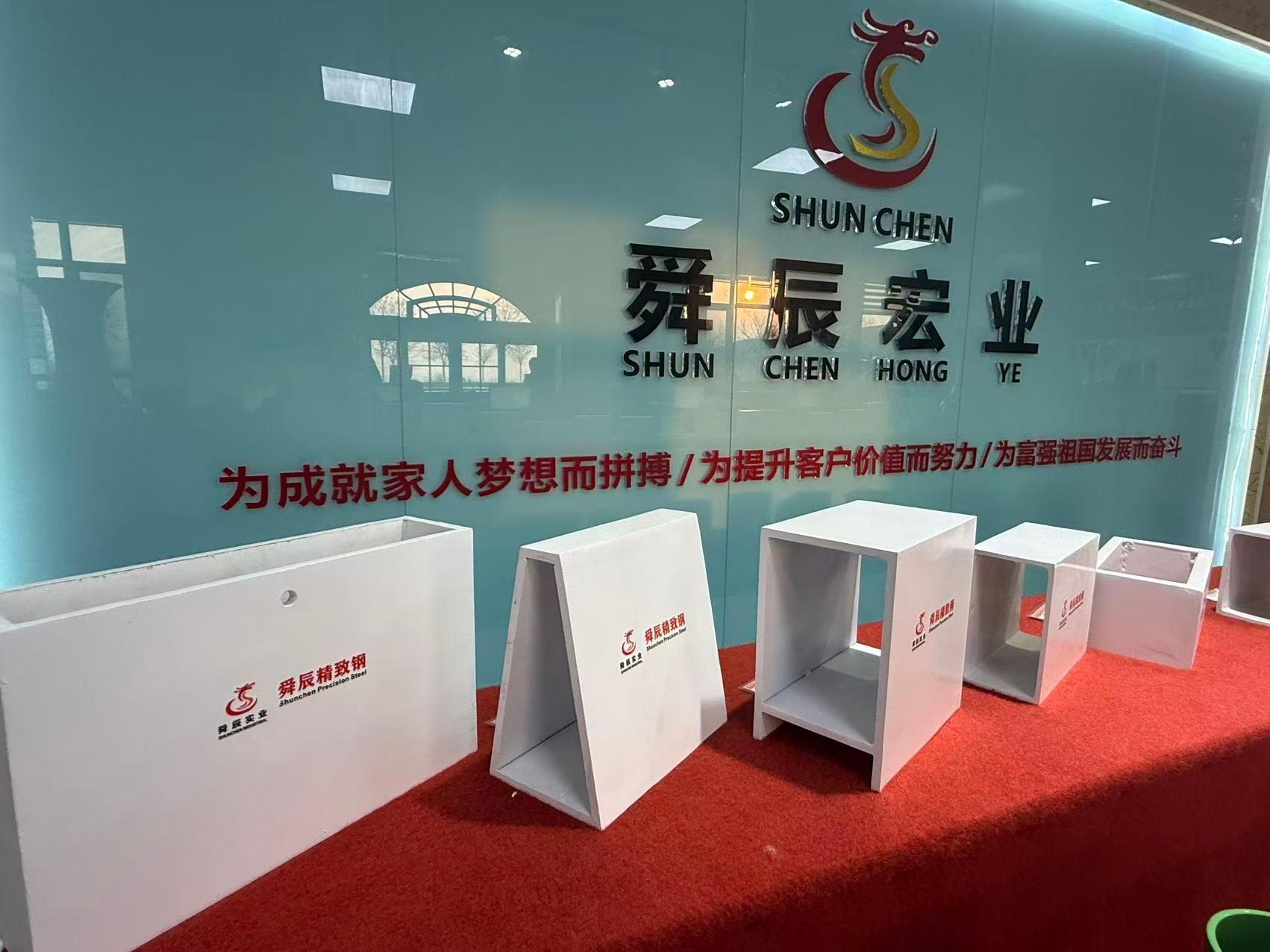
At the core of this process lies a meticulous surface preparation that strips away all impurities, creating an exceptionally receptive steel surface. The material is first degreased, then pickled in an acid bath to remove mill scale and rust, followed by a fluxing step that promotes uniform zinc adhesion. This foundational stage is critical—any oversight here compromises the integrity of the final coating, which is why we monitor chemical concentrations and immersion times with unwavering precision.
Once prepared, the steel is immersed in a bath of molten zinc at around 450°C, triggering a metallurgical reaction that forms multiple intermetallic layers. These layers, each with a unique zinc-iron alloy composition, become an inseparable part of the steel itself. The result is a barrier that resists corrosion from within, not merely a superficial shell. By controlling the bath composition—adding trace amounts of aluminum, nickel, or bismuth—we fine-tune coating characteristics such as brightness, ductility, and thickness uniformity, ensuring performance far beyond standard requirements.
Post-galvanizing, the work is cooled and inspected to guarantee the coating's structural soundness and aesthetic consistency. Unlike paint or powder coatings, this metallurgical bond withstands impacts, UV exposure, and extreme temperatures without peeling or cracking. From highway infrastructure to marine rigs, components emerge with a defensive layer that actively sacrifices itself to protect the steel, only corroding gradually over decades. This self-healing nature, combined with its complete coverage of edges and recesses, makes the process the definitive choice for longevity in the harshest environments.
Seamless Custom Fabrication to Match Unique Project Specifications
Every project brings its own set of demands—unusual dimensions, specific material properties, or environmental challenges that off-the-shelf solutions simply ignore. Our approach begins by listening closely to those requirements, then translating them into a fabrication plan that feels almost organic to the task at hand. No rigid templates, no forced fits; just a process that bends and adapts until the result aligns perfectly with your vision.
We blend traditional craftsmanship with modern precision, using techniques that leave room for refinement at every stage. Whether it’s a one-off prototype or a complex batch, the focus stays on the details that matter most to you: surface finishes, tolerances, or joining methods that elevate the final piece beyond mere functionality. It’s about making something that looks and performs like it was always meant to be there.
What truly sets this apart is the collaboration embedded in each step. You’re not just handing over a spec sheet; you’re part of the conversation. Adjustments happen in real time, and the workflow flexes to incorporate late-stage changes without derailing timelines. The outcome is a product that doesn’t just meet specifications—it reflects the nuance and intention behind them.
Global Logistics Network for On-Schedule Material Delivery
Ensuring materials arrive exactly when needed is a puzzle solved through a sprawling, interconnected network spanning continents. Every route, from ocean shipping lanes to regional trucking hubs, is calibrated to synchronize with production schedules, avoiding costly downtime. This system isn’t just about speed—it’s about rhythm, where a delay in one node can ripple outward, so contingency plans are woven into daily operations, not just written for emergencies.
The backbone is a web of strategically placed warehouses and cross-docking facilities that act more like living organisms than static depots. Real-time tracking doesn’t just show where a shipment is; it predicts when it will arrive within a narrow window, flagging potential disruptions before they escalate. Local teams on the ground speak the language of their region—literally and logistically—navigating customs quirks, last-mile hurdles, and sudden regulatory shifts that might trip up a centralized controller.
Technology ties it together, but human judgment remains the essential thread. Algorithms suggest optimal paths, yet experienced coordinators override them when a supplier’s historical patterns hint at upcoming trouble the data hasn’t yet captured. This blend of foresight and flexibility turns a logistical operation into a quiet guarantee: materials will be there, on time, every time, wherever “there” happens to be on the map.
Certified Quality Standards Backed by In-House Testing Labs
Every product we release is subject to rigorous internal protocols that go beyond conventional checklists. Our in-house labs aren't just for show—they're where raw materials and finished goods face a battery of tests simulating years of wear, extreme temperatures, and daily stress. We believe quality shouldn't be a gamble, which is why our dedicated technicians apply both standardized methods and proprietary benchmarks, catching inconsistencies long before items reach anyone's hands. This means the certifications you see aren't merely paperwork; they're backed by weeks of hands-on analysis you can trust.
It's one thing to claim compliance—it's another to prove it batch after batch. By keeping research and testing under the same roof, we shorten the gap between identifying a potential weakness and strengthening it. From metallurgy scans to endurance cycling on moving parts, our labs operate with a mix of automated precision and old-fashioned human judgment. When a product earns one of our seals, it has survived pushback that mimics the most demanding real-world environments, ensuring certification stands for lasting resilience rather than a fleeting inspection result.
The real advantage of in-house testing is the culture it builds. Our engineers, designers, and quality analysts collaborate daily right next to the testing floor, so feedback isn't filtered through layers of bureaucracy. That immediacy allows us to uphold certifications that are alive—constantly revisited, challenged, and raised. You won't find a more stubborn commitment to reliability because, for us, a certified standard isn't a static achievement but a continual promise kept by those who work with the materials firsthand.
Cost-Optimized Solutions Without Sacrificing Structural Performance
Trimming project costs often triggers concerns about weakened structures, but modern engineering proves otherwise. By rethinking material selection and load distribution, teams can achieve leaner designs that retain full strength. It’s not about cutting corners—it’s about cutting waste.
One approach involves parametric modeling to test countless configurations quickly, identifying where less material still meets safety buffers. Advanced composites and high-strength steel allow thinner sections without compromising durability. These choices often reduce both upfront spend and long-term maintenance, a combination that traditional methods rarely unlock.
Experienced teams also look beyond the bill of materials. Simplifying connections, reducing part counts, and leveraging locally available resources can slash fabrication and transport expenses. The result is a structure that stands just as tall and lasts just as long—built with a sharper focus on value, not excess.
FAQ
The zinc coating bonds metallurgically with the steel, creating a barrier that sacrificially protects even scratched areas, while paint simply sits on the surface and can chip or peel over time.
Check for consistent inventory, mill certifications, and a track record of on-time deliveries. Top suppliers also offer custom lengths, precise cutting, and knowledgeable support to match your project's exact load requirements.
When done correctly, hot-dip galvanizing doesn't compromise the steel's strength. Reputable suppliers control bath temperatures and immersion times to avoid warping, especially in longer sections.
Yes, but it requires proper technique. After welding, the affected area must be re-coated with a zinc-rich primer to restore protection. Good suppliers can advise on compatible welding procedures.
Initially, yes—they carry a premium of about 15-25%. But considering the extended lifespan and near-zero maintenance, they often end up costing less over the life of the structure.
They're common in coastal construction, bridges, solar panel frameworks, transmission towers, and industrial plants where moisture or chemicals would quickly rust unprotected steel.
Look for a uniform, spangle-free coating and measure the thickness with a magnetic gauge. A trustworthy supplier will provide data sheets showing compliance with standards like ASTM A123.
Beyond just selling steel, top suppliers offer value-added services like drilling, notching, and logistics coordination. They might also hold buffer stock for long-term projects to guarantee supply stability.
Conclusion
In modern construction and heavy infrastructure, the backbone of any resilient structure lies in the quality of its steel components. Leading suppliers of hot-dip galvanized H-beams deliver precision-engineered profiles that excel in critical load-bearing scenarios, from towering skyscrapers to expansive bridges. The advanced galvanizing process creates a metallurgically bonded zinc coating that penetrates every contour, ensuring decades of corrosion resistance even in harsh marine or industrial environments. This durability is matched by an unwavering commitment to custom fabrication—workshops readily adapt beam dimensions, web thicknesses, and flange widths to meet exact project specifications, eliminating on-site modifications and reducing waste.
Beyond the product itself, top-tier providers streamline the entire supply chain through a global logistics network that guarantees on-schedule delivery, keeping construction timelines intact. Every batch of H-beams undergoes rigorous in-house testing, from tensile strength assessments to coating thickness measurements, affirming compliance with international standards like ASTM, EN, and JIS. Such certified quality control gives engineers and contractors the confidence to optimize designs without over-specifying materials. By intelligently balancing material grades and sectional properties, these suppliers offer cost-effective solutions that preserve structural performance, making them indispensable partners for projects where safety, longevity, and budget alignment are non-negotiable.
Contact Us
Contact Person: Max Zhou
Email: [email protected]
Tel/WhatsApp: +86 15712216177
Website: https://www.shunchensteelmaterial.com/