
ODM Airplane BOX Benefits You Need to Know for Custom Packaging
2026-09-19
For many e-commerce and electronics brands, the humble airplane box is just another shipping carton—until a fragile product arrives damaged or dimensions don't match. That's where ODM airplane boxes shift from commodity to competitive advantage. The benefits aren't always obvious: better stacking strength, custom inserts that lock products in place, and material savings that quietly boost margins. Kuaijie Carton has helped brands rethink this overlooked packaging format, turning it into a tool for protection and brand recall. Before you choose your next batch of custom boxes, it's worth knowing what a well-designed ODM airplane box can actually do for your supply chain.
Why a Box That Ships Flat Ends Up Saving You Real Money
Think about all the empty space inside a standard assembled box. When a box is shipped flat, that space doesn’t exist yet — which means more boxes fit into a single truck, pallet, or shipping container. You’re not paying to transport air. The math is straightforward: fewer shipments for the same number of boxes translates directly into lower freight costs, and those savings get passed along instead of buried in your operating budget.
There’s also the matter of damage and storage. A flat box is nearly indestructible in transit compared to a pre-assembled one, which can get crushed or knocked out of shape. You avoid those frustrating “arrived bent” scenarios that force replacements and eat into margins. And on the warehouse side, flat boxes stack neatly in a fraction of the floor space, so you’re not renting extra square footage just to hold empty packaging. That quiet reduction in overhead shows up on your bottom line month after month.
Finally, consider labor and assembly. With flat boxes, your team can quickly fold and tape exactly what’s needed for each order, rather than hunting through a pile of mismatched pre-built boxes. It cuts down on wasted time and accidental over-ordering. When every dollar counts, choosing a box that ships flat isn’t just a packaging decision — it’s a leaner way to run your entire fulfillment process.
Custom Printing That Turns Every Parcel Into a Mini Billboard
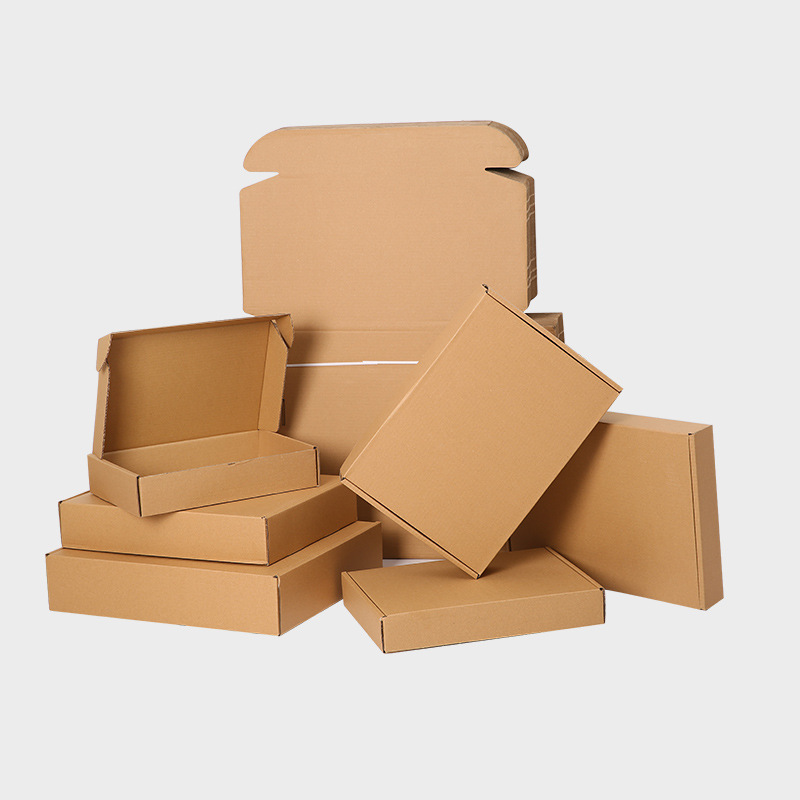
When a parcel lands on a doorstep, the first thing someone notices is the box. Custom printing swaps that plain brown cardboard for brand colors, bold type, or a few well-chosen words—something that feels more like a hello than a shipping container. That instant visual cue turns a routine delivery into a moment of recognition, giving your brand a physical presence before the tape even comes off.
The real appeal of custom printed parcels is how adaptable they are. You can cover the outer carton, line the inside with patterned tissue, add branded tape, or stamp a logo right next to the shipping label. Smaller runs have become affordable enough for growing shops, so every order that leaves your hands carries a piece of your identity. Those parcels move through sorting hubs, sit in mailrooms, and get carried up stairwells—each place giving your brand a free moment in front of new eyes.
A printed parcel doesn’t vanish after one glance. Recipients often keep the box for storage or reuse, and they might snap a photo that reaches their friends. Neighbors see it on the porch, delivery drivers handle it, office receptionists sign for it. That repeated, casual exposure adds up over time, turning each shipment into a low-cost, long-lasting marketing touchpoint that continues working long after the sale is done.
The Engineering Trick That Makes Airplane Boxes Surprisingly Strong
Most people assume airplane structures are strong because they use thick metal, but the wing boxes and fuselage sections on modern jets are more like cleverly engineered cardboard boxes—thin outer panels supported by internal bracing. This semi-monocoque design lets the skin, stringers, and frames work together so that a thin aluminum sheet doesn't crumple like an empty soda can under shear loads; instead, the stress gets spread across the entire boxed section.
Take the wing box at the center of an aircraft wing. Its upper and lower skins act like the top and bottom of a box, the front and rear spars are the side walls, and a series of internal ribs hold everything in place. When the wing bends in flight, the upper skin carries compression while the lower skin handles tension, and the spars and ribs keep the skins from buckling locally. Even with skins only a few millimeters thick, the box resists bending almost like a solid metal beam, yet weighs a fraction as much.
Another trick is the honeycomb sandwich panel—two thin sheets of aluminum or carbon fiber bonded to a core of hexagonal aramid paper honeycomb. It looks flimsy at first glance, but the honeycomb core acts like thousands of tiny I-beams, holding the face sheets apart and preventing them from moving toward each other under compression. The result is a panel less than a centimeter thick that can support the weight of an adult standing on it without bending, which is why you'll find these panels in aircraft floors, cargo bay walls, and even the overhead bins.
Less Weight, Lower Freight: The Shipping Math You Can't Ignore
Every extra kilogram you ship isn't just a line item on a carrier's invoice—it multiplies across distance, dimensional weight, and fuel surcharges. A carton that weighs 9 kg instead of 8 kg can push you into the next pricing tier, where the per-kilo rate jumps by 18%. Shave that single kilo off 500 monthly parcels, and you're looking at thousands in annual savings without touching your margin.
The real leverage hides in packaging redesign. Swap corrugated void fill for molded pulp inserts, or switch from double-wall to single-wall boxes where crush strength allows. A 12% reduction in tare weight often translates to a 4–6% drop in freight spend because carriers bill on chargeable weight—the higher of actual or volumetric. Lighter boxes also mean more units per pallet, which compresses your cost per item shipped.
Don't overlook the ripple effect on returns and reverse logistics. Heavier packaging costs you twice: once outward, once coming back. A modular box that fits multiple product sizes eliminates dead air and reduces dimensional weight. The math is simple—less material, less mass, less money handed to the carrier every single day.
How ODM Airplane Boxes Protect Products Without Excess Padding
ODM airplane boxes do away with bulky foam and bubble wrap by using precision-cut inserts and structural geometry tailored to each product. Folded corrugated partitions, locking tabs, and suspended cradles hold items away from the outer walls, leaving a thin cushion of air that absorbs shocks during loading and turbulence. This built-in buffer keeps goods steady without the need to stuff empty space with filler.
The corners and edges are reinforced with double-wall or triple-wall board, while scored fold lines channel impact forces along predictable paths. Instead of relying on extra padding to immobilize contents, the design uses tension and compression, with small flaps or die-cut slots gripping fragile parts directly. The outer shell itself works as a shock absorber, so one well-fitted box replaces several layers of cushioning.
From Storage Closet to Customer's Hands: A Packing Workflow Upgrade
Before the upgrade, our packing process felt like a scavenger hunt in a cramped storage closet. Items were stacked without rhyme or reason, so pickers wasted time digging through shelves while orders piled up. Mis-picks and delayed shipments were common, and the whole operation had a frantic, disorganized energy. It was clear the old way wasn't serving our customers or our team.
The new workflow turned that chaos into a calm, step-by-step system. We rebuilt the storage area with labeled bins and clear zones, so every SKU has a home that's easy to find. Packing stations now include barcode scanners for real-time verification, and each order follows a standardized sequence: pick, scan, pack, double-check. This has cut errors dramatically and given employees confidence in what leaves the door. The real payoff is when a customer opens a box and finds everything exactly as expected—nothing missing, nothing damaged, just a smooth handoff from our closet to their hands.
FAQ
They combine a self-locking design with flat storage, so you save warehouse space while getting a box that assembles in seconds. Because an ODM partner handles design and manufacturing under one roof, you can tweak dimensions, printing, and finishes without juggling multiple vendors.
The overlapping side flaps and double-layer front panel create extra cushioning at the corners, which are the most common impact points. You can also specify a thicker corrugated grade or add inserts without redesigning the outer structure.
Yes, from the paper stock and flute type to flexographic or digital printing. You're not stuck with standard white or kraft; you can run full-color graphics, add a soft-touch laminate, or use a custom die-cut window to show off the product.
Since ODM suppliers often keep standard blank sizes in stock and only customize the print plate, you can get a branded look at a lower minimum order than fully bespoke rigid boxes. Flat shipping also cuts freight costs because you're not paying to transport air.
Most use E-flute or B-flute corrugated board, sometimes with a coated white top layer for better print quality. The corrugation gives a good strength-to-weight ratio, so the box stays light enough for cheap parcel rates but rigid enough to resist crushing.
They arrive flat and pop open with a simple tuck-and-fold motion—no tape or glue needed for the basic closure. This speeds up packing lines, reduces repetitive hand strain, and lets seasonal workers be productive after a five-minute demo.
Many are made from recycled corrugated fiber and are fully recyclable after use. Because the design uses less material than a rigid setup box, you also reduce overall fiber consumption and lower the carbon footprint per shipment.
Check the supplier's tolerance for dimensional accuracy, ask about moisture resistance if the product will be cold-chain shipped, and request a physical sample before approving the print proof. Also confirm whether they can hold inventory and ship partial releases to avoid storage bottlenecks.
Conclusion
Most people assume a box has to be rigid from the start to do its job, but ODM Airplane Boxes flip that idea. They ship flat, which means you're not paying to haul empty air from the supplier to your warehouse. Once folded, a clever structural design kicks in: reinforced corners and load-bearing creases make these boxes surprisingly tough, so you can stack them without worrying about crushed edges. That same engineering allows them to hold heavier items than their slim profile suggests, and because the material is lighter than standard corrugated options, freight costs drop noticeably. Over a year of regular shipments, the difference in dimensional weight alone can cover the cost of a new print run.
Then there's the marketing side. Custom printing turns an ordinary shipping box into a moving advertisement—your logo, colors, and message wrap the parcel, so every delivery makes an impression before the box is even opened. Inside, the design cradles products firmly enough that you can cut back on bubble wrap, foam, or paper filler, which speeds up packing and reduces waste. That also frees up storage space, since flat boxes stack neatly on a shelf instead of eating half a closet. From the moment you break down a bundle to the moment a customer receives their order, the whole process feels less like wrestling with cardboard and more like a smooth, repeatable workflow. It's not just packaging; it's a quiet upgrade to how your business runs.
Contact Us
Contact Person: Tan Xiang
Email: [email protected]
Tel/WhatsApp: 8613798906863
Website: https://www.dgkjzx.com