

Portable High Intensity Light Factory Builds Rugged Illumination for Demanding Work Sites
2026-11-16
Ask any site manager what happens when portable lighting fails at 3 a.m., and the answer is rarely polite. Demanding work sites—especially those exposed to floodwater, mud, and rough transport—need illumination that is built more like equipment and less like a household fixture. That is the idea behind a high-intensity light factory approach: portable systems designed for impact, weather, and long shifts. In this article, we look at the design choices behind rugged illumination and where Jianghe Flood Prevention fits into that growing field.
Rugged by Design, Proven on the Job Site
Tough starts with the frame. We boxed the corners, moved the seams away from high-stress points, and used hardware that stays tight after repeated vibration. Every material choice was made with one eye on the scale and the other on years of rough handling.
The proof isn’t in the showroom. It comes from crews who leave the equipment out overnight, run it in wet clay, and drop it off a tailgate more often than anyone wants to admit. Those conditions reveal weak points that lab testing misses, and they guide every revision.
What ends up in your hands is the result of that cycle, built to take punishment without adding bulk and shaped by the kind of wear that only real work creates.
High Intensity Without the Fragile Parts
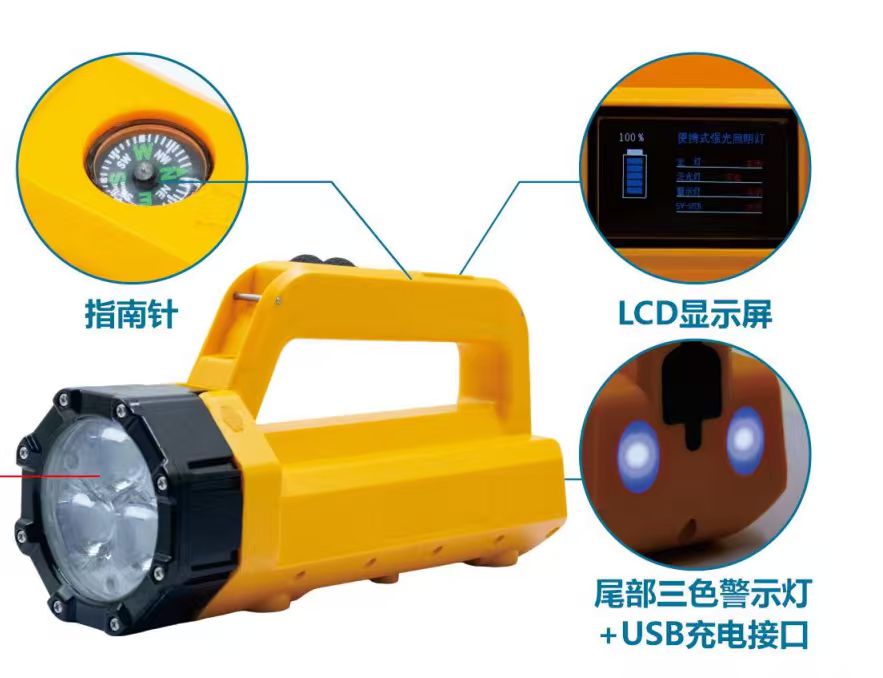
High intensity usually gets treated like a glass cannon—impressive output until one small part gives out. The point here is to keep that output without the glass. That means cutting the fragile pieces, not softening the work.
Sessions can be short, fast, and demanding without piling extra stress on joints, connective tissue, or awkward positions. The difficult parts stay difficult. The parts that tend to break are simply left out.
That changes how it feels the next day. You are more likely to be sore in the muscles that did the work, not nursing a sharp pain in a place that should have been protected.
Portable Enough for the Far Side of the Project
The far side of a job site rarely offers a clean path, a spare outlet, or a convenient place to set things down. That’s why this unit was built to tag along without demanding its own trip. It slips into a tool bag’s side pocket or clips onto a belt loop, leaving both hands free for a ladder, a roll of drawings, or a handful of fasteners. You’re not planning around it; it just comes with you.
Carrying weight stays low and close to the body, so crossing uneven ground or squeezing past stored materials doesn’t turn into a balancing act. The housing is shaped to avoid catching on door frames, conduit, or scaffold joints. After a full morning of moving from one end of the structure to the other, it stays comfortable rather than becoming another thing to shift from shoulder to shoulder.
Once you reach the far edge of the work, there’s no need to hunt for power or rig up a temporary stand. Open it, use it, close it, and keep moving. The same portability that gets it there also makes pack-up quick when the day shifts or the weather turns. It earns its place by staying out of the way until the moment it’s needed.
Sealed Tight Against Job Site Dust and Rain
Jobsite grit has a way of finding the smallest gap. The housing here uses interlocking seams and full-perimeter gaskets rather than relying on a single rubber lip, so fine dust from concrete cutting or drywall sanding does not settle onto circuit boards or connector pins.
Rain protection goes beyond a tight shell. Port covers press into place with enough tension to stay put when cables are unplugged, and the few necessary openings are angled or shielded to shed water before it can pool near seals. That matters when a storm rolls through mid-task and the unit is left exposed on a scaffold or tailgate.
The real difference shows up weeks later. Tools with poor sealing start acting up after repeated temperature swings and vibration, but this design keeps the inside dry and dust-free without making covers hard to open or connectors awkward to reach.
Factory-Tested Housings Before They Ship
Every housing that leaves our facility gets run through a short battery of checks on the actual production line. We verify bolt-hole alignment with a go/no-go fixture, cycle any threaded entries with a calibrated torque driver, and pressurize sealed units to catch pinhole leaks that visual inspection misses. If a housing does not hold spec, it is pulled before it ever reaches the packing bench.
The final pass also includes a practical assembly check. A housing is paired with its mating cover, gasket, and hardware, then closed and opened once to confirm the fit feels right—not just dimensionally correct on paper. This step catches tolerance stacking issues that drawings alone will not reveal, so the unit you receive is ready to build into your equipment without surprises.
Each tested housing carries a small batch label tied to the inspection record, including date, line, and operator initials. That gives us a clear trail if a question comes up later, and it means the housing in the box is not a random sample—it is the exact unit that passed those checks.
More Light Where Work Actually Happens
Most lighting plans stop at the center of the room, as if work only happens under the big ceiling fixture. But real tasks drift toward edges, corners, benches, and the exact spot where a shadow falls across a keyboard or a cutting line. This approach moves the brightest pools of light away from empty floor space and onto the surfaces that actually collect your focus.
It starts with noticing where your hands go without thinking. Maybe it is the left side of a desk where notes pile up, or the far end of a counter where small parts get sorted. Instead of flooding the whole area with one flat wash, the light is shaped and aimed so that the highest contrast lands there, while the rest of the room gently recedes.
That shift changes more than visibility. It quietly removes the strain of leaning into dim zones, makes glancing between tools and references feel effortless, and keeps the room from looking like a showroom. Light ends up where the work is, not where the ceiling happens to be.
FAQ
The housing is die-cast aluminum with a powder coat, and the lens is tempered glass. The driver is potted inside to prevent shock damage, and the mounting points have vibration-dampening bushings. People drag them onto scaffolds, toss them into truck beds, and drop them from ladders more often than anyone wants to admit. They keep working after that.
Most models accept a wide input range, typically 12-24V DC as well as 100-277V AC, so the same light can be wired to a work truck, a portable battery pack, or site mains without needing separate versions.
The smaller units weigh under 20 pounds and include a folding handle, magnetic feet, or a quick-release tripod mount. Even the wide-area models break down into one carry case, so you can set up or move them without bringing a second person.
Yes. Wiring entries are sealed with compression glands, switches are covered, and the cooling fins are designed to shed water rather than trap it. In testing, the fixtures have held up to high-pressure spray and prolonged dust exposure without moisture inside the lens.
Interchangeable lenses and reflector kits let you switch between a tight spot beam and a wide flood pattern. Some factory models also have a dial on the side for stepless focus, which is useful when the same light has to cover a small repair bay one day and a pipe laydown area the next.
With the standard lithium battery pack, a compact model runs about 4-6 hours at full brightness and up to 24 hours on reduced output. The larger site towers accept parallel battery trays or an AC feed, so runtime depends more on the power source you attach than on the lamp itself.
Yes. Common options include magnetic bases, C-clamp mounts, tripod spigots, recessed brackets for vehicle racks, and adjustable trunnion mounts. If those don't fit, the engineering team can produce a custom bracket or guards for your specific equipment.
The main difference is serviceability and thermal management. You can replace the driver, lens, gaskets, and emitters instead of treating the whole unit as disposable. The LEDs run cooler because the casting and fin arrangement pull heat away from the board, which keeps output stable over longer shifts.
Conclusion
At a portable high intensity light factory, the design starts with the housing rather than the bulb. Crews treat job site lighting roughly: it gets knocked off scaffolding, dragged across gravel, and left outside when a storm rolls in without much notice. The enclosures are built to take that abuse, sealed tight enough to keep out concrete dust, mud, and heavy rain, and every unit is run through factory testing before it ships. That means a fixture does not arrive on site as an untested assembly. It already has heat cycling, switch checks, and seal verification behind it, so the first real job is not the first time it has been powered hard.
The beam itself comes from a high intensity source that does not depend on thin glass panels or small fragile brackets that snap in cold weather or when the light tips over. Because the whole unit stays compact and light enough to carry one-handed up a ladder or across an unfinished floor, it actually travels to the far side of the project instead of staying near the power drop. That portability matters more than raw output numbers. A light that reaches the pour, the crawl space, or the framing crew at the back of the building puts usable illumination where the work is happening. Over time, sealed housings, impact-tolerant construction, and straightforward portability keep the same fixture in rotation across different tasks rather than sidelined for repairs.
Contact Us
Contact Person: Kristin Zhang
Email: [email protected]
Tel/WhatsApp: +8615366239752
Website: https://www.jianghecn.com/