

Pressure Vessel Supplier Selection: Key Factors for Safety and Quality
2026-06-05
Selecting the right pressure vessel supplier isn’t just a procurement task—it’s a safeguard for your operations. A single flaw can lead to catastrophic failure, so how do you cut through the noise and pinpoint a partner that truly prioritizes safety and quality? While many vendors make bold claims, few back them up with the engineering rigor and traceability that critical applications demand. At DYE, we’ve seen firsthand how the right criteria transform supplier evaluation from a box-checking exercise into a strategic advantage. In this article, we’ll unpack the non-negotiable factors that separate dependable manufacturers from the rest—and why a meticulous approach upfront saves more than just money.
Decoding Certifications: What Paperwork Actually Protects You
A string of letters on a product label might look impressive, but without digging into the fine print, you could be placing trust in something hollow. Many certifications require companies to meet baseline standards for safety, sustainability, or ethical practices—and those that carry real weight are backed by regular inspections, transparent audit trails, and consequences for non-compliance. The key is separating meaningful oversight from marketing fluff.
When a certifier is independent and accredited, their stamp often means a third-party has verified claims rather than relying on unverified self-declarations. For instance, in construction materials, genuine certifications might confirm that a product withstands specific stress levels or weather conditions over time, while in agriculture, they can attest to responsible chemical use and habitat protection. Reading the scope and version of the standard reveals what exactly was assessed—and what wasn't.
Ultimately, the paperwork only shields you if the certifier has teeth. Watch for ongoing surveillance, accessible complaint channels, and publicly available records of suspended or withdrawn certificates. A legitimate scheme should leave you with a clear understanding of what happens when a certified entity falls short, whether it's a recall, a mandatory fix, or loss of market access. Without those safeguards, even the most official-looking seal might be a promise written in air.
The Material Trail: Why Origin Stories Matter for Pressure Integrity
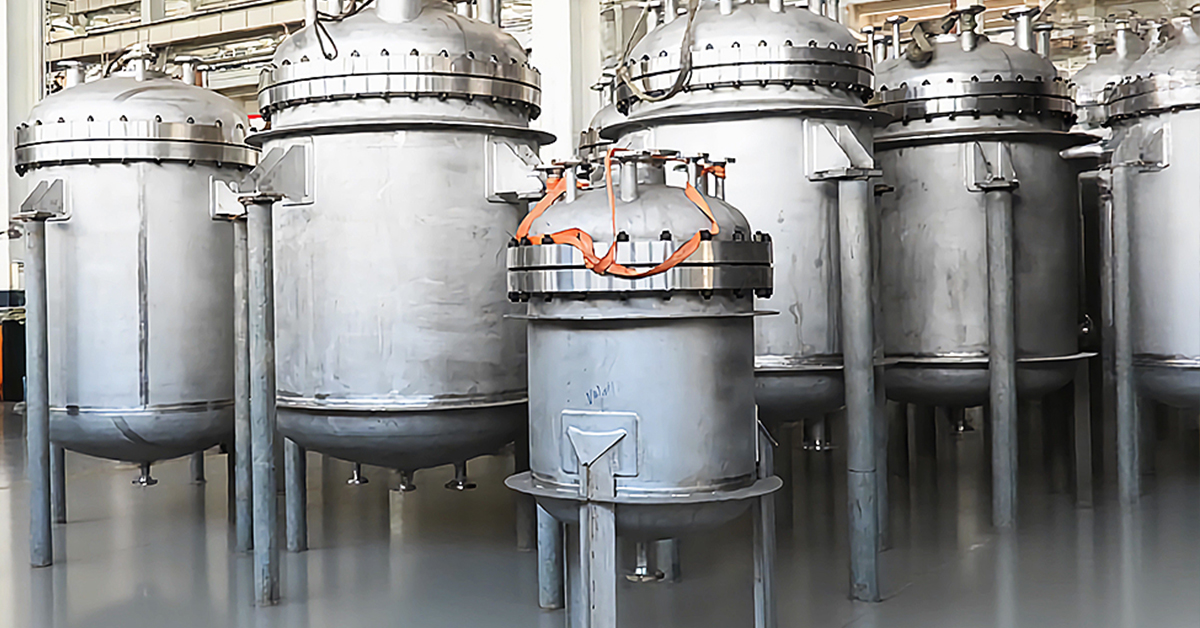
Every pressure vessel tells a tale long before it faces its first burst test. The steel’s birthplace—whether forged in a tightly controlled electric arc furnace or a dated open-hearth setup—shapes its microstructure in ways that chemistry certificates alone can’t capture. Trace impurities, rolling schedules, and even the cooling rate after hot forming leave fingerprints that show up decades later under cyclic loading. Ignoring this material backstory is like trusting a bridge without knowing if the cables were drawn from virgin ore or recycled scaffolding.
Field failures nearly always point to gaps in the narrative. A seamless pipe that cracked in sour service might have passed every mill test, yet its origin story would have betrayed a low reduction ratio that left centreline porosity intact. We’ve learned that the real safeguard isn’t a thicker wall—it’s an unbroken chain of custody from ladle to hydrotest, capturing each thermal event that can rewrite phase boundaries. When operators pair chemical specs with a visual map of where and how the material was born, they stop relying on statistical survival odds and start understanding their hardware as individuals.
Regulators are catching on. New fit-for-service guidelines quietly push for material genealogy, not just mechanical properties. Why? Because identical alloys can behave like strangers under hydrogen or extreme cold if their creation histories diverge. A clear provenance—packed with heat numbers, forming parameters, and post-weld treatments—turns a guessing game into an engineering judgment. As asset life stretches past original design limits, that material trail isn’t optional paperwork; it’s the only honest predictor of whether a pressure boundary will hold when it matters most.
Welds Without Weakness: Assessing Craftsmanship Over Checklists
A checklist might confirm that the correct filler metal was loaded and the joint preheated to spec, but it can’t sense the subtle feedback traveling through the torch. A welder with years under the hood knows when the puddle isn’t wetting out just right, or when the arc sound shifts to a lazy hum that spells trouble. That kind of instinct isn’t captured on any form—it’s earned through thousands of hours of paying attention to what happens between the lines of a procedure.
Consider a multi-pass groove weld on a pressure vessel. The WPS says section five requires three stringer beads with specified amps and travel speed. A craftsman, however, reads the cooling ripples of the previous pass and decides to slow down by five percent because the root opened slightly during fit-up. That micro-correction prevents a small lack-of-fusion that no checklist would ever catch. It’s the actual application of judgment, not blind adherence to numbers, that turns a merely acceptable weld into one you’d stake your reputation on.
When you’re assessing weld quality, watch how the welder prepares the joint, the way they angle the electrode to compensate for a slight bevel mismatch, or how they clean a restart with a flick of the grinder before the inspector even asks. These are the hallmarks of craftsmanship—decisions made in real time based on material behavior, not just a list of requirements. A checklist tells you the steps were supposed to happen. The welder’s hand tells you they actually did, with the care that prevents weakness from ever taking root.
Testing That Tells the Truth: Beyond Standard Hydrostatic Routines
Standard hydrostatic tests have long been the industry's default for checking pipeline integrity, but they often paint an incomplete picture. These routines pressurize a system with water and look for leaks or pressure drops, which is fine for spotting obvious flaws. Yet, they miss subtle signs of material fatigue, stress corrosion cracking, or third-party damage that don't immediately cause a rupture. Reality isn't a controlled, single-phase event; operating conditions fluctuate, fluids change, and the ground itself shifts over time. Relying solely on a one-time hydrotest is like checking a bridge's strength by driving a single truck over it and declaring it safe for a century.
Moving beyond these routines means embracing methods that listen to the pipeline's actual behavior under live conditions. Technologies like fiber-optic distributed acoustic sensing capture the whispers of strain and temperature along every meter, revealing weak spots that hydrotests never could. Electromagnetic inspection tools and guided wave ultrasonics dig deeper, assessing wall loss and mechanical properties without shutting down operations. The real truth comes from integrating these signals over time, building a health record that reflects seasonal swings, pressure cycles, and even encroaching excavation activity. This isn't about discarding hydrostatic tests entirely—they still have their place for commissioning and major modifications—but about layering on continuous, intelligent monitoring that talks back with real data, not just a pass/fail stamp.
The shift also demands a change in mindset, from reacting to failures to anticipating them. When operators pair physics-based models with machine learning trained on historical inspection logs, they start seeing patterns that human inspectors would miss: a small deformation growing incrementally, or a coating defect correlated with soil chemistry changes. This proactive approach doesn't just prevent leaks; it reshapes maintenance budgets, lengthens asset life, and builds public trust. After all, a test that tells the truth is one that acknowledges the dynamic, messy reality of infrastructure instead of hiding behind a spotless test certificate from last decade.
Engineering Backbone: Support That Outlasts the Sale
Real support doesn’t vanish once the paperwork is signed—it’s woven into every layer of a product’s design. An engineering backbone means thinking beyond the initial specs, building in reliability that quietly proves itself over years of hard use. It’s the extra tolerance in a gear, the reinforced seam on a housing, the countless test cycles that never made it to the brochure. This kind of foresight means you’re never left stranded when the unexpected hits, because the foundation was laid long before the first handshake.
When we talk about support that outlasts the sale, it’s not a warranty number or a chatbot response—it’s a team of engineers who treat your challenges like their own. They know the product inside out because they helped create it, and their commitment doesn’t expire with a calendar date. From diagnostic calls that feel like a quick chat with a trusted mechanic to onsite visits where they get their hands dirty, that backbone translates into solutions that keep operations humming. It’s the difference between a vendor and a partner who actually sticks around.
Over time, this engineering-first mentality builds something rare in a throwaway world: genuine continuity. Components get redesigned not for planned obsolescence, but because someone found a quieter bearing or a smarter logic board—and those improvements trickle back into the field, keeping older systems relevant. It’s a quiet promise that your investment won’t be orphaned, rooted in the pride of people who sign their work with invisible ink. That’s the kind of backbone you can feel when a piece of equipment is still pulling its weight, years after the sale, without ever grabbing headlines.
Auditing the Invisible: Corporate Culture’s Role in Vessel Safety
Walk onto any well-maintained vessel and you’ll find checklists, risk assessments, and safety manuals neatly filed in the bridge. Yet beneath the paperwork, a hidden current often shapes every decision on board. It’s the corporate culture—an unwritten code that can either strengthen safety protocols or quietly erode them. When a junior officer hesitates to challenge a captain’s hazardous shortcut, or when maintenance issues are ignored because “we’ve always done it this way,” the real culprit isn’t a broken procedure—it’s a culture that normalizes silence and shortcuts. Auditing the invisible means looking past the shiny compliance certificates to ask harder questions: Are near-misses discussed openly, or are they buried in blame? Do crew members feel safe speaking up, or does the chain of command punish honesty? These cultural dynamics rarely show up in standard audits, but they’re the very forces that decide whether a ship returns to port safely or becomes another statistic.
To audit corporate culture in maritime settings is to map something intangible yet decisive. Traditional audits focus on tangible items—equipment condition, logbook entries, training records—but a safety culture audit requires reading between the lines. Observers need to note how leaders react when something goes wrong: does the company immediately hunt for a scapegoat, or does it examine the system that allowed the error? The most reliable indicator is often the quality of conversation during safety meetings. If reports are met with genuine curiosity rather than defensiveness, the organization likely values learning over punishment. In contrast, a vessel where crew members parrot safety slogans while secretly cutting corners reveals a gap between espoused values and daily practice. Auditors should treat culture not as a vague notion but as a set of observable behaviors—who speaks, who listens, and what gets discussed when the official meeting ends. Ultimately, auditing the invisible doesn’t require a new checklist; it demands a shift in attention from what’s on the wall to what’s happening in the crew mess.
FAQ
Start by verifying their engineering capabilities and track record. Ask about past projects with similar pressure and temperature requirements, and don’t just rely on sales pitches—request detailed case studies. A supplier with in-house design expertise can catch potential failures before fabrication starts, which is far safer than one that simply builds to prints without question.
It’s non-negotiable. Every piece of plate, forging, and pipe should be traceable back to its heat number and mill test report. Without full traceability, you risk using substandard materials that may fail under stress. I’ve seen vessels rejected during audit simply because a supplier couldn’t prove the origin of a single nozzle.
They provide a common baseline, but compliance alone isn’t enough. A genuine ASME-certified shop will have regular audits and stamps for specific work types. However, you should probe deeper—ask how they handle deviations from code, and whether their practices exceed the minimum. A good supplier treats standards as a floor, not a ceiling.
Welding is where many failures originate. Qualified procedures and welder performance records tell you if the supplier understands metallurgy and joint design, not just bead appearance. During a shop visit, I always request to see ongoing weld logs and speak with the welding engineers, not just the quality manager.
Certificates are easy to frame. Better to examine their non-conformance reports and corrective action logs. This reveals how they catch and fix issues internally. Also, ask for a walk-through of their NDE capabilities—do they outsource radiography or have in-house experts? The depth of their inspection tells you how seriously they take defect prevention.
A history of field leaks or premature replacements is obvious, but look for subtle signs: high employee turnover in the QC department, reluctance to share incident reports, or a shop floor that seems disorganized during unscheduled visits. Consistent pressure from clients to expedite orders often correlates with corners being cut.
Safety doesn’t end at delivery. A responsible supplier offers ongoing support for installation, operational advice, and maintenance alerts. They should be willing to review inspection findings from your in-service vessels and suggest proactive repairs. If they disappear after the invoice is paid, you might miss early warning signs of fatigue or corrosion.
Go beyond the standard hydrostatic test. Ask about their approach to radiographic testing percentage and whether they use ultrasonic or phased array for critical welds. Inquire about witness points in their itinerary—if they push back on your inspector’s access, that’s a problem. Also, ensure they have a clear protocol for handling test failures, not just a retest-and-close mentality.
Conclusion
Choosing a pressure vessel supplier goes far beyond comparing price tags or delivery timelines. The paperwork that truly safeguards your operation isn't a generic certificate of compliance, but a detailed trail of third-party inspections tied to the specific vessel’s identification number—verify that stamps from ASME, PED, or local jurisdictions are backed by authentic audits, not just self-declarations. Equally critical is the origin of the steel itself: a mill test report that stops at chemistry and strength leaves gaps; demand full traceability from melt to plate, including heat treatment records and impact testing at design temperatures, because a vessel’s integrity starts long before the first weld is struck. When you do focus on fabrication, move past checklist-driven inspections and look for evidence of true craftsmanship—welders who understand heat input control, post-weld heat treatment nuances, and joint preparation beyond minimum code requirements, so that hidden flaws don't lurk under a visually acceptable bead.
Testing routines should provoke confidence, not just tick boxes; standard hydrostatic procedures rarely expose fracture risks or fatigue sensitivity, so insist on supplementary methods like phased array ultrasonic testing or acoustic emission monitoring that reveal the vessel’s actual condition under stress. But even the best build matters little without a living engineering backbone—the supplier’s support must extend years past the sale, offering responsive technical guidance for repairs, rerating, or fitness-for-service assessments without disappearing into voicemail. Finally, audit what you can’t see during a shop visit: a company’s culture around safety, its transparency when mistakes happen, and how it empowers quality control staff, because a vessel’s reliability is ultimately a mirror of the people and principles behind its production.
Contact Us
Contact Person: Ada Xu
Email: [email protected]
Tel/WhatsApp: 0577-86806088
Website: https://www.dayuwz.com/