
Professional Oilfield Reinjection Water Corrosion Inhibitor: Key Benefits and Applications for Reliable Protection
2026-07-11
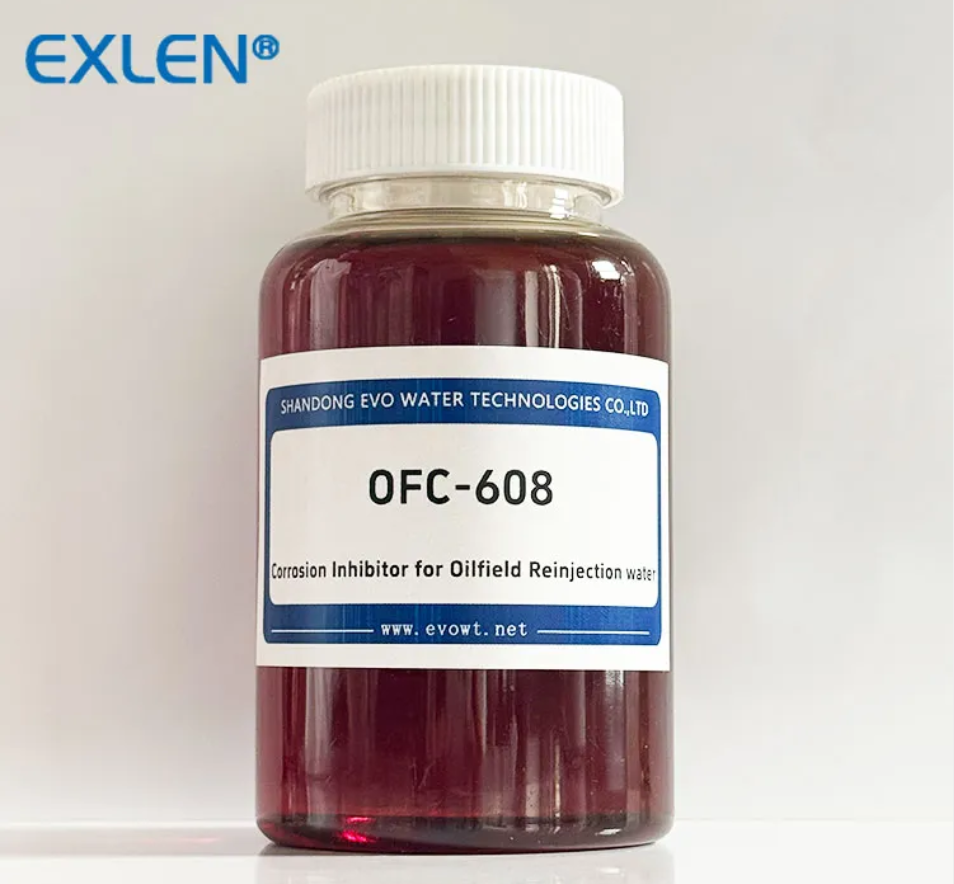
In the demanding world of oilfield operations, reinjection water systems face a relentless enemy: corrosion. Left unchecked, it eats away at pipelines and equipment, driving up costs and risking environmental harm. But what if you could stop corrosion in its tracks with a solution engineered for the toughest conditions? Enter EVO's professional oilfield reinjection water corrosion inhibitor—a game-changer designed to deliver reliable protection. In this post, we’ll dive into the key benefits and real-world applications that make it an essential tool for maintaining asset integrity and operational continuity. Whether you're battling H₂S, CO₂, or high-salinity brines, discover how the right chemistry can turn the tide against corrosion.
The Hidden Costs of Uncontrolled Corrosion in Reinjection Loops
When reinjection loops suffer from unchecked corrosion, the financial impact extends far beyond the obvious repair bills. Production downtime is one of the most punishing consequences—each hour a system is offline for emergency repairs translates to lost throughput that can never be recovered. Compounding this, the frequent need for component replacements strains maintenance budgets and warehouse inventories, as pumps, valves, and piping succumb to thinning walls and pitting attacks.
There's also a quieter drain on resources that often goes unnoticed: creeping energy inefficiency. As corrosion roughens internal surfaces and narrows flow paths, pumping systems must work harder to maintain target rates, driving up electricity consumption month after month. Add to this the hidden labor costs of reactive maintenance crews constantly firefighting corrosion-related failures, and the total cost of ownership begins to reveal itself as a slow, relentless bleed on operational profitability.
Perhaps most insidious are the risks that don't show up on a spreadsheet until it's too late—safety incidents and environmental releases. A corroded reinjection line that fails under pressure can cause injury, contaminate surrounding areas, or breach containment, triggering regulatory fines and reputational damage that far exceed any capital saved by deferring proper corrosion management.
Tailored Molecular Structures That Resist Harsh Downhole Conditions
Designing molecules that survive the extreme temperatures and pressures of deep reservoirs requires a departure from conventional polymer chemistry. By building custom architectures with thermally stable backbones—think ladder-like or semi-rigid chains—we minimize degradation pathways that ordinary materials rapidly succumb to. Strategic placement of functional groups further shields vulnerable bonds, ensuring the chemistry holds up when others falter.
Beyond mere thermal endurance, molecular designs are tuned to combat the corrosive cocktail of brines, acids, and sour gases encountered downhole. Hydrophobic segments and steric barriers are deliberately woven into the structure, repelling water and aggressive ions that accelerate breakdown. This targeted approach preserves viscosity and reduces unwanted adsorption on mineral surfaces, even in the most chemically aggressive zones.
The result is a suite of additives that perform predictably where off-the-shelf products fail. Each tailored molecule acts as a robust scaffold, maintaining its intended function—whether friction reduction, scale inhibition, or fluid-loss control—under stresses that would unravel lesser designs. It's this molecular-level precision that turns a promising lab concept into a reliable downhole solution.
Case Studies: Extending Asset Lifespan Across Diverse Fields
In the aerospace industry, a leading manufacturer faced persistent wear on turbine blades used in regional jet engines. Traditional coatings were failing prematurely under high-temperature cycling, leading to frequent overhauls. By adopting a refined surface engineering process that combined laser peening with a proprietary ceramic-metallic overlay, the company managed to double the expected service interval. Field data over three years confirmed a significant reduction in erosion and fatigue cracking, ultimately saving millions in unplanned maintenance. The approach not only kept aircraft flying longer but also minimized downtime for operators.
Shifting to maritime logistics, a global shipping firm grappled with corrosion in ballast tanks across its fleet of bulk carriers. Rather than relying solely on sacrificial anodes and scheduled recoatings, they implemented an active impressed current cathodic protection system integrated with real-time monitoring sensors. This data-driven strategy allowed crews to adjust protection levels based on actual corrosion rates rather than fixed timetables. Over a five-year assessment, the initiative cut steel renewal costs by nearly forty percent and essentially eliminated emergency dry-docking related to hull degradation.
On the manufacturing floor, a heavy equipment producer reimagined how it maintained hydraulic systems in its line of excavators. Instead of performing fluid changes at rigid intervals, they installed inline sensors to track oil cleanliness, moisture, and wear particle counts. The condition-based maintenance program that followed used predictive algorithms to schedule servicing only when necessary. As a result, hydraulic pump life stretched by an average of thirty percent, and instances of catastrophic failure dropped sharply. Through these varied examples, it becomes clear that combining material innovation, digital oversight, and tailored protection strategies can fundamentally alter the longevity equation for critical assets.
Synergy With Scale Inhibitors and Oxygen Scavengers
Combining scale inhibitors with oxygen scavengers creates a powerful defense against multiple forms of system degradation. While scale inhibitors prevent mineral deposits from forming on heat transfer surfaces, oxygen scavengers eliminate dissolved oxygen that fuels corrosion. When used together, these chemicals reinforce each other's performance: the absence of scale ensures that oxygen scavengers can reach metal surfaces more uniformly, while reduced corrosion means fewer rough spots where scale crystals might anchor and grow. This dual-action approach not only extends equipment life but also maintains thermal efficiency that would otherwise decline as layers of scale and rust accumulate.
In practice, the synergy becomes especially evident under fluctuating operating conditions. For instance, during load changes or start-up phases, oxygen levels can spike unexpectedly. A system relying solely on a scale inhibitor might still suffer localized corrosion, which in turn creates nucleation sites for scale. By maintaining a consistent residual of an oxygen scavenger, operators close this vulnerability. Field data from boiler and cooling systems frequently shows that combined programs reduce the total chemical demand compared to treating each problem separately—because the agents work together to keep passivation layers intact and heat transfer surfaces clean simultaneously.
Formulators often take advantage of this interplay by designing products that blend the two functions, carefully balancing the active species to avoid antagonism. Some oxygen scavengers, for example, can alter pH in ways that affect scale inhibitor solubility, so compatibility testing is crucial. When the pairing is optimized, the result is a treatment program that responds dynamically to water chemistry shifts. This integrated strategy not only simplifies dosing and monitoring but also addresses the root cause of many failures: the fact that scale and corrosion tend to reinforce each other in a destructive loop.
Meeting Stricter Environmental Limits Without Sacrificing Performance
Advancements in material science and system design now allow engineers to push efficiency boundaries without giving up speed or reliability. Novel low-friction coatings, for example, minimize energy loss at high temperatures, while redesigned combustion chambers maintain output levels even when running on cleaner fuel blends. These subtle but critical improvements prevent the typical drop-off that stringent regulations once imposed.
Precision control systems play an equally vital role by dynamically adjusting operating parameters in real time. Integrated sensors and adaptive algorithms compensate for variations in fuel quality or ambient conditions, ensuring consistent performance under tighter emission caps. This approach eliminates the need for oversized components, keeping both weight and cost in check while meeting rigorous standards.
Equally important is the use of predictive maintenance and lifecycle analysis to sustain performance gains over time. By continuously monitoring wear and efficiency drift, operators can intervene before minor issues compromise output or push emissions beyond limits. This proactive strategy extends equipment life and ensures that environmental compliance never becomes a trade-off against operational excellence.
From Batch Treatment to Continuous Injection: Smart Delivery Systems
The shift from batch treatment to continuous injection represents a fundamental evolution in delivery strategies, moving away from intermittent, high-concentration dosing toward a steady, controlled release of active agents. Traditional batch methods often lead to peaks and valleys in concentration, which can reduce efficacy, increase side effects, or require more frequent interventions. Smart delivery systems address these limitations by integrating responsive materials and micro-scale engineering to maintain optimal levels over extended periods, closely mimicking natural biological rhythms or process demands.
At the heart of continuous injection platforms are components such as osmotic pumps, responsive hydrogels, and microfluidic devices that operate autonomously or with minimal external control. These systems can be programmed to release payloads in response to specific stimuli—pH changes, temperature shifts, or the presence of certain enzymes—ensuring that the delivery rate is not just constant but adaptive. For example, a hydrogel matrix can be designed to swell or shrink in response to glucose levels, enabling on-demand insulin release without the need for manual injection or electronic monitoring.
Beyond healthcare, the continuous injection paradigm is reshaping industrial processes and environmental applications. In agriculture, smart delivery systems embedded in soil provide a steady supply of fertilizers or pesticides, reducing runoff and minimizing labor. In water treatment, continuous dosing of biocides or coagulants can be finely tuned to fluctuating water quality, improving efficiency and lowering chemical usage. The convergence of materials science and digital control is pushing these systems toward true feedback loops, where sensors and actuators work in concert to sustain ideal conditions without human oversight, making batch interventions increasingly obsolete.
FAQ
A reinjection water corrosion inhibitor is a specially formulated chemical blend designed to prevent metal loss in pipelines, downhole tubing, and surface equipment that handle produced or source water for reinjection. In oilfields, massive volumes of water are injected to maintain reservoir pressure or dispose of brine. This water often contains dissolved oxygen, CO2, H2S, and high salinity, all of which aggressively corrode carbon steel. Without effective treatment, pitting, wall thinning, and sudden failures occur, leading to costly downtime and safety risks. The inhibitor works by forming a protective film on metal surfaces, interrupting the electrochemical reactions that cause corrosion.
Reliability comes from the inhibitor's ability to persist under shear stress, temperature swings, and varying flow regimes. It adsorbs strongly onto steel, creating a nanometer-thick barrier that blocks corrosive species from reaching the metal. Some formulations include filming components that self-heal if the layer is disrupted. For reinjection water, the chemical must also handle high turbulence at injection points and remain effective in stagnant zones where under-deposit corrosion might otherwise start. The best inhibitors are tested in dynamic flow loops to simulate these real-world conditions before field deployment.
Professional formulations go beyond basic corrosion suppression. They often incorporate multiple active ingredients to handle different corrosive agents simultaneously, from oxygen scavenging to scale inhibition. A major benefit is extended equipment life, sometimes doubling the interval between workovers. You also get lower injection dosages due to higher activity, better thermal stability for deep wells, and fewer compatibility issues with other production chemicals. Field support from the supplier ensures the program is optimized over time, rather than a 'set and forget' approach.
The most common targets are water source wells, transfer lines, injection pumps, downhole tubing in disposal wells, and even the reservoir face if water breakthrough is a concern. It's particularly critical in high-rate injection systems where tiny pits can quickly propagate into leaks. Surface storage tanks and filtration units also benefit, especially if the water sits for extended periods. In tertiary recovery projects, it helps protect injectors handling low-quality water that fluctuates in composition.
Selection starts with a detailed water analysis, measuring pH, dissolved ion concentrations, dissolved gases, and bacteria. Lab tests like linear polarization resistance or kettle tests can screen candidates under simulated field conditions. A key differentiator is how the inhibitor behaves in brines with high TDS or high H2S—some films break down in those environments. Compatibility with existing demulsifiers, biocides, or pour point depressants must be checked. Field trials with coupon monitoring then confirm lab predictions, and the dosage is adjusted based on actual corrosion rates.
Yes, and that dual protection is essential. Downhole, the inhibitor must survive high temperatures and pressure while coating the tubing interior. At the surface, it needs to handle oxygen ingress and lower temperatures without gelling or precipitating. A film-forming inhibitor often travels with the water, so what protects the surface lines also continues to work downhole if properly chosen. For complex systems, separate injection points might be used, but a versatile product can simplify chemical logistics and reduce ancillary costs.
It comes down to formulation depth, stability, and tailored performance. High-quality inhibitors use advanced filmers with synergistic additives that enhance film strength and persist through system upsets. They maintain integrity at elevated temperatures where low-cost amine salts might volatilize or degrade. They also undergo extensive compatibility testing with elastomers and metallurgies found in specific fields. Perhaps most notably, their performance is backed by technical service that includes on-site monitoring, optimization, and failure analysis if needed.
Absolutely. The inhibitor must meet local environmental regulations for aquatic toxicity, biodegradability, and bioaccumulation potential, especially if there's any chance of groundwater contact. Operationally, improper dosing can lead to under-treatment or chemical waste. Some inhibitors can cause fouling of downhole screens or formation damage if they emulsify with the injection water. That's why a thorough compatibility assessment with the reservoir mineralogy and produced fluids is part of any responsible application. Modern products are moving toward greener chemistries without sacrificing efficacy.
Conclusion
Untreated corrosion in reinjection water loops often triggers far more than surface rust—it silently multiplies maintenance budgets, leads to unplanned shutdowns, and eats into the lifespan of downhole tubing and surface facilities. A professional reinjection water corrosion inhibitor counters this by forming a resilient, adsorption-driven film on metal surfaces, effectively blocking acidic gases, dissolved oxygen, and high-chloride brines even at temperatures exceeding 150°C. Tailored molecular backbones—whether imidazoline derivatives for sweet systems or specialized amines for H₂S-rich environments—ensure persistent protection without the typical thermal degradation. In one Middle Eastern field, switching to a customized formulation extended tubing life by 4 years, while an offshore platform cut workover costs by 30% within 18 months, proving that the right inhibitor turns reactive repairs into proactive asset management.
Modern programs rarely rely on the inhibitor alone. Blending it with scale inhibitors and oxygen scavengers creates a synergistic shield where each component enhances the others’ efficiency, minimizing under-deposit corrosion and pitting. As regulations tighten, newer formulations meet strict aquatic toxicity limits while maintaining film persistency at dosages below 10 ppm, eliminating the old trade-off between environmental compliance and protection. The shift from periodic batch treatments to continuous injection via smart dosing systems further refines control, automatically adjusting feed rates based on real-time corrosion rates or water chemistry fluctuations. These integrated solutions not only extend equipment life but also enable produced water reuse, reducing fresh water demand—making reliable protection a sustainable engineering choice.
Contact Us
Contact Person: Fiona Su
Email: [email protected]
Tel/WhatsApp: 8619963724144
Website: https://www.evo-chemical.com/