

Profile Projector Machine Ranking Top Performers for Precision Metrology
2026-09-30
Precision metrology demands tools that don't just measure—they reveal the smallest deviations before they become costly errors. In this ranking of profile projector machines, we cut through spec-sheet noise to spotlight the top performers redefining accuracy on the shop floor. Among them, JATEN continues to draw attention for its blend of optical clarity and repeatable results, but the field is more competitive than ever. Here's what actually separates the leaders from the rest.
What Actually Separates a Great Profile Projector from a Disappointing One
A profile projector lives or dies by its optics, but not in the way spec sheets suggest. It’s not just the magnification number stamped on the lens—it’s how evenly the light fills the screen, whether the image stays crisp at the edges, and whether the surface illumination doesn’t wash out fine threads or radius blends. Cheaper units often nail the center and blur the periphery, which forces you to constantly reposition parts and trust measurements you shouldn’t.
Then there’s the stage, which separates weekend tools from shop-floor workhorses. A great projector has linear bearings that glide without stick-slip, fine adjustment knobs that don’t drift after you lock them, and enough travel to stage awkward castings without flexing. Disappointing ones feel gritty within months, develop backlash that turns a 0.002 mm measurement into guesswork, and make focusing a two-handed wrestling match. The difference shows up in setup time and whether your repeat measurements actually repeat.
Finally, pay attention to how the machine holds calibration. Some projectors need constant re-zeroing because heat from the lamp or a flimsy column causes drift. Others use temperature-stable castings and LED illumination that stays consistent for years. It’s not glamorous, but a profile projector that’s still dead-on after three hours of continuous use—and doesn’t require a service call every quarter—is the real dividing line between a tool you trust and one you tolerate.
The Quiet Rise of Digital Readouts in Optical Comparator Rankings
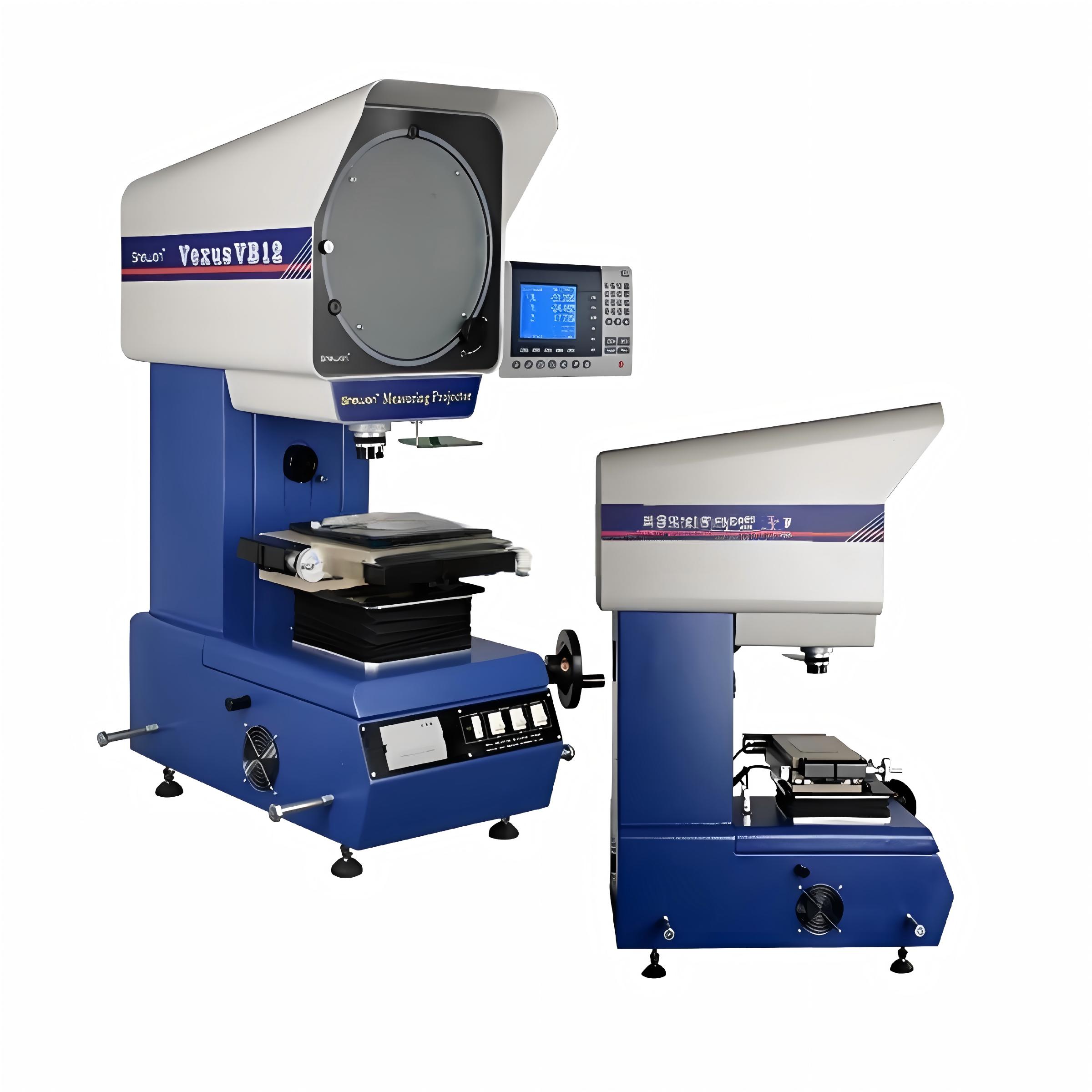
Walk through a mid-sized job shop today and you might notice that the old optical comparator in the corner no longer relies on a vernier scale alone. A small, bright digital readout sits beside the screen, quietly replacing the mental math of edge detection with direct micron-level numbers. This shift rarely makes headlines, but it has begun to reshuffle how machinists and quality managers rank these machines. A comparator that once seemed outdated now gains respect if its stage can accept a magnetic scale retrofit and its screen remains sharp enough for the DRO to matter.
Part of the reason for the quiet change is that digital readout upgrades arrive as aftermarket kits rather than factory redesigns. No major trade show booth celebrates a 1970s comparator fitted with a glass scale and Bluetooth output, yet in daily use that combination often beats a newer comparator with a cramped display or limited travel. Rankings increasingly reflect this practical layer: axis repeatability, display refresh speed, and how easily the readout handles 2D features. The brand name on the casting matters less than the data port on the side.
In practice, the rankings have become more fluid and less trusting of glossy specification sheets. A comparator with a tired optical path but excellent DRO integration can outperform a pristine analog unit in high-volume inspection, simply because the digital readout removes transcription errors. Shops share these results through word of mouth and maintenance logs, not through formal marketing, which is why the rise remains quiet. Those who pay attention to the used-equipment market now factor in the cost of a competent retrofit before assigning a rank to any optical comparator.
Why Stage Travel and Workspace Size Still Catch Buyers Off Guard
Most buyers obsess over horsepower, spindle speed, or tool capacity when comparing machines, yet they rarely take a tape measure to the two dimensions that dictate daily frustration: how far the stage actually moves and how much real room exists around the work area. A machine that looks compact in a showroom can become a puzzle box in your own shop once you realize the table can't reach the far corner without repositioning the part three times.
Stage travel is often quoted at its maximum, but that number ignores practical limits like fixture overhang, cable drag, and the simple fact that you never want to run an axis to its hard stop during a real job. Buyers who skip the dry-run test on their own workpiece geometry end up with a machine that can technically travel 500 millimeters but is only comfortably usable for 350. That missing 150 millimeters translates into extra setups, wasted stock, and a growing resentment toward a machine that was supposed to make life easier.
Workspace size gets similar treatment. The footprint on paper includes the enclosure, but the usable space between the spindle nose, the tool changer, and the splash guards is often far smaller than expected. You might fit the machine through the door, but then discover that a standard 4x8 sheet can't be loaded without tilting, your favorite clamping kit won't clear the column, or coolant access becomes a yoga exercise. Successful buyers treat these two specs not as marketing bullet points but as physical constraints they'll live with every single shift.
Illumination Choices That Change the Way You See Fine Features
A single overhead bulb tends to wash out the very details you are trying to inspect. Instead, use a diffused source positioned just above eye level and angled slightly from the side—this raking effect throws micro-shadows across etched lines, pores, or hairline cracks, giving them depth without harsh glare. Color temperature matters too: a neutral 4000K–5000K LED renders reds and browns more naturally than warm 2700K bulbs, so subtle variations in wood grain or skin texture become easier to judge.
For extremely fine relief, lower the light until it sits almost parallel to the surface. That low angle turns faint scratches into visible ridges and can reveal tool marks or brush strokes you would otherwise miss. If you are working with translucent materials like jade, thin glass, or layered resin, try backlighting instead—it makes internal flaws and boundaries glow softly. A small dimmer gives you the final control: reduce intensity until the feature just begins to separate from the background, and you will often see more than at full brightness.
Comparing the Usual Suspects: Benchtop, Floor-Standing, and Horizontal Models
When lab space is tight and daily loads are modest, benchtop units usually win on practicality. They tuck neatly into corners, run on standard outlets, and handle the typical small batches without much fuss. The trade-off is a smaller chamber and fewer program options, so pushing one past its comfort zone tends to slow you down more than save money.
Floor-standing models step in once throughput demands more than a shelf can offer. Their larger chambers and faster cycle times make sense for busy shared facilities, but you're paying for that capacity in floor space and often in service requirements. If you're already rearranging the lab to accommodate extra equipment, it's worth measuring doorways and clearance before the unit arrives.
Horizontal chamber designs solve a different problem altogether. The low, wide opening makes loading awkward or elongated items far easier than vertical lifts, and they often run gentler cycles for delicate media. The footprint is still substantial, but if your workflow involves bulky containers or heat-sensitive liquids, that layout can cut handling time significantly.
Long-Term Ownership Costs That Rarely Show Up in Spec Sheets
The sticker price rarely tells the whole story. A car that seems affordable can quietly drain your wallet through insurance premiums that spike after the first year, or through replacement tires that cost twice as much as you'd expect because the OEM fitted an unusual size. Even routine maintenance can become a financial surprise when the manufacturer insists on full-synthetic oil changes every 5,000 miles and a dealer-only computer reset for a simple brake job.
Depreciation is the silent budget killer that spec sheets ignore. Some models lose half their value in three years, while others hold steady, and this gap often has less to do with reliability than with market perception, fleet sales, or an upcoming redesign. If you plan to sell or trade in, a lower upfront price can end up costing you more than a pricier car with stronger resale.
Then there are the subscription traps. Heated seats, navigation, even remote start increasingly require a monthly fee after a trial period. Add in the cost of premium fuel for a turbocharged engine, or the higher registration fees tied to vehicle weight in some regions, and the real cost of ownership drifts far from what the window sticker suggested.
FAQ
When you look at metrology labs that rely on optical comparison daily, Mitutoyo, Starrett, and Nikon tend to surface again and again. Mitutoyo’s PH series gets credit for repeatable staging and crisp optics, Starrett’s HB400 is often favored for heavy-duty use, and Nikon’s V-12B stands out for its large viewing area and upright ergonomics.
Accuracy and repeatability usually carry the most weight, followed by screen size, lens magnification range, and stage travel. But real-world rankings also factor in ease of focus, edge-to-edge illumination quality, and how stable the readings stay after hours of continuous use. A projector that drifts after thermal cycling won't hold a top spot no matter how impressive its spec sheet looks.
It’s not just about having the highest magnification; it’s about having the right range without losing clarity. Top-ranked models usually offer interchangeable lenses from 10x to 100x and keep distortion low at every step. If a 50x lens shows fuzzy edges or uneven brightness, the machine drops in practical standing even if its brochure claims otherwise.
They can be, but only within certain working envelopes. Benchtop units often earn top marks for smaller parts, tight labs, and routine checks because they’re easier to move and calibrate. Floor-standing models still dominate when you need large stage travel, heavy fixtures, or a bigger screen for group reviews. The ranking depends heavily on the type of work you actually do.
The differences show up in subtle ways: crispness at the outer edges of the screen, minimal parallax when operators shift their viewing angle, and stages that don’t bind or develop backlash after months of use. Top performers also tend to have better shielding against stray light and more intuitive fine-focus controls, which reduces operator fatigue during long inspection runs.
Absolutely. A high-quality DRO with edge detection can turn a solid optical system into a much more reliable measurement tool. When the readout resolves down to a micron or better and communication with software is seamless, the projector becomes far more useful for statistical process control. Models with clunky or outdated readouts often lose ground even if the optics are good.
Mitutoyo PH-3515F, Starrett HB400, and Nikon V-12B come up often in shop floor conversations and independent roundups. The PH-3515F is praised for its compact footprint and robust stage bearings, the HB400 for its durability in production environments, and the V-12B for its large, bright screen and solid after-sales support. Other models from OGP and J&L also earn respect in specialized applications.
Conclusion
Ranking profile projectors for precision metrology quickly separates machines that deliver repeatable measurement confidence from those that merely look the part. The best performers pair a rigid, well-damped stage with illumination that doesn't wash out fine edges—surface and profile lighting both need independent control, because what you can't see clearly, you can't measure reliably. Digital readouts have quietly become a differentiator: cheap scales drift and miss the crisp snap of a good optical encoder, while top-ranked units let you trust the numbers without second-guessing. Stage travel and workspace size are equally easy to under-buy. A machine that handles today's part might choke on next month's fixture or a taller workpiece, and cramped access turns routine checks into slow contortions.
Benchtop, floor-standing, and horizontal designs each earn their place, but the ranking rewards models that match the measurement task rather than following a spec-sheet trend. Horizontal units shine for shaft-like parts; benchtop models fit tight labs but often trade away throat depth; floor-standing machines bring stability for large parts yet demand more floor space and climate control. Long-term ownership costs tip many rankings more than purchase price. Lens sets, bulb replacements, calibration intervals, and service response times accumulate quietly, so the top performers aren't necessarily the cheapest upfront—they're the ones that stay accurate, keep lamps cool, and don't force you to chase drift with every shift.
Contact Us
Contact Person: Volien
Email: [email protected]
Tel/WhatsApp: +86 18029161762
Website: https://www.jatentech.com/