

Reefer Container Recommend: Smart Strategies for the Perfect Selection
2026-05-21
Selecting the perfect reefer container can make or break your cold chain logistics. From temperature precision to cargo compatibility, the choices are vast—and costly if you get them wrong. At Worldbase, we’ve seen how strategic selection slashes risks and boosts efficiency. This post shares actionable insights to help you navigate specifications, avoid common pitfalls, and choose with confidence—because your perishable cargo deserves nothing less.
Matching Your Cargo to the Right Climate
Every product has its own personality when it comes to climate tolerance—some thrive in cool, dry spaces, while others demand steady warmth and humidity control to avoid turning into a loss. Matching your cargo to the right environment isn’t just about checking a temperature gauge; it’s about reading the subtle needs of what you’re shipping, from the way pharmaceuticals can lose potency in a day’s heat spike to how chocolate blooms under poor ventilation. Think of it as a quiet negotiation between your goods and the conditions they’ll travel through, where small oversights in route planning or container prep can unravel months of careful sourcing.
A keen eye on moisture and airflow often separates a seamless delivery from a warehouse surprise. Electronics, for instance, despise condensation—half a degree above dew point and suddenly you’re dealing with hidden corrosion that only shows up weeks later. Meanwhile, fresh produce breathes; it gives off heat and ethylene, turning a sealed box into a miniature ripening chamber if the cooling isn’t dialed in right. The trick is not just setting a number but understanding how heat shifts during long hauls, how packaging materials trap or release humidity, and why a route with milder nights can spare you from fiddling with active controls altogether.
Even the most rugged goods can have hidden climate sensitivities that trip up the unprepared. Wooden furniture might warp if moved from a damp port to an arid inland warehouse too quickly; certain textiles fade or mildew when temperature swings go unchecked. It pays to look beyond the label—ask how your cargo actually behaves, not just what the spec sheet promises. Sometimes the best move is a simple buffer: a desiccant here, a ventilated crate there, or picking a slightly longer path that keeps conditions stable. When you start seeing climate as a partner rather than a hurdle, you stop wrestling with last-minute fixes and start building reliability into every mile.
Rethinking Container Size and Capacity
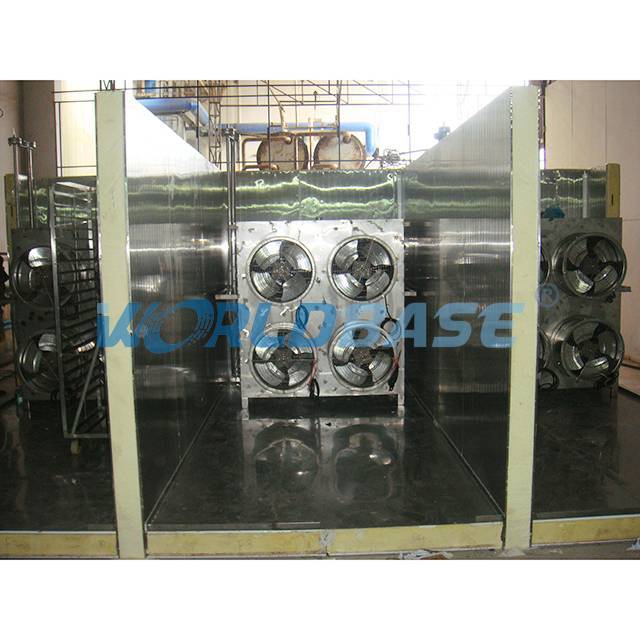
The obsession with ever-larger containers ignores a fundamental truth: efficiency isn't spawned by scale alone. While bigger vessels theoretically reduce per-unit transport costs, they introduce hidden penalties—port congestion, deeper dredging requirements, and inflexible supply chains that snap under disruption. A moderate size often unlocks greater agility, allowing ships to access a wider range of ports and adapt to shifting trade patterns without becoming a stranded asset.
Rethinking capacity means acknowledging that true optimization sits at the intersection of physical limits and operational realities. For instance, a container designed not just for maximum volume but for smarter stowage, faster turnaround, and compatibility with existing infrastructure often outperforms its oversized counterparts. Shifting focus from sheer TEU counts to metrics like container velocity and port call frequency reveals that smaller, nimbler vessels can generate superior total system throughput.
Sustainability further tilts the balance. Enormous ships demand deepening channels and expanding terminals, often at the expense of coastal ecosystems. By contrast, right-sizing container dimensions—both on ships and in the boxes themselves—curbs fuel consumption, cuts idle time, and reduces the carbon footprint per journey. The future belongs to a fleet that matches capacity to actual demand rather than pursuing size for its own sake.
Energy Efficiency Hacks Most Shippers Overlook
Many shippers focus on big-ticket items like fuel surcharges or carrier rates, but miss the quiet drain of poor packaging habits. Using boxes that are just a hair too large means shipping air—and paying for it. Downsizing to snugger packaging can slash dimensional weight charges without sacrificing protection. Even swapping bubble wrap for lightweight, molded fiber inserts can trim ounces off each parcel, which adds up fast across a day’s worth of shipments.
Another overlooked trick lies in consolidating less-than-truckload (LTL) shipments. Instead of sending partial loads piecemeal, batching up orders headed to the same region into a single full truckload often unlocks steep per-unit savings. It might require a little extra coordination with your warehouse team, but the payoff in reduced handling fees and better fuel efficiency per item is substantial. Some shippers also tap into backhaul opportunities—utilizing carriers that would otherwise return empty—to score discounted rates while cutting carbon waste.
Lastly, idle reduction strategies don’t get the attention they deserve. Drivers waiting at loading docks with engines running burn fuel and money. Simple policy shifts, like turning off engines during load times over 30 seconds, or investing in electric auxiliary power units for temperature-controlled trailers, can pare down monthly fuel bills noticeably. Pairing that with route optimization software that avoids congested areas further chips away at unnecessary burn, turning overlooked minutes into saved gallons.
Tech Features That Actually Matter on the Route
When you're miles from the nearest charging point, a battery indicator that shows a vague percentage just doesn't cut it. What you need is a smart range estimator that considers your current speed, the terrain ahead, and even wind direction to tell you exactly how far you can go. Pair that with a adaptive power delivery system that learns your riding style and optimizes assist levels on the fly, and suddenly those long stretches between towns feel a lot less daunting.
Navigation tech on a ride should anticipate your next move, not just spit out a turn-by-turn list. Look for a dashboard that overlays upcoming elevation changes, real-time weather radar, and even highlights points of interest where you can grab a quick charge. And don't overlook the simple genius of a bar-mounted control that lets you switch maps or music with a thumb flick, keeping your eyes on the road and your hands where they belong.
Durability Checks Beyond the Spec Sheet
When evaluating product longevity, relying solely on manufacturer specifications often falls short. Real-world stress factors—like fluctuating temperatures, humidity shifts, and repetitive mechanical strain—can reveal weaknesses that lab tests miss. We go further by simulating everyday mishaps, from accidental drops to prolonged vibration, ensuring the device survives not just controlled conditions but the chaotic reality of daily use.
Our approach involves pushing units to their breaking point long before they reach your hands. This isn't about ticking boxes; it's about understanding failure thresholds in unconventional scenarios, like exposure to fine dust after a cracked seal or the cumulative impact of hundreds of charge cycles under load. By mapping these edge cases, we uncover design flaws that a standard spec sheet would never capture.
When Customization Beats Off-the-Shelf
There's a quiet confidence in software built exactly for the way you work. Off-the-shelf tools often force teams into rigid workflows—fields you don’t need, menus that bury the one feature you rely on. Customization flips that. It’s not about adding bells and whistles; it’s about stripping away the friction that generic solutions never quite escape. When your team can shape the tool around their actual processes, adoption isn’t a battle—it just happens.
The real advantage shows up in the margins that standard products ignore. A tailored dashboard that surfaces the three metrics your ops team actually tracks, an automated report that pulls data from a niche internal API, a permission model that mirrors your org chart—these aren’t luxuries. They’re the small, daily wins that compound into significant time savings. Off-the-shelf often demands that you change how you work; customization meets you where you are and then grows with you.
But it’s not always the right call. The sweet spot is when your problem is well-defined and the generic alternatives require constant workarounds. If you’re patching together spreadsheets and email chains to fill gaps in a mainstream tool, customization isn’t a splurge—it’s a fix for a leak that’s been draining your team’s attention for months.
FAQ
Think of it as a portable fridge or freezer built inside a standard shipping container. It keeps perishable goods—like seafood, pharmaceuticals, or fresh produce—at precise temperatures during transit. Without a reefer, those items would spoil before reaching their destination, costing you money and reputation.
Don't guess—check the product's specific requirements. Fresh fruit often needs around 0°C to 4°C, while frozen meat demands -18°C or lower. Some electronics need controlled humidity, not just cold. Always consult the cargo's supplier or a cold chain expert; they'll hand you the exact numbers that keep your shipment in peak condition.
One big slip-up is ignoring local climate conditions. A container that works perfectly in Scandinavia might struggle in the Middle East. Another is overlooking ventilation needs—some fruit releases gases that require regular air exchange. Also, assuming all reefers have the same temperature accuracy can burn you; some models fluctuate more than your cargo can handle.
Remote temperature monitoring and real-time GPS tracking are non-negotiable if you value transparency. Automated defrosting and self-diagnostic alerts save you from midnight headache calls. Fancy touch screen controllers? Nice to have, but not a dealbreaker. Focus on reliability and alarms that wake you up when something's off.
It's the single biggest factor. Even a top-notch cooling unit can't fix poor insulation—you'll leak cold air and chew through energy. Look for containers with thick, high-density foam and tight door seals. A simple flashlight test (shine it inside at night and check for light escaping) often reveals gaps you'd otherwise miss.
Used can be a smart budget move if you're careful. Inspect the cooling unit's runtime hours (like a car's odometer), sniff for any chemical or rotten smells inside, and demand maintenance logs. Avoid units that lived in salty marine environments without anti-corrosion coatings. If the seller won't let you run it for a few hours before buying, walk away.
Clean the condenser coils every few months—dirt buildup is a silent killer. Check door gaskets for cracks; a loose seal can hike your electricity bill by 20%. After every trip, fully defrost and dry the interior to prevent mold. And never skip the manufacturer's service schedule; it's cheaper than emergency repairs.
Conclusion
Getting the most out of your refrigerated container starts well before you even book the shipment. It’s not just about setting a temperature and hoping for the best—it means matching the precise climate needs of your cargo, whether you’re moving delicate berries that demand steady humidity or pharmaceuticals that can’t tolerate even a slight drift. Too often, shippers fixate on the nominal capacity of the box without thinking through how the load actually fits: the way you stack, the airflow you leave, and how the product itself generates heat can turn a "right-sized" container into a disaster. Clever stowage and a realistic view of usable volume often beat simply upsizing to a larger unit. On top of that, small energy-saving moves—like pre-cooling the container, using thermal blankets in mixed shipments, or plugging in at a monitored stack—can add up to serious savings that many overlook.
The technology inside the reefer matters, but only if it’s suited to the route. A unit with sophisticated atmosphere control is wasted on a short trucking leg, while an ocean voyage through equatorial heat demands robust dehumidification and real-time tracking that actually works when you need to check it. Beyond the tech sheet, real durability means inspecting door seals with a flashlight, testing the drain lines, and recognizing that a nearly new machine with a history of being patched up can be a bigger gamble than an older, well-looked-after fleet unit. Sometimes, the best choice isn’t an off-the-shelf container at all—a slight modification like an extra row of tie-down points, a custom airflow floor, or a reinforced interior lining can protect your specific cargo better than any standard box. It’s about blending all these factors: knowing your product, being honest about the journey it’ll take, and refusing to settle for a one-size-fits-all solution.
Contact Us
Contact Person: Mr Yang
Email: [email protected]
Tel/WhatsApp: +8613809083091
Website: https://en.worldbase.cn