

Top 10 Standing Seam Machine Companies Worth Knowing
2026-11-02
Ask ten contractors which standing seam machine they trust, and you'll hear ten different answers. But dig into build quality, after-sales support, and real-world uptime, and the field narrows fast. This list rounds up the names that keep showing up where it counts—including Beenew, a brand that's been quietly earning repeat orders. Whether you're expanding a roofing business or replacing an aging line, these are the companies to know first.
Who Actually Builds the Machines Behind Those Standing Seam Roofs?
Most standing seam roof panels don't come from a giant factory floor. They're shaped on-site or in small regional shops using portable roll formers, and the people who build those machines are a mix of old-school toolmakers, hydraulic specialists, and software tinkerers. Some work for family-owned equipment firms in the Midwest or the Southeast, where a single order might be customized for a contractor's trailer size or a crew's preferred gauge range. Others are independent rebuilders who take 30-year-old frames and re-machine the rollers, retrofit servos, and send them back out with hand-written torque specs.
The actual assembly rarely follows a clean corporate blueprint. A builder might spend three days aligning a set of profiling rollers by feel and dial indicator, then weld a guard that was never in the CAD file because the operator's hand kept drifting too close. It's that layer of practical adjustment—born from phone calls at 6 a.m. and jobsite failures—that separates a machine that lays a clean seam from one that wrinkles the panel edge. You won't see their names on the equipment, but they're the reason a crew can uncoil steel in a field and end up with a roof that sheds water for 40 years.
Five Companies That Changed How Metal Roofs Are Made
The modern metal roof owes its existence to a handful of innovators who quietly rewrote the rules of manufacturing. Before their influence, panels were often cut and shaped by hand, leading to inconsistencies that plagued installers and homeowners alike. These companies introduced precision roll-forming and automated profiling, turning what was once a craft into a repeatable science. Their early machinery could churn out uniform ribs and seams at speeds that made metal roofing viable for more than just barns and warehouses.
What set these pioneers apart was not just faster equipment but a stubborn focus on durability. They experimented with coatings that resisted rust and fading, pushing past the limitations of plain galvanized steel. By refining paint systems and developing hidden fastener designs, they answered the two biggest complaints about metal roofs: noise and leaks. The result was a product that could survive coastal salt spray and mountain snow loads without looking dated after a decade.
Today’s standing seam profiles and stone-coated steel options trace directly back to these breakthroughs. Every modern manufacturer that claims weathertight warranties or energy-efficient finishes is building on foundations laid by companies that refused to accept the status quo. Their legacy shows up in how easily panels snap together on a job site and how little maintenance a roof needs over thirty years.
What Happens When a Cheaper Roll Former Meets a Tough Job
A cheaper roll former looks fine on the spec sheet. The speed ratings match, the profile drawings line up, and the price feels like a smart move. Then the tough job hits. Maybe it's high-tensile steel, a complex profile with tight tolerances, or a run that has to hold straight and true for thousands of feet. That's when the real differences surface.
The frame flexes just enough to throw off the bend angles. The tooling wears faster than expected, leaving burrs and inconsistent leg lengths. Adjustments that should take minutes turn into hours of shimming and re-aligning. Operators learn to compensate, nursing the machine along, but every correction adds labor cost and slows output. What started as a bargain now eats into the schedule and the scrap bin grows.
A robust roll former earns its keep when the material fights back. Heavier side plates, better bearing support, and precision-ground shafts keep the forming stations locked in position. The result is repeatable geometry from the first part to the last, even on demanding profiles. Short-term savings from a cheaper machine rarely survive contact with a truly tough job. The real cost shows up in downtime, rework, and the quiet loss of confidence on the shop floor.
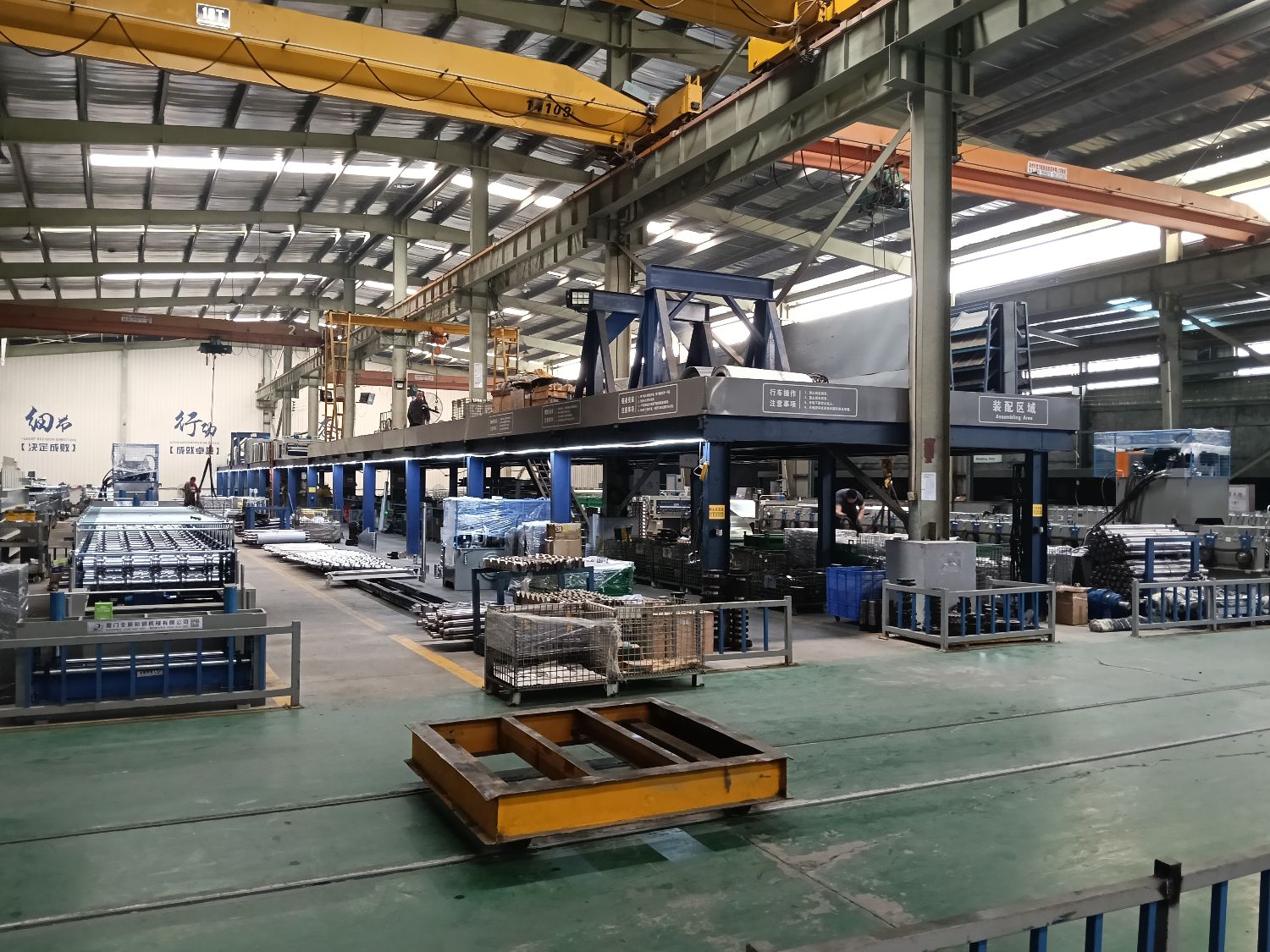
Inside the Factories: A Different Way to Judge a Machine
Step onto a real factory floor and the glossy spec sheets quickly lose their grip. Machines are judged less by top speed and more by how they hold up after three consecutive shifts in heat, dust, and vibration. You listen to the rhythm of the tool changes, watch how operators move around it, and notice whether anyone flinches when a new order comes in.
Maintenance crews carry their own mental scorecard. They care about how long it takes to clear a jam, whether the wear points are reachable without a ladder and a flashlight, and if the error messages actually point to the real problem. A machine that needs constant small favors may never show up as a line item, but it quietly drains the shift.
There is also the test of time: how does the equipment behave on the third month, not just the first afternoon? Downtime, changeover friction, and the ability to take on a slightly different part without a service call can reveal more than cycle time ever will. In the end, the shop floor verdict is built from thousands of unglamorous hours, not a single demo.
The Materials, Profiles, and Gauges These Machines Handle Best
Cold-rolled steel is the default for a reason, but these machines don't blink at pre-painted coil, galvanized stock, or thin aluminum and copper either. Day to day, the best results come from 22 to 18 gauge mild steel, where the tooling stays sharp and the bends land crisp without making the drives work too hard.
As for shapes, C, Z, U, and hat profiles are the mainstays. They form with fewer passes and hold leg lengths plus flange angles to tight tolerances. If you push into stainless or go lighter than 20 gauge, expect to ease off the line speed or add another pass; inside that range, the equipment runs about as fuss-free as it gets.
FAQ
New Tech Machinery, Englert, and Knudson keep showing up because they've been around for decades and have strong field support. Bradbury Group and Hayes International are stronger on the heavier industrial side, while CIDAN and Roll Former LLC lean toward compact or specialized setups.
For many shops, yes. Their machines hold tolerances well over thousands of panels, and their support network still picks up the phone when you're mid-job. You pay for that reliability, but it can save you from the downtime that cheap imports often cause.
Englert tends to focus on integrated gutter and roofing solutions, so their machines often come with accessories that fit a full metal roofing package. Knudson is more about straightforward, robust roll formers that run day in and day out without a lot of fuss.
Shanghai Novotek and Jupiter Rollforming have gained ground with lower upfront prices and improving build quality. They make sense if you have in-house mechanical know-how and don't mind longer lead times for parts, but you trade some local service convenience.
Ask about gauge capacity, profile changeover time, and whether they can ship replacement rollers quickly. Also find out if the company has a real training program, not just a manual. A machine that's hard to set up will cost you more in labor than the purchase price over a few years.
If you're just starting, a mid-range option like Knudson or a well-supported used machine from New Tech Machinery often beats buying the biggest unit. You want a simple single-lock or double-lock profile, minimal hydraulics, and a manufacturer that won't leave you hanging during the first six months.
Bradbury is overkill for most residential shops, but if you're doing high-volume commercial or architectural panels, their lines are engineered for speed and repeatability. Setup takes longer, but output per shift is hard to match.
Conclusion
Most of the roll formers sold under familiar roofing brands are not built by the companies whose names appear on the decals. A short list of factories in the Midwest and the Southeast quietly produces machines for a dozen labels, and a handful of them have genuinely reshaped how standing seam panels get formed. The difference becomes obvious when a budget machine meets 24-gauge Galvalume or a deep trapezoidal profile: instead of a clean, repeatable seam, you get edge wave, inconsistent leg heights, and a crew burning hours on adjustments. The companies worth knowing are the ones that design their own tooling, run test coils before shipment, and keep tolerances tight enough that a panel from Monday matches one from Friday.
Walking through a factory tells you more than a spec sheet ever will. Look at how the roll tooling is staged, whether the shafts are ground in-house, and how much time the builder spends on material feeding for lighter gauges versus the stiff stuff. The best machines handle a wider band of profiles—snap-lock, mechanical seamed, nail strip—without forcing you to swap an entire cassette for every change. They also deal honestly with limits: a machine that excels at 26-gauge residential panels may be a poor choice for 22-gauge commercial work. That kind of clarity, rather than a polished sales pitch, separates the ten names that actually deserve your attention.
Contact Us
Contact Person: Sophie
Email: [email protected]
Tel/WhatsApp: 8615959271231
Website: https://www.beenew-rollformer.com/