

Top 10 Swiss Type Lathes for Precision Manufacturing and High-Performance Machining
2026-07-30
When precision is non-negotiable, the choice of lathe can make or break your manufacturing output. Swiss type lathes have long been the backbone of intricate, high-volume production, but not all machines are created equal. In this countdown of the top 10 Swiss type lathes for precision manufacturing and high-performance machining, you’ll discover engineering marvels that push the boundaries of speed, accuracy, and versatility. Among them, WINNRUI CNC stands out with innovations that redefine what’s possible on the shop floor. Whether you’re machining bone screws or aerospace connectors, the right lathe transforms complexity into routine — let’s explore the contenders that can elevate your production line.
What Sets Swiss Type Lathes Apart in High-Stakes Machining
Swiss type lathes excel in high-stakes machining due to their unique sliding headstock design. Instead of the workpiece being fixed and the tools moving along the length, the bar stock advances through a guide bushing, keeping the cutting area extremely close to the support. This effectively eliminates deflection, even on long, slender parts, enabling tight tolerances that conventional lathes struggle to achieve. The result is precise, consistent output that requires minimal post-processing, a critical advantage when machining expensive materials or components where failure is not an option.
Another distinguishing feature is the ability to perform multiple operations simultaneously. Swiss lathes often pack numerous tool stations, live tooling for milling and drilling, and sub-spindles that pick up the parted-off piece for back working. This eliminates secondary handling, reducing cycle times and the risk of human error. In industries like medical device manufacturing or aerospace, where complex geometries and flawless surface finishes are mandatory, this all-in-one capability ensures that every part meets exact specifications straight off the machine.
The thermal stability of Swiss machines also gives them an edge. Because the guide bushing provides constant support and the cutting tools engage the bar near the bushing, heat generation is localized and managed more effectively. Many models incorporate advanced cooling systems that maintain the machine's structural integrity during long, unattended runs. This translates to dimensional stability across thousands of parts, a must-have when producing critical components that demand absolute repeatability.
The Hidden Engineering Behind Sub-Micron Precision
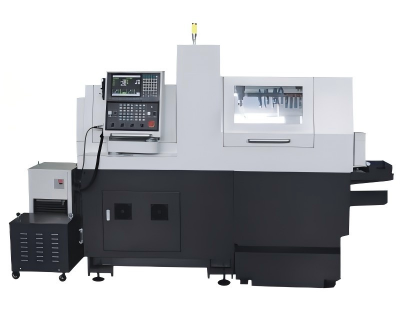
Achieving precision below a single micron isn't just about making better tools—it’s a battle against the physical world itself. At this scale, thermal expansion becomes a dominant force. A steel part the length of your hand grows roughly a micron with just a tenth of a degree temperature shift. To counter this, machines are built from materials like Invar or Zerodur, which barely budge, and entire facilities are held within millikelvin stability. Even the operator’s body heat is managed through elaborate air handling, turning workshops into climate-controlled vaults where precision thrives.
Then there’s the challenge of vibration. Footsteps, distant traffic, even the hum of a cooling fan can ripple through foundations and into sensitive alignments. Isolation isn’t simple—active systems use voice-coil actuators and feedback loops to constantly cancel out disturbances, while passive stages float on air bearings or oil films, severing the mechanical path between the precision zone and the chaotic outside world. In e-beam lithography, for instance, the columns sit on massive granite blocks suspended by pneumatic isolators, because anything less would smear features smaller than viruses.
The real hidden art, though, lies in error mapping and compensation. No axis is perfectly straight, no encoder perfectly linear. Over weeks, metrologists use laser interferometers to trace out the machine’s innate geometric flaws—pitch, yaw, roll, straightness deviations—building a digital fingerprint. This error map is then inverted and fed into the controller, so every commanded position is subtly warped in real time. It’s a ghost in the machine, correcting movements before they happen, often squeezing out the last few nanometers of accuracy. Without these invisible corrections, sub-micron work would be a lottery, not a process.
How Modern Swiss Machines Redefine Production Speed Without Sacrificing Quality
Swiss-style lathes have completely flipped the script on what's possible in precision manufacturing. Instead of forcing a part to travel to the tool, these machines bring the cutting action right up against the guide bushing, turning the material itself into a live, continuously supported bar. This one shift in geometry eliminates the whip and chatter that plague conventional setups, allowing the spindle to scream at 10,000 RPM or more while still peeling off material with a surgeon's eye for detail. The result is a rhythm that feels almost organic—complex parts emerge from a single bar of stock in a fraction of the time, yet surface finishes stay immaculate and tolerances hold tighter than a drum.
What really separates modern Swiss machining from the pack is how it stacks operations. While a traditional CNC might need multiple setups, a Swiss machine gangs up tools on its gang slide and subspindle, allowing simultaneous roughing, finishing, drilling, and even backworking. Picture a part getting its main diameter turned on one side while a secondary spindle snatches it for cross-holes and thread whipping on the opposite end—all in one continuous dance. This overlapping of tasks doesn't just shave seconds off cycle times; it rewrites the timeline entirely. And because the workpiece is always firmly hugged by the guide bushing, you don't pay for speed with sloppy tolerances. Every cut lands exactly where it should, every time.
Thermal stability and software smarts seal the deal. Swiss machines are engineered with temperature compensation loops that adjust in real time, so a hot shop floor doesn't drift features by a few microns. Combined with tool life monitoring and automatic offset correction, the machine essentially watches its own work and self-corrects before a bad part ever arrives. There's no standing at the controller, micro-adjusting offsets while praying for scrap rates to drop—the process stays consistent from the first part to the thousandth. That's how these machines compress production schedules: they eliminate the invisible downtime of quality checks, tweaks, and do-overs, all while spitting out finished components that demand zero secondary handwork.
Uncommon Applications Where Swiss Lathes Outperform Traditional CNC
When it comes to producing long, slender medical components like bone screws or spinal fixation devices, Swiss lathes take the lead. Their guide bushing design supports the workpiece right next to the cutting tool, preventing deflection and chatter during deep hole drilling or tricky external threading. Traditional CNCs often struggle with such parts—requiring multiple setups, steady rests, or slower feeds—yet a Swiss machine can complete them in one pass with flawless surface finishes and tight tolerances down to a few microns.
Micro-watch components, such as pinions, arbors, and tiny screws, demand precision that simply outpaces conventional lathes. Because Swiss machines allow turning operations extremely close to the spindle, they can hold minuscule diameters and intricate profiles without any sign of bending. No secondary polishing or grinding is needed, and the seamless integration of driven tooling handles cross-drilling and slotting in the same cycle. This makes them the go-to choice for horologists who won’t compromise on craftsmanship or reliability.
Electronics hardware is another surprising niche where Swiss lathes excel. Tiny connector pins or fiber-optic ferrules with wall thicknesses thinner than a sheet of paper are notoriously difficult on standard CNC lathes. The Swiss machine’s ability to feed material incrementally while turning reduces vibration dramatically, letting manufacturers achieve extreme geometries that fit the microscopic demands of modern sensor housings or delicate tuning elements. In these realms, a single scrapped part can cost more than the machine time saved, so the consistency of Swiss turning pays for itself tenfold.
Key Innovations Shaping the Next Wave of Swiss Turning Centers
The latest Swiss turning centers are breaking free from traditional constraints through hybrid multitasking platforms. Imagine a single setup where laser cutting, gear hobbing, and high-pressure coolant drilling happen in sequence without operator intervention. This convergence slashes cycle times for complex medical and aerospace parts that previously bounced between specialist machines, eroding precision and doubling handling costs.
Machine builders are also weaving in sensor-driven thermal stability systems. Instead of waiting for warm-up cycles or ambient shifts, spindles and guideways actively compensate using real-time data streams. The result is repeatable micron-level accuracy across unattended overnight runs—a shift that turns lights-out manufacturing from a risky gamble into a predictable norm.
Equally transformative is the rise of augmented reality interfaces for setup and maintenance. Touchscreen menus are giving way to spatially aware 3D overlays that guide technicians through collet changes or tool alignments with step-by-step holograms. Simultaneously, digital twins are being deployed to simulate and perfect chip evacuation paths before a single bar of stock is loaded, dramatically reducing scrap and ramp-up times. These leaps aren't just about speed; they're redefining what a single Swiss machine can deliver from bar stock to finished high-value component.
Choosing a Swiss Lathe: Overlooked Factors That Impact Long-Term ROI
A machine's initial price tag can be deceiving. What truly shapes long-term ROI often hides in the peripherals—things like bar feeder compatibility, tooling flexibility, and how easily the lathe integrates with your existing workflow. A slightly cheaper model that demands proprietary tool holders or struggles with material changeovers can quietly drain thousands in setup time and scrapped parts over its lifecycle.
Another dimension that escapes the spec sheet is the control system's learning curve and support ecosystem. If your team wrestles with an obscure interface or waits days for remote diagnostics, the gains from faster cycle times evaporate. Look beyond the demo cuts: ask about real-world troubleshooting frequency, availability of local application engineers, and whether the programming environment allows for quick tweaks without a dedicated specialist.
The less obvious durability factors matter just as much. Chip management, thermal stability, and way guarding might sound mundane, but they directly influence spindle uptime and part consistency over years of multi-shift operation. A well-designed chip flume that prevents pile-ups, combined with a rigid base that holds tolerance across temperature swings, can mean the difference between a lathe you trust for lights-out production and one that becomes a constant maintenance headache.
FAQ
Swiss type lathes use a sliding headstock that feeds the bar stock through a guide bushing, which supports the workpiece very close to the cutting tool. This design drastically reduces deflection and vibration, enabling extremely tight tolerances and fine surface finishes that are essential for small, intricate parts in medical, watchmaking, and electronics industries.
Key factors include the number of axes, tooling capacity, spindle speed, and the quality of the live tooling and sub-spindle. For complex parts, look for machines with simultaneous multi-axis capabilities, robust thermal stability, and advanced numerical controls that support CAM integration. Also consider the maximum bar capacity and whether the machine can handle secondary operations like milling, drilling, and thread whirling in a single setup.
Well-regarded manufacturers include Tornos, Citizen (Cincom), Star, Tsugami, and Hanwha. These brands have a long history of innovation and offer a range of models tailored to different production needs, from simple turned parts to highly complex geometries requiring extensive backworking and live tooling.
Yes, modern Swiss type lathes are highly versatile. They can be quickly set up for prototyping and small runs thanks to user-friendly programming interfaces, yet they are also engineered for 24/7 high-volume production with automatic bar feeders, tool wear monitoring, and robotic part handling systems that ensure consistent output with minimal operator intervention.
Regular maintenance includes daily cleaning of the guide bushing area and chip removal system to prevent buildup, checking and replacing coolant and oil filters, monitoring way oil levels, and calibrating the guide bushing clearance. It's also critical to periodically check spindle alignment and backlash in axes, along with scheduled replacement of belts and seals as recommended by the manufacturer.
A sub-spindle allows the machine to transfer the parted-off workpiece for second-side machining without manual handling. This eliminates the need for secondary setups, reduces cycle times, and improves accuracy since all operations are referenced to the same bar centerline. It’s especially beneficial for parts requiring cross-holes, back turning, or off-center features.
The guide bushing provides radial support inches away from the tool’s cutting edge, minimizing bar whip and chatter. By confining the workpiece, it allows very aggressive cutting parameters while maintaining precise diameters. It’s pivotal for long, slender parts where unsupported turning would lead to deflection and tolerance loss.
Recent innovations include the integration of gear skiving, polygon turning, and laser cutting heads directly into Swiss machines. Others feature smart thermal compensation systems, IoT connectivity for predictive maintenance, and high-pressure coolant through the tool for better chip control. Software advances like conversational programming and real-time collision prevention have also made setups faster and safer.
Conclusion
Swiss type lathes have carved a distinct niche in precision manufacturing, delivering sub-micron accuracy and high-speed production that conventional CNC machines struggle to match. Their unique sliding headstock design drastically reduces tool-to-workpiece distance, minimizing deflection and enabling tight tolerances even on long, slender parts. This hidden engineering, paired with advanced thermal compensation and real-time tool monitoring, ensures repeatability that is critical in medical, aerospace, and micro-mechanical sectors. Beyond typical turned parts, Swiss lathes excel in uncommon applications like producing intricate bone screws, micro fluidic components, and complex watch parts, where simultaneous multi-axis operations collapse multiple setups into a single cycle. The ability to handle exotic alloys and maintain surface finishes under 4 Ra showcases how these machines redefine what's possible in high-stakes machining.
Modern Swiss turning centers are shedding their niche-image through innovations such as high-pressure coolant systems, B-axis versatility, and AI-driven process optimization. These advancements push production speeds without sacrificing quality, enabling lights-out operation and quicker changeovers. When selecting a Swiss lathe, factors like bar feeder integration, workholding flexibility, and real spindle utilization often go overlooked but have an outsized impact on long-term ROI. The next wave is being shaped by hybrid additive-subtractive capabilities, enhanced automation, and digital twin simulation, making Swiss type lathes increasingly accessible and indispensable for manufacturers aiming to merge precision with scalable performance.
Contact Us
Contact Person: Tim
Email: [email protected]
Tel/WhatsApp: +86 15522553731
Website: https://www.winnrui-cnc.com/