

Top Cryogenic Ball Valve Factory for Reliable Low Temperature Valve Solutions
2026-07-24
When it comes to handling extreme low-temperature media, every component in your system must perform flawlessly—especially the valves. A single failure can lead to costly downtime or safety risks. That’s why choosing the right manufacturer matters. At ZMV, we’ve spent years perfecting cryogenic ball valve technology to deliver reliable shut-off and control in the harshest conditions. In this post, we’ll explore what sets a top cryogenic ball valve factory apart and how ZMV consistently meets the mark.
Engineering Valves That Perform When Temperatures Plunge
When temperatures drop far below zero, standard valve materials and designs quickly reveal their weaknesses. Brittle fracture becomes a real threat in carbon steel components, seal materials lose elasticity, and lubricants thicken until they seize. The key to reliable cold-weather operation lies in selecting austenitic stainless steels or nickel alloys that retain toughness at cryogenic temperatures, paired with extended bonnets that keep packing and stem seals away from the direct cold. Even subtle details like the thermal contraction of gaskets and bolting must be accounted for, or a perfectly machined seal can open a leak path under thermal stress.
Beyond metals, resilient seat materials need especially careful thought. PTFE and other fluoropolymers often become rigid when cold, losing their ability to conform to minute surface imperfections. Modified PTFE grades with added fillers can maintain better flexibility, while metal-seated designs bypass polymer limitations entirely—though they demand incredibly precise lapping to achieve tight shutoff without soft sealing surfaces. Double-block-and-bleed configurations are frequently specified in low-temperature service, providing an uninterrupted seal even if ice crystals form and prevent full valve rotation.
Actuation adds another layer of complexity. Pneumatic actuators depend on clean, dry instrument air, because moisture that condenses and freezes inside solenoids or spool valves will cripple an automated system. Spring-return designs offer a fail-safe stroke if supply pressure drops, but springs themselves must be rated for cold service to avoid sudden failure. For extreme environments, thermal jackets or external trace heating can keep critical components within a safe operating window, and redundant position feedback allows remote monitoring without direct visual inspection. Each design decision ripples through the final valve package, yet the result—a unit that functions seamlessly in conditions that would shatter lesser hardware—rewrites what’s possible in harsh industrial frontiers.
The Material Edge: Alloys Built for -196°C and Beyond
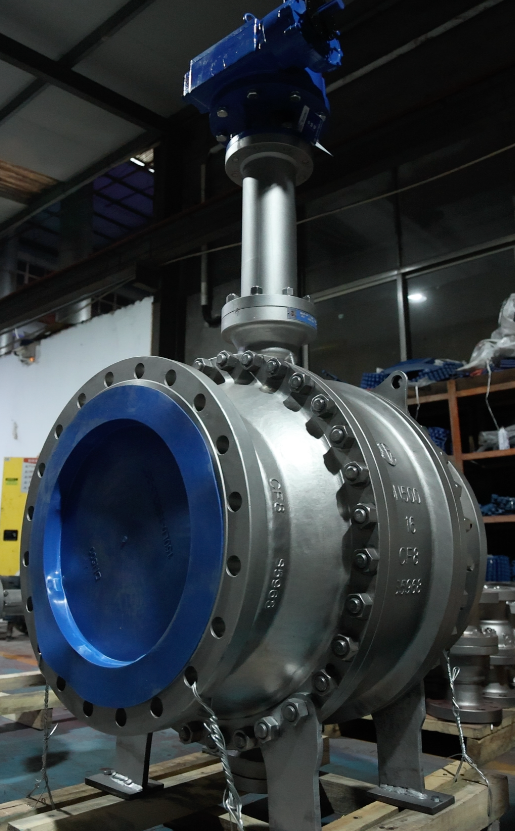
At -196°C, the temperature of liquid nitrogen, most conventional steels become as brittle as glass. Yet certain metal alloys not only survive these extremes—they thrive. The secret lies in their crystal structure. Face-centered cubic (FCC) metals like austenitic stainless steels, aluminum, and nickel-based alloys lack a ductile-to-brittle transition, meaning they retain toughness even as the mercury plummets. This atomic arrangement allows slip planes to move freely, absorbing energy rather than snapping under stress.
The real magic happens in the microstructure. Alloys designed for cryogenic service are meticulously engineered to suppress phases that turn treacherous in the cold. In 9% nickel steel, a workhorse for LNG storage tanks, controlled heat treatment creates a fine-grained blend of tempered martensite and retained austenite. Each interface acts as a crack arrestor, halting microscopic fissures before they can propagate. It’s a metallurgical balance that transforms a potential liability into one of the toughest materials on Earth at subzero temperatures.
Beyond static toughness, these alloys must also handle thermal cycling fatigue as systems swing from room temperature to cryogenic cold and back. Nickel-based superalloys like Inconel 718 step up here, combining high strength with remarkable expansion stability. Their carefully tuned precipitation-hardening phases remain stable across a wide thermal range, preventing the microstructural degradation that plagues lesser metals. Whether it’s in the turbopumps of a rocket engine or the superconducting magnets of an MRI machine, the material edge isn’t just about surviving the deep freeze—it’s about performing without compromise, every cycle.
Zero Leakage: Sealing Systems That Defy the Cold
In the most unforgiving cold environments, standard seals give way to brittleness and contraction, opening microscopic pathways for leaks. A sealing system built for sub-zero extremes must start with material science that laughs at low temperatures—elastomers and thermoplastics that retain their elasticity and memory when others turn to stone. These compounds are carefully selected or custom-engineered to maintain a tight, consistent grip on mating surfaces even as metals shrink and differential thermal expansion tries to tear the seal apart. The result is a barrier that stays intact, flexible, and absolutely impermeable, whether it's -40°F or plunging to cryogenic depths.
Geometry plays an equally critical role. Simple O-rings and traditional gaskets often can't compensate for the dimensional chaos unleashed by extreme cold. Advanced sealing designs use smart profiles—energized lip seals, U-cups, or heavily loaded spring-energized jackets—that actively adjust to temperature swings, boosting contact stress as the environment gets colder. Every groove, relief, and interference fit is calculated to ensure the seal remains dynamically responsive, transforming thermal challenges into a tighter lock. This thinking moves sealing beyond a passive component into a system that actively combats the conditions.
Installation and hardware integration complete the zero-leakage equation. Even the best seal fails if the housing doesn't support it correctly in the cold. Surface finishes are tightened, gland dimensions are re-evaluated, and build procedures are adapted so that assembly at room temperature translates into ideal compression at operating lows. Some systems even incorporate co-energizing elements that respond to temperature shifts, maintaining constant sealing force without human intervention. The outcome is a seal that doesn't just survive the cold—it uses it to seal tighter, guaranteeing zero leakage when any failure would be catastrophic.
From LNG Terminals to Aerospace: Where Cryo Valves Shine
Cryogenic valves find their place in some of the most demanding industrial settings, managing fluids at temperatures deep below freezing. In LNG terminals, they are the linchpins of safe and efficient natural gas handling, where a single point of failure can cascade into operational nightmares. These valves are designed to lock in tight shutoff even as thermal stress pushes components to their limits, ensuring no precious cargo escapes or contaminates the system.
Step into the aerospace sector, and the stakes rise higher. Launch vehicles and satellite propulsion systems rely on cryo valves to control super-chilled propellants with absolute precision. A valve that sticks or leaks in microgravity is a mission killer. That’s why every component is engineered for zero-hysteresis response, often with extended bonnets that isolate the actuation from the bitter cold, keeping the delicate internals functioning when every gram of payload matters.
But the real artistry shows up in less obvious corners: pharmaceutical freezedrying processes, superconductor magnet cooling, or even food preservation systems. It’s in these quieter applications that cryo valves prove their versatility. From massive terminal manifolds to a niche lab setup, the common thread is relentless reliability when the mercury plummets. Every seat material, every stem seal is a deliberate choice against cracking, sticking, or escaping gases—because in these environments, failure simply isn’t an option.
Testing Under Pressure: How We Validate Every Valve
Every valve we produce endures a gauntlet of pressure tests that push it well beyond its rated limits. We don’t just tick boxes—we flood the body with water or nitrogen at pressures that make design specs look timid, holding steady while watching for the slightest weep or deformation. It’s loud, it’s unforgiving, and it separates the reliable from the risky.
Our validation doesn’t stop at a single pass. Seat and shell tests are repeated at temperature extremes, cycling from cryogenic cold to scalding heat, because a valve that seals perfectly at room temperature can turn treacherous in the field. We also run actuation tests under full differential pressure, ensuring the stem doesn’t bind and the torque stays predictable. If it hesitates, it fails.
Data drives every conclusion. Digital transducers capture minute leaks that the naked eye would miss, while long-duration hold tests reveal fatigue patterns that surface only after hours. We tear down units that push boundaries, inspecting seals and seats for wear that hints at future trouble. No valve ships until the test logs tell a story of consistent, unfaltering performance—pressure after pressure, cycle after cycle.
Making the Right Choice for Long-Term Low-Temp Reliability
低温环境对材料特性的影响远比大多数人想象的要复杂。许多组件在室温下表现完美,一旦温度降至冰点以下,脆化、收缩差异和润滑失效就会接踵而至。如果希望系统在极端条件下稳定运行数十年,就不能只盯着说明书上的“最低工作温度”——必须理解这一指标背后是如何测试的,以及它是否涵盖了实际使用中的温变速率和机械应力。
真正的可靠性源于对细节的偏执。例如,焊点与聚合物密封件在反复的冻融循环中会缓慢退化,这种累积效应很难通过短期加速实验暴露。所以,选择长期低温方案时,优先考虑那些已经在类似应用场景中积累了十年以上现场数据的供应商,哪怕他们的参数看起来并不最亮眼。同时,在系统层面预留足够的安全余量,比单纯追求单个器件的极限耐温要明智得多。
最后,别忘了“低温”是个相对概念:同一套方案在阿拉斯加管道上验证过,不一定适用于液氮储存罐。花些时间与供应商讨论具体的失效机理、材料晶相变化甚至微观裂纹扩展,远比比较表格里的数字有用。当你把注意力从“达标”转向“真实世界的表现”,选择的方向就会清晰很多。
FAQ
It comes down to the design and materials. The extended bonnet keeps the stem packing away from the cold zone, preventing freezing and leakage. Special alloys and seat materials are chosen to maintain toughness and sealing at temperatures where standard valves would become brittle.
We conduct rigorous cryogenic testing to simulate actual service conditions. Each valve is subjected to leak tests at full differential pressure after being chilled to the required temperature. Only after passing these tests is it certified for LNG use.
A true leader focuses on in-house engineering and precision machining. They offer customizable solutions, from seat materials to actuation packages, and back them with detailed traceability and full material certifications. Their experience across many cryogenic projects also means they anticipate field challenges better.
Yes, but with proper cleaning and material selection. For oxygen service, the valve must be thoroughly degreased to prevent combustion risks. We use oxygen-compatible lubricants and seals, and our facility is equipped to handle these specialized cleaning procedures.
Even in low-temperature systems, safety is paramount. A fire-safe valve is designed to minimize leakage if the soft seats are destroyed by fire. Our cryogenic ball valves often meet API 607 or similar standards, providing an extra layer of protection in critical installations.
They are engineered for long service intervals, but regular inspection of the stem seal and periodic cycling help prevent seizing. The extended bonnet design also protects the packing, so repacking is rarely needed. When maintenance is required, the top-entry design of our valves allows in-line servicing without removing the body from the pipeline.
Conclusion
When it comes to cryogenic ball valves that must perform flawlessly at temperatures as low as -196°C, this factory stands out by combining advanced engineering with material science. Every valve is built from specialty alloys like stainless steel and Inconel, selected for their ability to retain strength and ductility in extreme cold, eliminating the risk of brittle fracture. The internal geometries are optimized to handle thermal contraction while maintaining precise flow control, ensuring that the valve opens and closes smoothly even when the operating environment is punishingly frigid. From the initial design phase, the focus is on reliable low-temperature performance, addressing the unique challenges that come with plunging temperatures.
Sealing systems are engineered for zero leakage, defying the harsh cold with advanced lip seals and metal-to-metal contact points that prevent fugitive emissions. The factory validates every unit through rigorous cryogenic testing, including pressure tests at full-rated conditions to guarantee integrity. These valves excel in demanding applications ranging from LNG terminals and petrochemical plants to aerospace and cryogenic storage, where failure is not an option. Choosing a partner with proven expertise in low-temp reliability means looking beyond standard specifications—it requires a factory that offers tailored material solutions, extensive in-house testing protocols, and a track record of long-term performance in the world’s most critical cold-temperature processes.
Contact Us
Contact Person: Lucas Lin
Email: [email protected]
Tel/WhatsApp: +8613968913000 / +8613868610141
Website: https://www.zhengmaogroup.com