

Top Tubular Steel Towers Dealers for Reliable Infrastructure Solutions
2026-11-02
When a tubular steel tower has to carry high-voltage lines across a floodplain or keep a microwave link stable in 120 km/h winds, the dealer you choose is no longer just a vendor—they're part of your reliability equation. That's why procurement teams aren't just comparing price per ton; they're comparing failure histories, weld inspections, and delivery promises. In that shortlist, Anbang keeps appearing, not because of glossy brochures, but because their towers show up on time and stay standing. This article digs into what actually makes a top tubular steel tower dealer, and why the right choice can prevent a minor cost saving from becoming a major outage.
What Actually Matters When Choosing a Tubular Steel Tower Dealer
A dealer's reputation often gets boiled down to a logo, a brochure, or a handshake at a trade show. But what separates a reliable supplier from a costly mistake is rarely visible on the surface. It lives in the details: how they handle a delayed shipment, whether their engineers actually answer the phone, or if their quality documentation stands up to a site audit. The best dealers don't just sell steel; they understand load paths, wind zones, and the quiet tyranny of a deadline.
You should look for a partner who treats your project timeline as their own. Ask about their past projects in similar terrain or climate. A dealer who has supplied towers for a coastal hurricane zone will understand different stresses than one who only works inland. Also, pay attention to their after-sales response. A tower is a long-term asset; you want a dealer who will answer a call in year three, not just during the quote stage.
Finally, consider the human factor. Steel specifications can be copied. But integrity, communication, and a willingness to say 'we need to double-check that' are what turn a transaction into a working relationship. The right dealer will ask about your soil report, your foundation plans, and your maintenance crew — not just your purchase order number.
Material Grades and Coatings That Help Towers Survive Harsh Climates
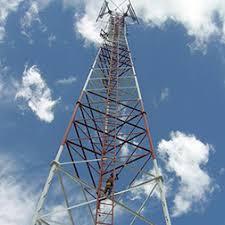
Selecting the right steel grade is the first line of defense against environmental attack. High-strength low-alloy grades like ASTM A572 and A588 offer improved atmospheric corrosion resistance compared to plain carbon steel, thanks to small additions of copper, nickel, and chromium. In regions with extreme cold, choosing steels with low ductile-to-brittle transition temperatures prevents sudden fractures when temperatures plunge below freezing.
Protective coatings play an equally critical role in extending a tower's service life. Hot-dip galvanizing remains the workhorse for general outdoor exposure, creating a thick zinc layer that corrodes sacrificially before the underlying steel. For coastal or industrial areas with high chloride or sulfur dioxide levels, a duplex system of galvanizing followed by an epoxy primer and polyurethane topcoat offers superior barrier protection and resists UV degradation and abrasion from wind-blown sand.
Matching the material and coating to the specific climate is what separates a tower that needs frequent maintenance from one that lasts decades. In Arctic environments, specifiers often pair low-temperature steel with a high-build epoxy coating to guard against both ice abrasion and salt spray from de-icing chemicals. Desert installations, on the other hand, benefit from a zinc-rich primer and a flexible polysiloxane topcoat that withstands intense UV radiation and thermal cycling without cracking or peeling.
How Custom Fabrication Speeds Up Field Assembly Without Sacrificing Strength
Off-site custom fabrication shifts the hard work into a controlled shop environment, where precise cutting, drilling, and fitting happen long before materials reach the field. Components arrive with pre-punched holes, welded subassemblies, and matched connection plates, so crews spend less time measuring, re-cutting, or improvising on a windy jobsite. This reduces the usual back-and-forth of field adjustments while keeping the original design intent intact. The result is faster bolt-up, fewer crane hours, and a cleaner installation sequence that doesn't lean on rushed, on-the-fly fixes.
What makes this approach hold up under load is that the fabrication process itself can add strength rather than compromise it. Shop welds are made in a clean, climate-stable space with better access and inspection than a field position allows. Tolerances are tighter, heat input is controlled, and connections can be welded all around where field access would force a weaker partial joint. Because every piece is jigged and checked against the same 3D model, the final assembly behaves like a single engineered unit instead of a stack of loosely fitted parts. Strength comes from repeatability, not from on-site guesswork.
Field crews still need room for common site variations, so smart custom fabrication includes a few adjustable features—slotted holes, shim packs, or bolted splice plates—that allow fine positioning without weakening the connection. These details let the structure absorb minor foundation or alignment differences while keeping the load path exactly where the engineer intended. The bottom line is that speed and strength aren't competing goals; they're both outcomes of thoughtful pre-planning and shop-based precision.
Lessons From Infrastructure Projects Where Tower Supply Went Right
The first clear lesson is that early supplier involvement pays off. In projects where tower supply flowed without major hiccups, the fabricators were brought in during preliminary design, not after the drawings were frozen. They reviewed load assumptions, bolt patterns, and flange details before final approval, which eliminated last-minute rework. One wind farm team shared hub-height and fatigue data weeks ahead of the tender, letting the tower maker lock steel prices and schedule rolling mill slots without guessing. That single step cut the typical delivery window by nearly a third and avoided the change orders that usually pile up when interfaces are handed over cold.
Another pattern is a deliberate reduction in custom geometry. Teams that resisted the urge to tweak every wall thickness or door frame position found that suppliers could reuse jigs, welding procedures, and even leftover plate from earlier jobs. Some owners wrote specifications that allowed the fabricator to propose minor adjustments—like moving a ladder bracket or reorienting a flange—so long as structural and fatigue limits were met. That flexibility kept the production line running at a steady pace, which in turn reduced the scrap rate and allowed for more predictable quality inspections. The result was fewer surprises at the receiving yard, not because the design was perfect, but because it was manufacturable.
Logistics, often treated as an afterthought, turned out to be a differentiator. Projects that went smoothly had a dedicated transport coordinator mapping routes and checking bridge clearances months before the first section left the plant. They pre-booked cranes, reserved laydown space near the site, and arranged for just-in-time delivery with a small buffer instead of a massive stockpile. Digital tracking of each tower segment—from weld shop to foundation—let field crews know exactly what was coming and when, so they could plan lifts without idle crews. In one particularly tight corridor, the owner negotiated night-time hauling permits and pre-staged sections at a nearby quarry, which kept the installation sequence unbroken even when a bridge closed for emergency repairs.
The Questions Experienced Contractors Ask Before Signing a Tower Order
Before any experienced contractor signs a tower order, they start with the structural unknowns: What is the actual wind and ice rating for this site, and does the existing foundation have capacity for the proposed loading? They ask for the latest mount analysis and ask whether the tower owner will require a reinforcement package or if the design assumes shared loading across multiple carriers. If the order references standard details but the tower is an older monopole, they will request an as-built verification rather than rely on drawings.
Access and schedule questions come next. Who handles the permit and is the site under a lease amendment that could delay the start? Contractors ask whether the tower crew will have full access during daytime hours, whether a lift plan or crane pad is already approved, and what the penalty structure looks like if the structural modifications push the install outside the original window. They also confirm the grounding and RF safety requirements because a tower that is hot with live carriers changes both crew certifications and cost.
Finally, they dig into the commercial terms. Is the order fixed-price or time and materials? Are change orders triggered by differing site conditions, and who pays for standby time if the tower owner's rigging crew is not ready? Experienced contractors want a clear definition of "substantial completion" and a written process for closeout photos, torque reports, and as-built documentation before they sign anything.
Post-Delivery Support That Keeps Steel Towers Standing for Decades
A tower is only as good as the care it receives after the cranes leave. Our crews don't disappear once the last bolt is torqued — they're the same faces you'll see at year five, year fifteen, year thirty. We schedule proactive inspections that catch galvanic corrosion before it pits, retorque critical connections after seasonal thermal cycles, and document every visit in a live maintenance log you can access anytime. It's less about fixing problems and more about making sure they never get a foothold.
What sets this apart is the human thread. Your tower gets a named support engineer who knows its history, its soil conditions, its wind profile — not a rotating call center. When you phone with a concern, you're talking to someone who has climbed that exact structure and can recall the weld inspection from last spring. That continuity means faster diagnosis, fewer unnecessary site visits, and honest advice on whether a repair can wait or needs immediate attention.
We also keep an eye on the future. Load requirements evolve, antennas get swapped, ice shields get added. Our team reviews your tower's original design margins against any proposed changes and tells you plainly if it's safe, if it needs reinforcement, or if it's time to plan a replacement. No scare tactics, no upsell — just the kind of straight stewardship that keeps steel standing through decades of weather, growth, and changing standards.
FAQ
Look at their engineering support, past projects in similar terrain and wind load conditions, whether they provide factory trial assembly reports, and if the galvanizing thickness meets ISO 1461 or ASTM A123. These details often matter more than a small price difference.
The round profile reduces wind drag, but actual performance depends on the tower design. A reliable dealer will ask for site-specific wind speed, ice thickness, and seismic acceleration data, then use finite element analysis to verify the structure instead of applying a generic drawing.
Yes, customization usually covers flange connections, internal cable ducts, climbing ladders, and top mounting platforms. It is worth confirming whether the dealer has an in-house design team or outsources it, because that affects how quickly changes can be confirmed.
A galvanized tower typically needs no major work for the first 10 to 15 years. You mainly check bolt torque, foundation settlement, and grounding resistance. In coastal or industrial areas, coating inspections may need to be more frequent. Some dealers offer annual inspection services with written reports.
For a standard design, expect 8 to 14 weeks from material cutting to hot-dip galvanizing and shipping. Custom designs may add 3 to 6 weeks. Installation time depends on foundation curing and weather, but a 30-meter monopole often takes 2 to 4 days for lifting and alignment.
Focusing only on price per ton and ignoring design optimization; not confirming whether the dealer provides full calculation sheets and warranty documents; and leaving transport and crane access planning until the last minute, which can cause problems if tower sections are too long for local roads.
Tubular towers look cleaner, use less land, and have lower wind drag, but they usually cost more per unit. If the project has aesthetic requirements, land constraints, or visibility concerns, tubular is the better choice. If the budget is tight and the site is far from urban areas, a lattice tower may be more economical.
Ask for welding procedure qualification records, galvanizing plant certifications, straightness tolerance standards, whether they perform non-destructive testing, and if they can provide third-party inspection reports. Also ask if they allow you to assign an inspector to their factory during production.
Conclusion
A reliable tubular steel tower dealer earns that label long before any purchase order is signed. The first real test is material transparency: can they produce mill certificates for every heat, and do they specify coating systems tested against salt spray and UV cycling rather than just a generic "galvanized" stamp? Custom fabrication also reveals a lot. Shops that pre-assemble tower sections in their yard catch bolt-hole misalignment and flange warpage before the steel ever reaches your site, which saves days of field rework. One infrastructure project we studied succeeded because the dealer's shop drawings flagged a twist in a transmission tower leg that would have gone unnoticed until erection in high winds. That kind of foresight comes from dealers who understand fatigue loads, weld sequencing, and the difference between a commodity pole and a structure that must hold antennas or conductors for decades.
After delivery, the gap between a transactional vendor and a long-term partner becomes obvious. Strong dealers keep records of every base plate and heat number, supply torque charts, and answer calls when a tower needs retrofitting after a severe storm. Experienced contractors don't just compare base prices; they ask about lead times for replacement segments, coating touch-up procedures, and whether the dealer has references from telecom, transmission, or wind projects where towers have endured thermal cycling and ice loading. A dealer who can honestly walk you through past failures—and explain what changed in their process—is far more valuable than one promising impossible delivery dates. Ultimately, dependable infrastructure comes from dealers who treat every tower as a piece of critical public safety, not just another line item on an invoice.
Contact Us
Contact Person: antor khan
Email: [email protected]
Tel/WhatsApp: 8613863903569
Website: https://www.qdabtower.com/