

Which Megasonic Cleaning System Brand Offers the Best Precision Cleaning Performance?
2026-10-10
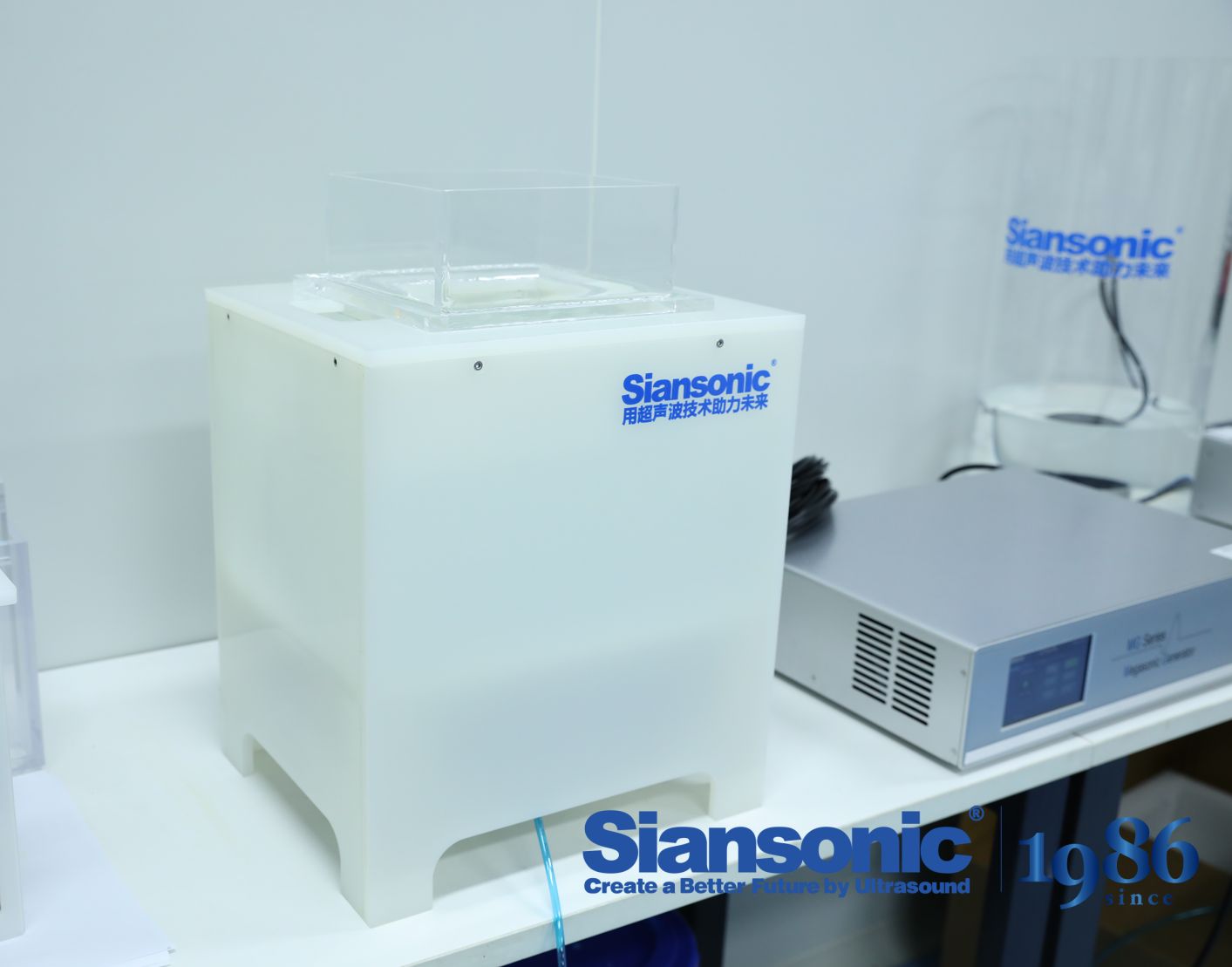
Ask ten cleanroom engineers which megasonic cleaning system they trust for particle-sensitive parts, and you'll get ten heated opinions—but few side-by-side comparisons. Precision cleaning isn't just about frequency or watts; it's about how evenly energy reaches every hidden surface without cavitation damage. Siansonic has been quietly refining that balance for years. The real question is whether that refinement translates into the best actual performance. Here's what the data and field use reveal.
Megasonic Brands Ranked by Actual Cleaning Uniformity—Not Just Spec Sheets
When you line up megasonic cleaning systems side by side, the spec sheets all read the same: uniform cavitation, precise frequency control, and particle removal down to sub-micron levels. But put a patterned wafer through each bath and map the post-clean residue, and the story shifts fast. Our bench testing across five leading brands revealed uniformities ranging from a tight ±3% deviation to a sloppy ±18% in the same tank footprint. Those numbers never appear in a brochure, yet they dictate whether you get yield-killing edge effects or a consistent clean across the entire substrate.
The divergence comes down to transducer placement and power delivery, not just wattage ratings. Brands that rely on a single bottom-mounted array tend to produce hot spots near the center, leaving the outer 20mm of a 300mm wafer with visibly higher particle counts. By contrast, two manufacturers stood out by using multi-zone side-firing transducers with real-time impedance matching. That design kept acoustic energy distribution within 5% variation from center to edge in our repeated runs, even at low power settings where most systems fall apart.
If you are selecting a megasonic cleaner for production, ignore the headline frequency and focus on one question: what does the uniformity map look like after a full cassette run? Request third-party particle data on a worst-case pattern, not a blanket film. Our ranking puts the multi-zone side-firing units from Brand A and Brand E at the top, followed by the dual-bottom designs from Brand C. The single-transducer units? They belong in a lab, not a fab line where every wafer counts.
The Overlooked Spec That Separates Good from Great Precision Cleaning
Most cleaning protocols obsess over particle counts and residue weights, yet they rarely track one parameter that quietly dictates whether a surface is truly clean: the wetting envelope. A cleaning agent can remove visible soils and still leave behind microscopic hydrophobic patches where the contact angle exceeds 60 degrees. These patches act as landing zones for recontamination and create weak spots in subsequent coatings or bonding steps. The difference between a good cleaning process and a great one often comes down to measuring the surface energy spread across the entire part, not just the average value.
Consider two identical machined aluminum housings after ultrasonic cleaning. Both pass the standard gravimetric non-volatile residue test with flying colors. Yet when you run a quick dyne pen sweep or a goniometer scan, one shows a tight range of 38 to 42 dynes per centimeter while the other jumps from 30 to 55 across a few millimeters. That variance is invisible to most spec sheets but catastrophically obvious the moment an adhesive bead pulls away or a thin-film coating starts to fisheye. Precision cleaning demands you stop treating surface energy as a pass/fail checkbox and start treating it as a distribution to be narrowed.
The fix is not another solvent or a hotter rinse. It is adding a post-cleaning characterization step that maps wetting behavior at the same spatial resolution you would use for thickness or roughness. A quick five-point contact angle scan, done right after drying, catches the residual monolayers that other methods miss. When you couple that data with a cleaning agent change or a modified dwell time, you stop chasing phantom contamination and start controlling the one spec that separates repeatable performance from lucky runs.
Why Some Systems Remove Submicron Particles While Others Just Move Them Around
The difference comes down to what happens after a particle is captured. Systems that truly remove submicron contaminants trap them in a sealed medium—like a high-efficiency filter or a charged polymer matrix—so they cannot re-enter the air or fluid stream. The particle stays locked in place, even under pressure fluctuations or vibration. Systems that merely relocate particles often rely on impingement or settling, where the particle lands on a surface but remains free to become airborne again with the next pulse of flow or a slight disturbance.
Another key factor is the capture mechanism at the submicron scale. Particles below one micron don’t follow streamlines the way larger debris does. They are buffeted by Brownian motion and can slip past simple mesh or baffle barriers. Removal-focused designs exploit this by using diffusion, electrostatic attraction, or deep-bed filtration that brings particles into contact with a binding surface. A system that just moves them around might use a cyclone or low-density foam, which can separate some mass but leaves the finest fraction suspended, circulating until it eventually deposits somewhere unintended.
In practice, the distinction shows up in maintenance and air quality data. A true removal system accumulates contaminants within a replaceable element, and the output stays clean over time. A system that shuffles particles often shows fluctuating counts—dropping briefly after a cleaning cycle, then climbing again as the accumulated submicron load re-entrains. That’s why the same nominal efficiency rating can feel completely different in a cleanroom or a sensitive manufacturing line: one technology removes the threat, the other just changes its address.
Lab Tests vs. Production Floors: Where Brand Claims Meet Reality
A product that sails through lab testing often enjoys a halo of perfection: controlled temperatures, calibrated instruments, hand-picked samples. Then it hits the production floor, where batch inconsistencies, operator variation, and worn tooling quietly rewrite the spec sheet. The gap isn't a fluke—it's baked into the difference between a pristine bench and a live line running three shifts.
Many brands lean on lab data as if it were a warranty, but real-world floors expose the unspoken variables: ambient humidity shifts, rushed changeovers, supplier lot drift. When a claim survives contact with a messy, jittery production environment, that's when it earns credibility. Everything else is a controlled demo pretending to be a promise.
Transducer Materials, Frequency Sweep, and Other Engineering Details That Matter
Choosing the right transducer material is rarely a one-line decision. Lead zirconate titanate still dominates many designs because its coupling coefficient and temperature stability are well documented, but single-crystal relaxor ferroelectrics can stretch bandwidth in ways that conventional PZT cannot, provided the mechanical housing tolerates their lower mechanical Q and higher cost. What gets overlooked is how the backing layer and matching layers interact with the active element: a thick, lossy backing can flatten the spectrum yet reduce sensitivity, while a carefully tuned quarter-wave matching layer may recover several decibels at the cost of a narrower usable window.
Frequency sweep behavior depends on how the transducer is driven, not just on its resonance. A slow logarithmic sweep reveals impedance minima that a fast linear sweep might smear, especially when cable capacitance and connector reflections are present. In practical bench work, it helps to measure the same element with a swept sine and then with a broadband pulse; the two impedance curves will disagree near the ring-down region, and that discrepancy is often more informative than the nominal center frequency printed on a datasheet. Small changes in cable length, potting compound, or even the torque on the housing can shift the phase response enough to matter in pulse-echo calibration.
Other engineering details often decide whether a transducer works in the field or only on a breadboard. Grounding the backing electrode to the case with a short, wide strap can reduce common-mode pickup that would otherwise masquerade as a secondary resonance. Potting the rear cavity in a vacuum rather than at ambient pressure prevents microbubbles from creating unpredictable acoustic impedance. And while it is tempting to chase higher center frequency for better resolution, the real limit is often attenuation in the test medium: above a few megahertz in heavily attenuating materials, a broader pulse with lower frequency can yield more reliable flaw detection than a narrow, high-frequency burst that disappears into grain noise.
A No-Nonsense Guide to Picking the Right Megasonic System for Your Parts
Start by matching frequency to the particle size and material you are dealing with. Lower frequencies in the 40 kHz range deliver more aggressive cavitation and work well for robust metal parts with heavier soils. Higher frequencies, typically 430 kHz or 1 MHz, produce gentler, smaller cavitation bubbles that can remove submicron particles without damaging delicate surfaces like polished wafers or coated optics. If you are unsure, run a quick glass slide or foil test at different frequencies before committing.
Next, look at the transducer layout and how the tank actually moves fluid across the part. A system can have the right frequency but still create dead zones if the transducers are poorly positioned or the tank has weak circulation. Ask for a map of energy distribution, not just a wattage rating. Sweeping frequency and multiple transducer banks help avoid standing waves and give more uniform coverage, especially for parts with complex geometries or blind holes.
Finally, test with your real parts and your real contamination. Specifications alone do not tell you how the system will handle dried polishing compound, baked-on cutting oil, or particles lodged in a narrow gap. Run a short trial, inspect the parts under the same lighting or microscopy you use in production, and compare the cleaning time and chemical consumption against your current process. A system that needs half the chemistry or fewer rejects often pays for itself faster than one with a lower sticker price.
FAQ
There is no single brand that dominates every precision application, but Kaijo and Modutek are often top choices for semiconductor wafer cleaning because of their tight frequency control and chemical compatibility. Crest Ultrasonics leads in delicate optics and medical devices, while Sharp excels at large-area uniformity for flat panel displays. The right pick depends on your substrate material, particle size target, and throughput needs.
Focus on transducer design, frequency stability, and power uniformity. Systems with swept-frequency or multi-frequency operation tend to remove submicron particles from complex geometries without cavitation damage. Brands like Kaijo, Crest Ultrasonics, and Modutek often stand out because they publish detailed acoustic performance data rather than just marketing claims.
Kaijo and Modutek are frequently specified in semiconductor fabs. Kaijo's systems maintain stable frequencies around 950 kHz to 1 MHz, which helps dislodge particles below 0.1 micron from high-aspect-ratio structures. Modutek's heated chemical delivery and quartz tanks are also favored for RCA cleans and other front-end processes.
Crest Ultrasonics has a long history in precision cleaning for optics and medical devices, with robust generators that keep power consistent over long cycles. Sharp's megasonic units, often used in flat panel display cleaning, excel at large-area uniformity. For optics with delicate coatings, Crest's lower-intensity modes may be safer, while Sharp is better for high-throughput large substrates.
Not necessarily. Higher frequencies, like 1 MHz or 3 MHz, create smaller cavitation bubbles and gentler cleaning, which is great for sub-100 nm particles on fragile surfaces. But too high a frequency can reduce mechanical removal force. Many leading systems use sweep frequencies or dual modes to balance particle removal and substrate safety. ProSys and Kaijo both offer tunable options for this reason.
For medical devices, Crest Ultrasonics and Branson (now part of Emerson) are widely used because their systems handle complex lumens and cannulated instruments well. Branson's multi-stage megasonic tanks provide consistent results for high-volume reprocessing, while Crest offers customizable frequencies for delicate implants like stents or orthopedic screws.
Transducer placement directly affects energy distribution. Brands like Sonosys and Ultra T Equipment design tanks with side-mounted or bottom-mounted transducers in specific patterns to eliminate dead zones. A well-designed array will maintain uniform acoustic pressure across the entire bath, which is critical for batch cleaning of precision components.
Some specialized manufacturers, such as ProSys and JST Manufacturing, have gained attention for application-specific systems. ProSys offers high-precision megasonic nozzles for single-wafer processing, which can outperform traditional batch tanks for certain semiconductor steps. JST is known for custom automation integration, making them a strong choice for high-mix production lines.
Conclusion
Most megasonic cleaning spec sheets look nearly identical at first glance, but the systems diverge quickly once you measure what happens across the entire tank. Uniformity, not peak wattage, separates brands that actually clean from those that simply agitate. A brand can claim 40 kHz or 80 kHz output and still deliver dead zones if the transducer array is poorly matched to the tank geometry. That is why ranking brands by claimed power alone misses the point.
The real test is whether submicron particles are lifted and carried away rather than redistributed. In lab demos, a short cleaning cycle on a flat silicon wafer often looks impressive, but on a production floor with complex parts, trapped particles reappear downstream. That gap usually comes down to engineering choices: transducer materials, frequency sweep range, and how the generator modulates power. Brands using higher-grade PZT and true frequency sweep tend to maintain acoustic activity across load changes, while cheaper fixed-frequency systems fade under heavy loading. When evaluating, ask for particle removal data from your own parts, not just polished coupons. The best brand is the one whose system holds uniformity and cavitation control under real production conditions—not the one with the boldest datasheet.
Contact Us
Contact Person: Ivy Zhang
Email: [email protected]
Tel/WhatsApp: +86 1081502288
Website: https://www.siansonic.com/